This November, Abu Dhabi hosts the first Frieze fair in West Asia, North Africa, and South Asia. Organised by Frieze in partnership with the Department of Culture and Tourism – Abu Dhabi, Frieze Abu Dhabi runs from 19 to 22 November at Manarat Al Saadiyat, in the Saadiyat Cultural District, alongside Louvre Abu Dhabi and Zayed National Museum.
At Booth A10, the Dubai gallery The Third Line, founded in 2005, presents painting, photography, collage, and sculpture by Anuar Khalifi, Bady Dalloul, Hassan Hajjaj, Joana Hadjithomas & Khalil Joreige, and Sarah Awad. The thread that runs through the booth is the journey. For some of these artists, it is a passage across countries and cultures; for others, a movement between the real and the imagined; for others still, a descent through layers of history and deep time.
Stories that travel
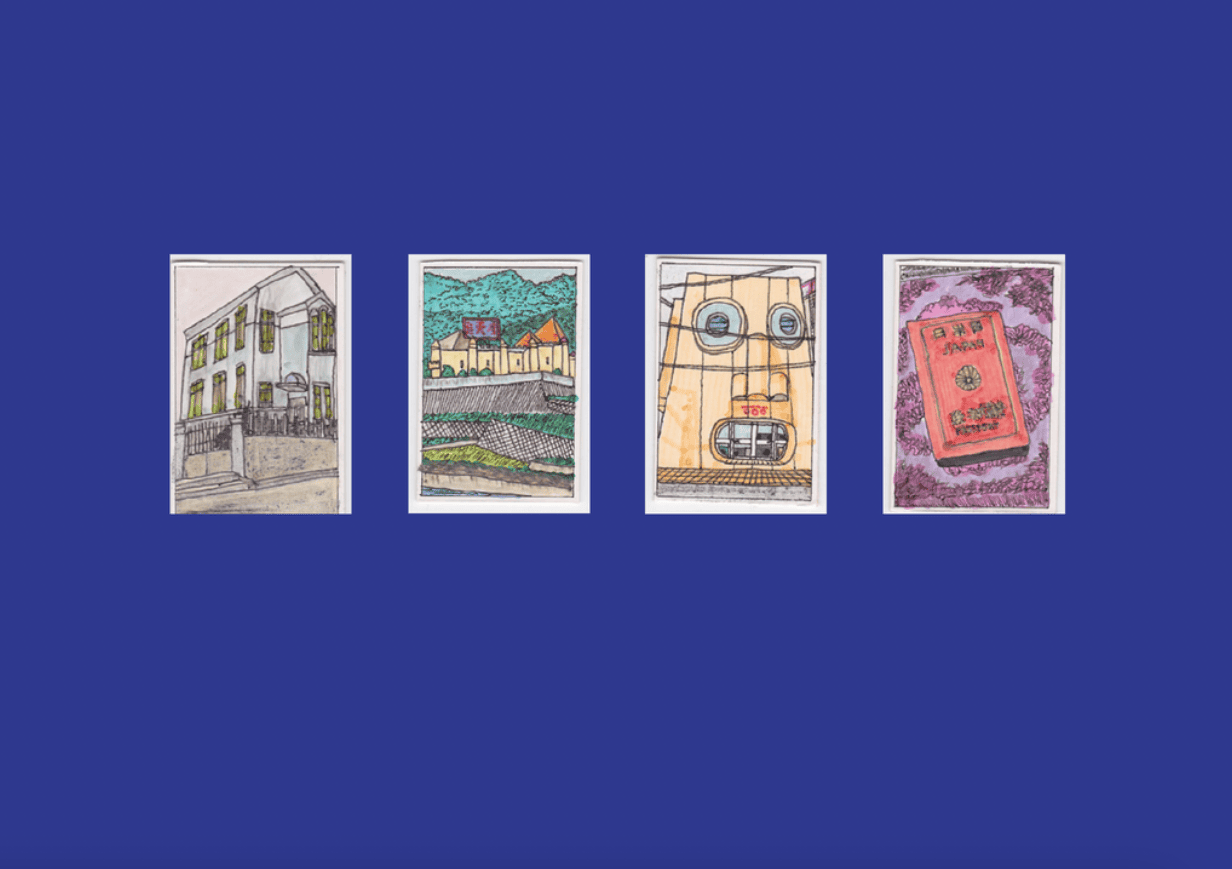
Bady Dalloul‘s work is a reminder that stories travel with the people who tell them. Born in Paris in 1986 to a Syrian family, the artist builds his collages from archival material, drawing and text. In a series begun in 2016, he turns to Kalila wa Dimna, a collection of animal fables rooted in the Indian Panchatantra. Translated into Arabic from Middle Persian by Ibn al-Muqaffa’ in the eighth century, the book went on to circulate in countless languages, and its tales eventually found their way into the fables of La Fontaine.
Dalloul’s work weaves historical events together with personal memory and fiction. Reflecting on the borders drawn between nations, he questions Western-centred historiography and the very logic by which history is written. He received the Sciences Po Prize for Contemporary Art in 2016 and, in 2017, the Prize for Arab Contemporary Creation awarded by the Friends of the Institut du Monde Arabe. He has had solo exhibitions at the Mori Art Museum in Tokyo and Jameel Arts Centre in Dubai (both 2025), at Mathaf: Arab Museum of Modern Art in Doha (2022), and in 2026 at the Centro de Arte Moderna Gulbenkian in Lisbon.
In The Battle of the Lion-King and Shanzaba (2016), Dalloul copies an episode of the fable by hand: the jackal Dimna turns the lion against the ox Shanzaba, and the two are drawn into a deadly fight. The battle unfolds across the lower half of the sheet, while the text is framed by labels from Japanese cafés and confectioners. An ancient parable of power and treachery is set among the traces of everyday modern life, and in this meeting the artist shows how stories change as they pass from one era and culture to another. Abu Dhabi has met these fables in his hands before: in 2024, Dalloul took part in the exhibition From Kalīla wa Dimna to La Fontaine: Travelling through Fables at Louvre Abu Dhabi.
Between dream and waking
Anuar Khalifi understands the journey differently. A self-taught Spanish-Moroccan artist, born in Lloret de Mar in 1977 and working between Barcelona and Tangier, he paints figures held in a space where the line between reality and imagination dissolves. The title of his two 2026 paintings, Dreamigrant, fuses the words “dream” and “immigrant”. In Dreamigrant (there), a young man in a wetsuit sits on a folding chair in a domestic interior, a snorkel in his hand and flippers on his feet: he is dressed for a sea that is nowhere in sight. In Dreamigrant (here), a shirtless figure stands on pools of red fabric, holding up a crocodile in triumph. Images drawn from art history surface in the background of both works, leaving viewers to piece the layers together into stories of their own.
Khalifi drew constantly as a child, and that habit still shapes his palette and the way he arranges his characters. His protagonists – adolescents, young men, now and then an older man – are often caught in absurd settings or in the middle of some mischief. Beneath the playful tone lie questions of identity and spirituality, and of life lived between two cultures. Blending fact and fiction, Khalifi takes apart stereotypes and the canon of Orientalism with wit and irony. He has exhibited at Lisson Gallery in London, Sharjah Art Foundation, Misk Art Institute in Riyadh and Bank Al-Maghrib in Rabat.
Portraits shaped by the road
For Hassan Hajjaj, the journey is part of his biography. Born in 1961 in the fishing town of Larache in northern Morocco, he moved to London at the age of twelve and came of age as the city’s club culture was taking shape. Returning to Morocco in the early 1990s, he saw the places of his childhood with new eyes. The stereotypes about Moroccan life that persisted even among his London friends spurred him to make work that reflects the country in all its variety, from the everyday to the exuberant. Today, the photographer, designer and filmmaker works between London and Marrakech. His work is often compared to that of Andy Warhol, a comparison Hajjaj plays on in the name of his clothing label, Andy Wahloo, which in Arabic means “I have nothing”.
At the booth, Hajjaj shows black-and-white portraits from the early 2000s. In Untitled (E21B) (2000/1421), two figures pose against a whitewashed wall as if caught mid-dance. In Untitled (E14B) (2006/1427), a group of women lie together on a patterned rug spread over a tiled floor, leaning on one another. The double dating, in both the Gregorian and Hijri calendars, is a deliberate part of Hajjaj’s practice. These photographs record not only the friends who populated the young artist’s world, but an entire milieu shaped by migration and return. Hajjaj is best known for his maximalist portraits of musicians and friends, framed with brightly coloured everyday objects from local markets.
His solo exhibitions include the Victoria and Albert Museum (2005), LACMA (2014), Somerset House (2017), the Maison Européenne de la Photographie in Paris (2019), the Aga Khan Museum in Toronto (2025) and the Musée de la Musique – Philharmonie de Paris (2026). His work is held in the collections of the British Museum, the Brooklyn Museum, the Institut du Monde Arabe, LACMA and the Guggenheim Abu Dhabi.
Time beneath our feet
Joana Hadjithomas and Khalil Joreige, both born in Beirut in 1969 and living between Beirut and Paris, take the viewer on a journey into the earth itself. Since 2016, they have been collecting core samples drilled from construction sites in Athens, Paris and Beirut, which are normally discarded once analysed. They named the project Unconformities, after the geological term for a break in the sequence of rock strata, the trace of a missing interval of time. In 2017, the project won them the Prix Marcel Duchamp.

Working as both artists and filmmakers, Hadjithomas and Joreige move between photography, video, performance, installation, sculpture and cinema. Their work examines how images and collective imaginaries are made, and recovers stories that official history has silenced. Where places have been transformed or destroyed, particularly by war, their work preserves a social memory and gives weight to the traces that remain.
Their solo exhibitions include Jeu de Paume in Paris and Haus der Kunst in Munich (both 2016), Sharjah Art Foundation (2016), and the Sursock Museum in Beirut (2025). In 2026, they are taking part in the 61st Venice Biennale and the 25th Biennale of Sydney.
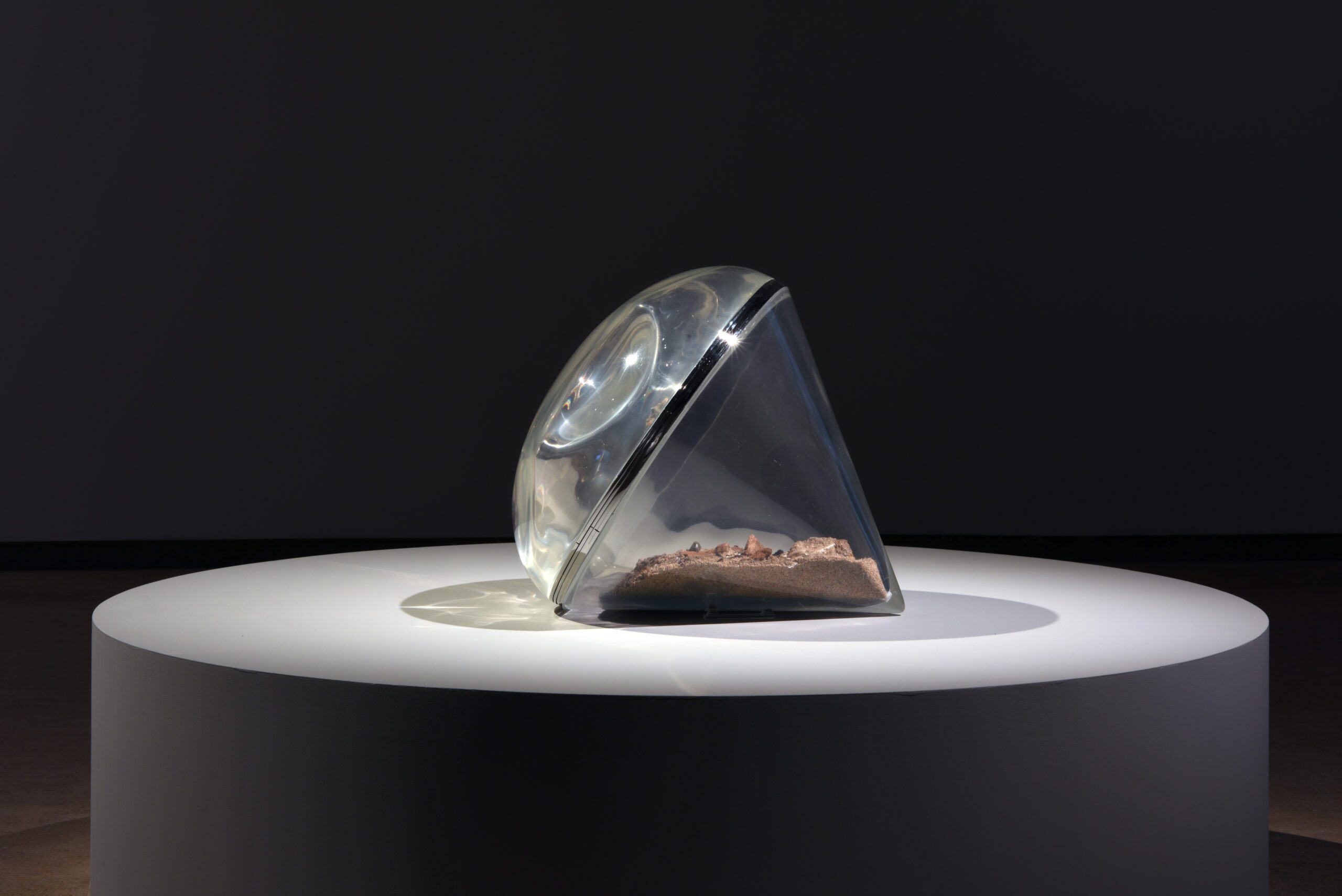
Their Blow Up sculptures, part of the Unconformities series, magnify tiny sediments: fine pebbles, pottery shards and fragments of glass unearthed on Murano. Encased in lens-like forms of blown glass, they become archives of the histories held beneath the ground. Each sculpture is double-sided, reconstructing an archaeological scene on one face and revealing the same scene under the microscope, at various magnifications, on the other. “When you dig, what is old moves up, and what is new moves down,” says Khalil Joreige. “You are recycling, redoing, regenerating. You are using the traces of civilisations to build new ones.”
Colour as transformation
Sarah Awad‘s painting carries the theme of the journey into the language of colour. Born in Pasadena in 1981, she lives in Los Angeles and teaches at the Claire Trevor School of the Arts at UC Irvine. Drawing on Fauvism, Color Field painting, and Neo-Expressionism, her canvas builds up saturated pinks and reds, cut through with passages of black and pale blue and flashes of orange. Fragments of a body – a limb, a turning torso – rise briefly from these fields of colour before dissolving back into them. Colour is both subject and structure here, and the painting itself becomes a place where forms emerge, shift and keep renegotiating their boundaries.
Richly layered and at once abstract and figurative, Awad’s compositions explore the relationship between colour and form. In 2011, she received the Joan Mitchell Foundation MFA Grant, and her work has been reviewed in Art in America, Artillery, Modern Painters and Artsy. She has had solo exhibitions at Night Gallery in Los Angeles and The Third Line in Dubai, and her work is held in the collections of the Dallas Museum of Art and the Barjeel Art Foundation in Sharjah.
Stones that crossed an ocean
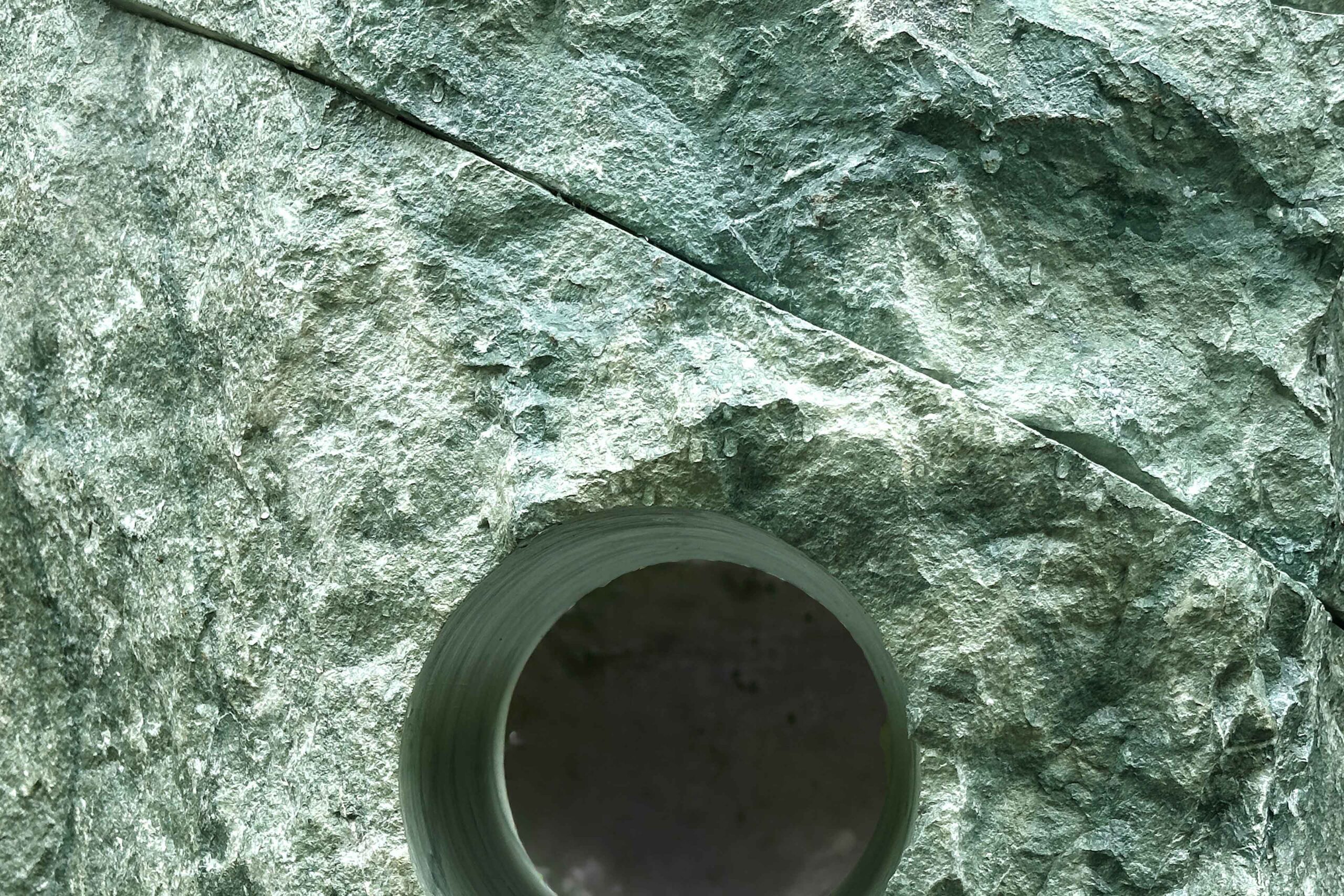
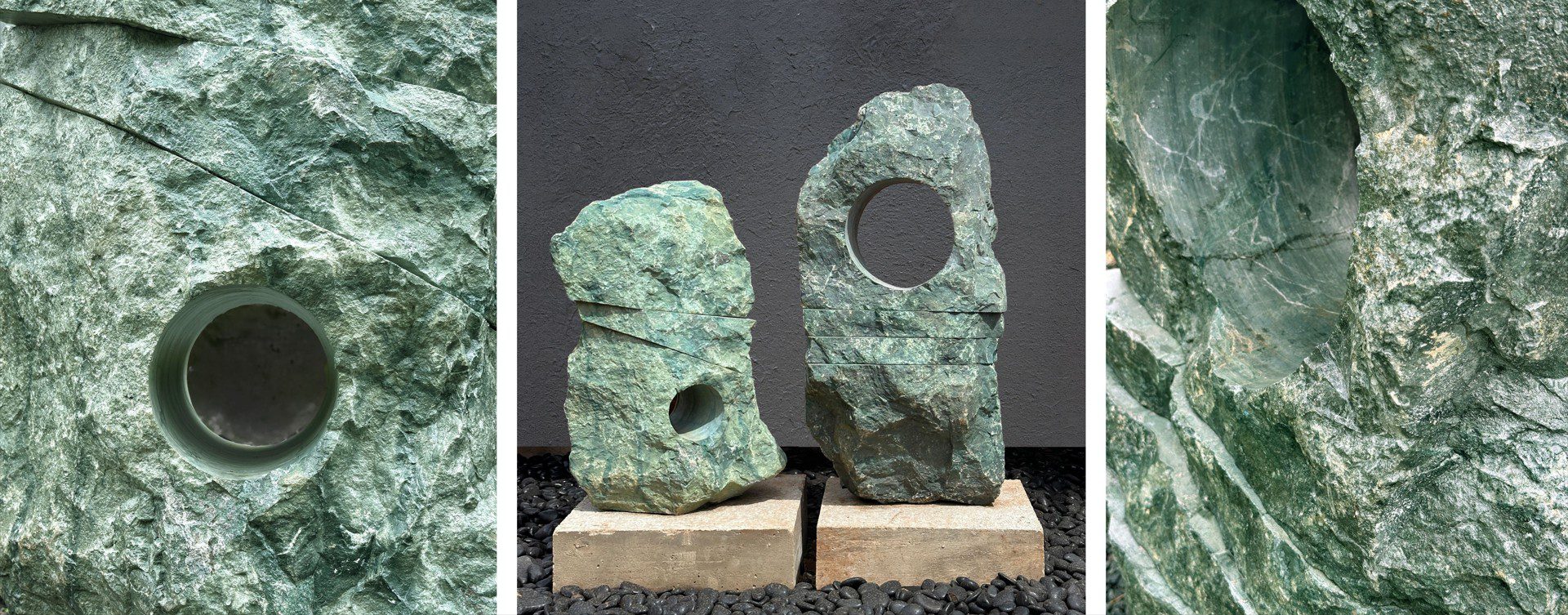
Beyond the fair, the journey continues by the sea. From 16 November to 16 December, Frieze Sculpture Abu Dhabi brings five large-scale works to Mamsha Beach on Saadiyat Island, among them a pair of sculptures by Kamran Samimi, Voyagers (Traveling Stones) (2025). Born in Minnesota in 1984 to a family of Iranian and Norwegian heritage, Samimi grew up in rural Laupāhoehoe on Hawaiʻi Island, where, as a child, he collected stones with his father. Stone has since become the principal material of his art. He approaches natural materials – stone, wood, pigment, land – with both curiosity and reverence.
Samimi’s outlook is shaped by Zen Buddhism and Sufi mysticism, with their emphasis on the direct experience of the natural world, and his process is at once a dismantling and a re-forming. A graduate of the University of Hawaiʻi at Mānoa, he received the Best in Show Award at Artists of Hawaiʻi in 2024, and his work is held by Sharjah Art Foundation, the Shangri La Museum of Islamic Art, Culture & Design and the Hawaiʻi State Foundation on Culture and the Arts.
The green basalt of these sculptures was formed on the North American continent and shaped in Hawaiʻi. Traces of fire, pressure, fracture and erosion hold the history the stones have gathered over millions of years, and the journey that carried them over land and sea. At the centre of each stone is a circular void, an opening through which to contemplate the span of time it holds. For Samimi, this is a return to the Emirates: he made the works for his first exhibition with The Third Line, Before Nature (I Am Both Created and Destroyed) (2024), in Dubai, drawing on the forms of the UAE’s mountains and rocks.
Stones that have crossed an ocean, fables that have passed through languages and centuries, people who live between countries, and layers of earth that keep the traces of vanished cities: everything The Third Line brings to Abu Dhabi suggests that a journey changes not only where we are, but our bodies, our memory and our language.
To learn more about The Third Line, please visit its official website.


