Set near Fujairah Fort in the heart of Fujairah City, Fujairah Museum offers a chance to explore the history of the emirate, from prehistoric settlements and Bronze Age communities to traditional life in the decades before the discovery of oil. Its collections feature archaeological discoveries from sites across Fujairah, with objects that document the occupations, customs, and everyday practices of more recent generations. Thus, the museum presents the emirate as a region with thousands of years of continuous human history.
The origins of Fujairah Museum can be traced to 1969, when a small museum was established in a room at the Khalid bin Al Waleed Public Library. Its initial collection comprised traditional weapons, pottery, coins, and agricultural tools. As archaeological excavations expanded across Fujairah, the volume and importance of discoveries grew. This created the need for an institution dedicated to preserving and documenting the archaeological and cultural heritage of the emirate. Sheikh Hamad bin Mohammed Al Sharqi, Ruler of Fujairah, issued a decree establishing the museum in 1991. It was officially inaugurated on 30 November of that year.
The museum occupies a building connected to Fujairah’s modern history. Originally built in 1968 as a government guesthouse for official visitors, the structure was adapted to house the museum. Its architecture combines traditional Emirati decorative elements with more contemporary features, while its proximity to Fujairah Fort and the Heritage Village makes it part of a wider historical area in the city.
The archaeological galleries form the museum’s most important window onto Fujairah’s distant past. The objects were recovered during excavations at archaeological sites throughout the emirate, including Al Bidya, Qidfa, and Dibba, among other locations. Together, they illustrate the region’s connections with wider networks of trade, craft production, and cultural exchange extending across the Arabian Peninsula and beyond.
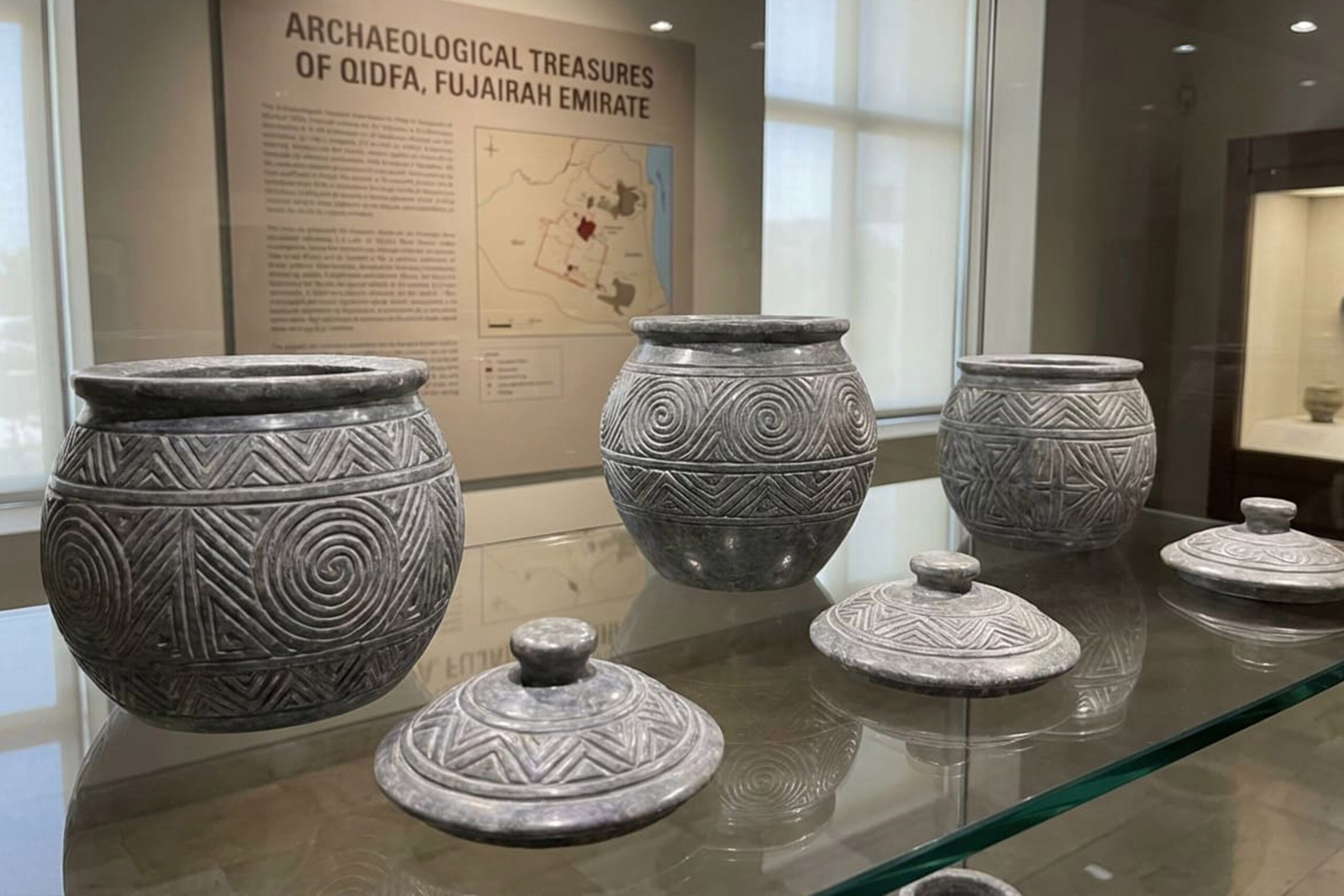
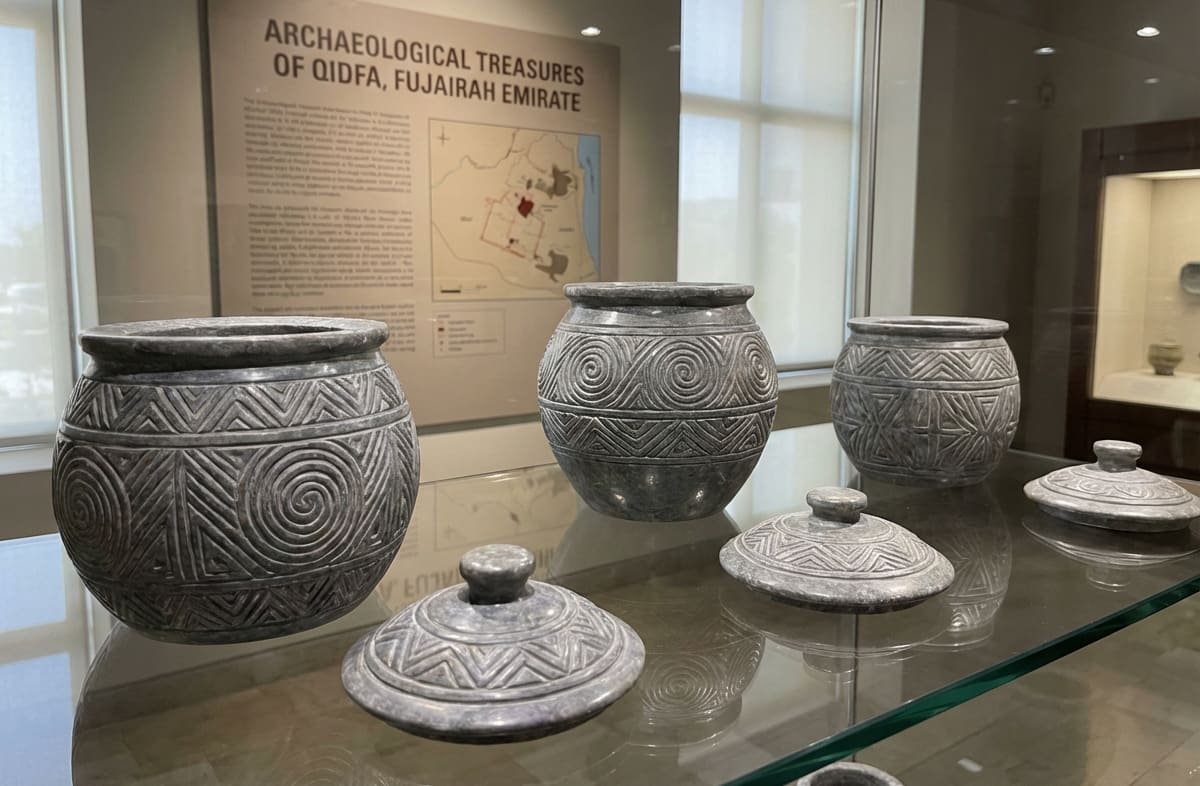
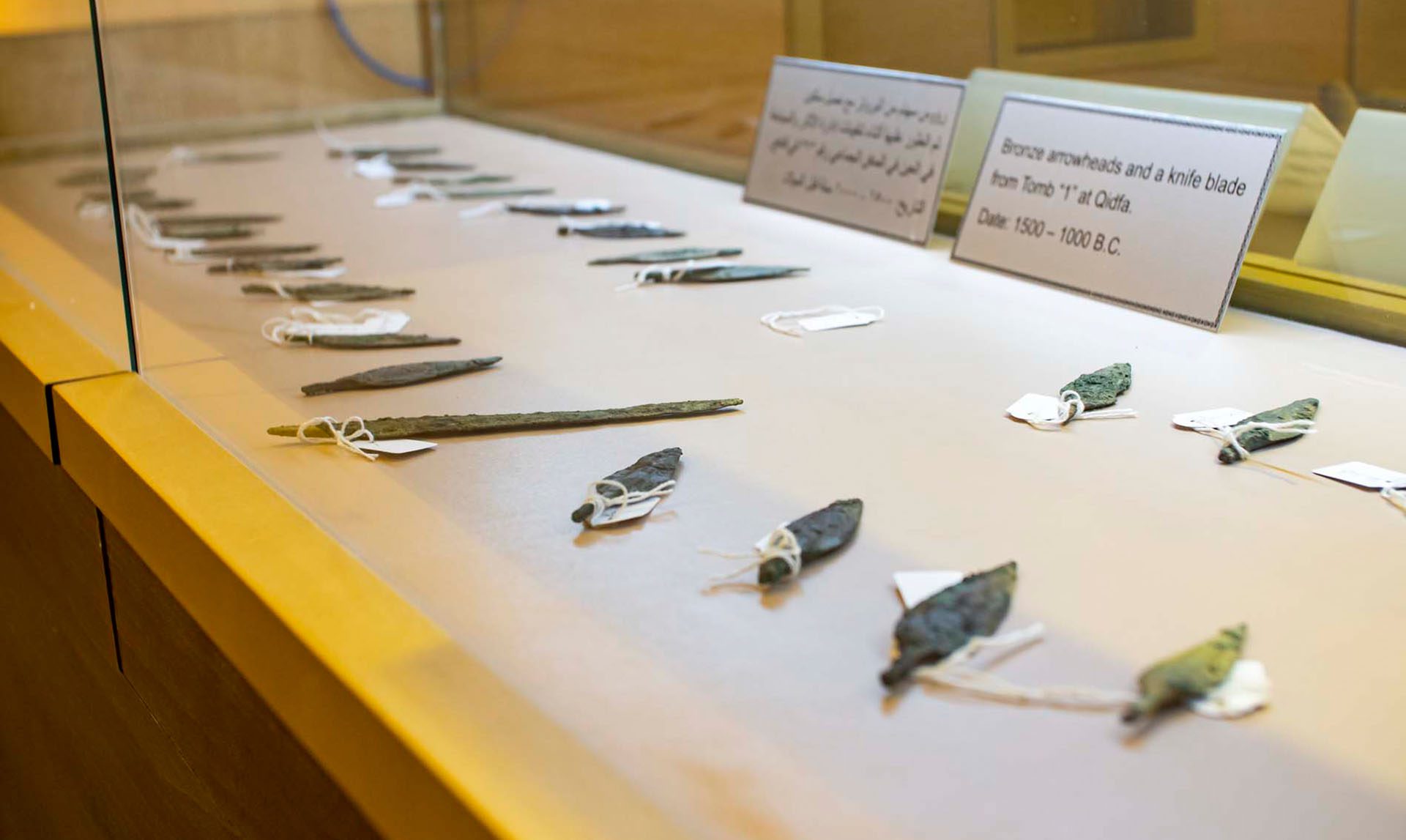
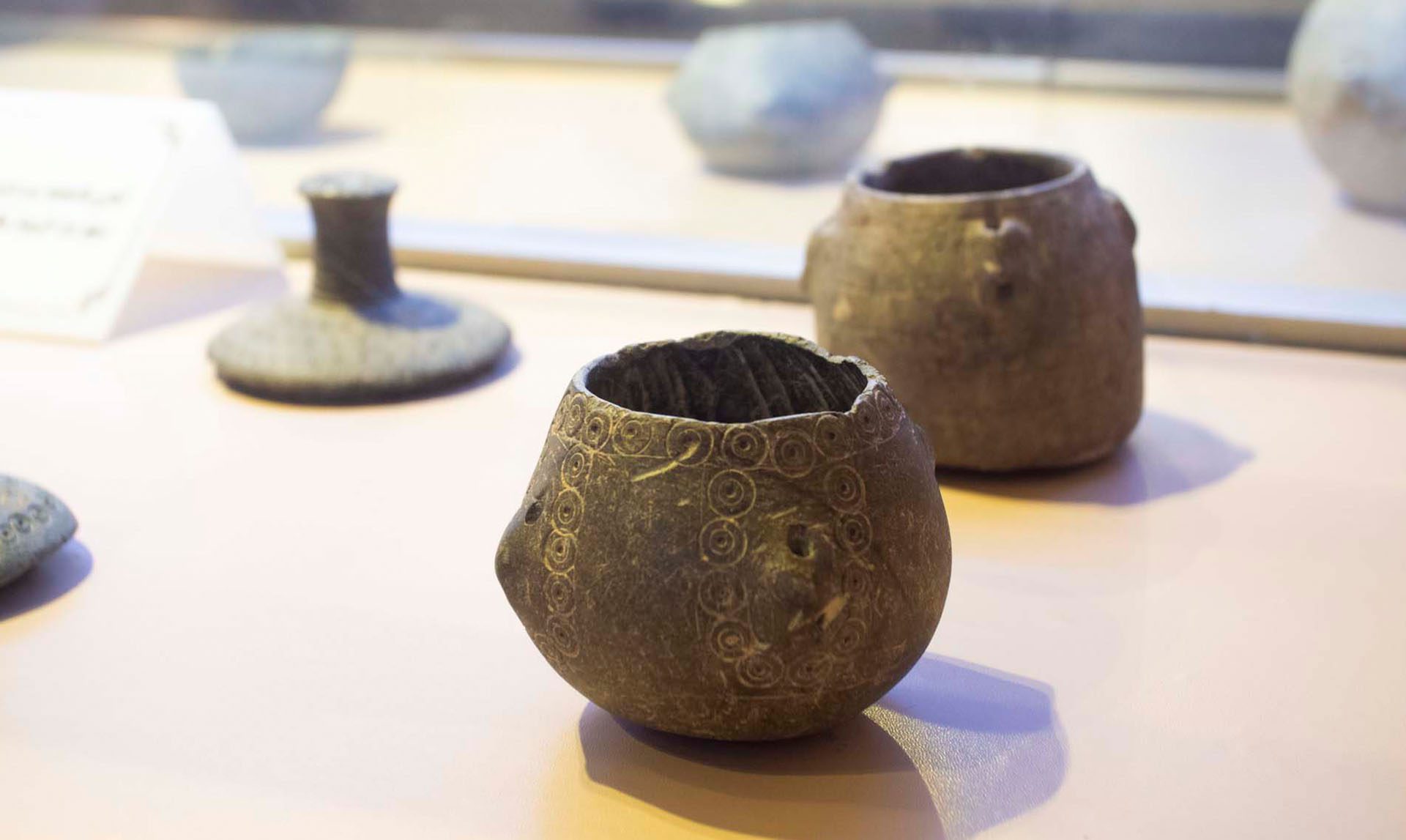
The museum’s archaeological material includes pottery vessels, bronze weapons and tools, stone vessels, beads, copper objects, and burial-related artefacts. Some date to the 2nd millennium BC, while others belong to the Iron Age, Hellenistic period, and the early centuries of the Common Era. For example, on view are bronze spearheads, stone vessels from Qidfa and Dibba, Iron Age incense burners from Masafi, and a glazed amphora from Bithnah dating to the 1st century AD.
These collections are especially valuable because they reveal how communities in the mountains and along the eastern coast adapted to their environment. Objects associated with agriculture, fishing, metallurgy, craft production, and trade point towards a region that was considerably more interconnected than its mountainous landscape might initially suggest. Fujairah’s position on the Gulf of Oman also placed it within maritime routes linking the Arabian Peninsula with other parts of the Indian Ocean world.
The heritage galleries focus on the social history of Fujairah. Here, visitors encounter objects associated with traditional occupations and domestic life, including farming, fishing, and trade, alongside examples of weaving, pottery and other crafts. The displays also document traditional approaches to agriculture and water management. One notable example is the Yazrah, an irrigation system used to raise water for cultivation.
Traditional weapons are another significant part of the collection. Among them are the Um Fiteelah, Al-Sam‘ah, and Al-Rumiyah, as well as a historic rifle known as Al Khediwi, manufactured in 1916. Also exhibited are local costumes, household utensils, and other objects that help reconstruct everyday life before the transformation brought about by the oil economy. A model of a traditional palm-frond house further illustrates the materials and construction techniques once used in the emirate.
Fujairah Museum’s archaeological galleries establish the depth of the region’s history. Its heritage rooms demonstrate how that history continued into the lives and practices of communities living in the emirate until relatively recently. Viewed alongside nearby Fujairah Fort and Heritage Village, the museum forms part of a cultural landscape in which archaeology, architecture, and living heritage are presented together.
Fujairah Museum can be particularly interesting for those who want to understand the UAE beyond its contemporary skyline. The museum’s collections tell a story that begins thousands of years before the formation of the modern federation. So Fujairah is revealed as a place shaped by mountain environments, agriculture, maritime exchange, craftsmanship, and successive generations of settlement. The result is a remarkably broad portrait of the eastern UAE in which ancient archaeological discoveries and the memory of everyday life are equally important parts of the story.
To learn more about Fujairah Museum, please visit its official web page.
You may also be interested in exploring Saruq Al Hadid Archaeology Museum and Sharjah Archaeology Museum.


