Sharjah Art Foundation (SAF) invites everyone to visit Vantage Point 13, an exhibition that approaches the question “What can documentary photography do beyond recording what is already there?” through newly commissioned bodies of work by six artists. Running through 29 November 2026, the show features Luisa Dörr, Latifa AlBokhari, Sathish Kumar, Adam Rouhana, Guanyu Xu, and Maheder Haileselassie. Their practices explore photography as a space for memory, identity, belonging, absence, and interpretation.
The 13th edition marks a new chapter for Vantage Point, SAF’s long-running photography programme. Launched in 2013, the initiative has previously presented a broad selection of photographic practices. This edition adopts a more focused format: six artists were commissioned to develop substantial projects specifically for the exhibition. It is also the first edition to be presented in SAF’s dedicated Photography Gallery in Al Manakh. Curated by Sara Al Mheiri and Osemudiamen Ekore, Vantage Point 13 was developed through sustained dialogue between the artists and curators, allowing each project to respond to the particular questions raised by documentary photography today.
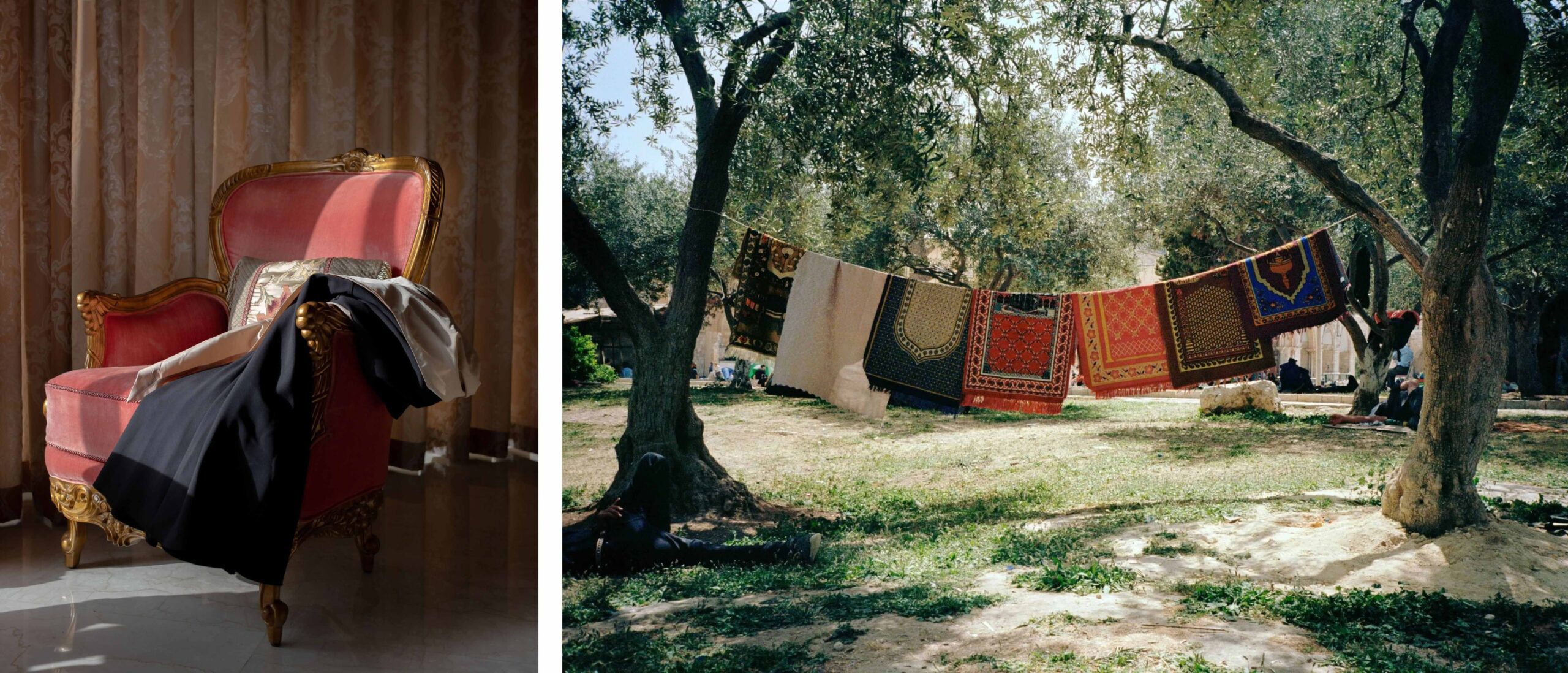
Rather than treating the photograph as an objective record, the exhibition considers the circumstances behind every image: who is looking, who is being represented, what is remembered, and what might remain unseen. The participating artists move between intimate portraiture, archival research, constructed imagery, and installation, expanding documentary photography through different materials and modes of display.
One of the more intimate projects is Escaramuzas (2024–ongoing) by Brazilian photographer Luisa Dörr. The series focuses on the Escaramuza Escuela Perla del Occidente, a Mexican equestrian team and school that trains female riders in charrería, the country’s traditional equestrian sport. Dörr’s portraits and observations look beyond athletic performance towards the relationships between the women, their horses, and the cultural traditions they carry forward. The riders appear in costumes inspired by the Adelitas, women associated with the Mexican Revolution, connecting contemporary sporting practice with histories of femininity and cultural memory.
Saudi artist and curator Latifa AlBokhari takes a similarly personal approach in Sirti Mara (You’re a Woman Now). Working with women from her community, AlBokhari considers moments associated with becoming a woman, from weddings and adornment to family rituals and memories. Henna, jewellery, hair, and beauty practices become entry points into broader questions of belonging and identity. The presentation itself becomes part of the work. The photographs are printed on velvet, and one image is incorporated into a vanity-table setting, recalling the intimate domestic spaces in which many of these memories were formed.
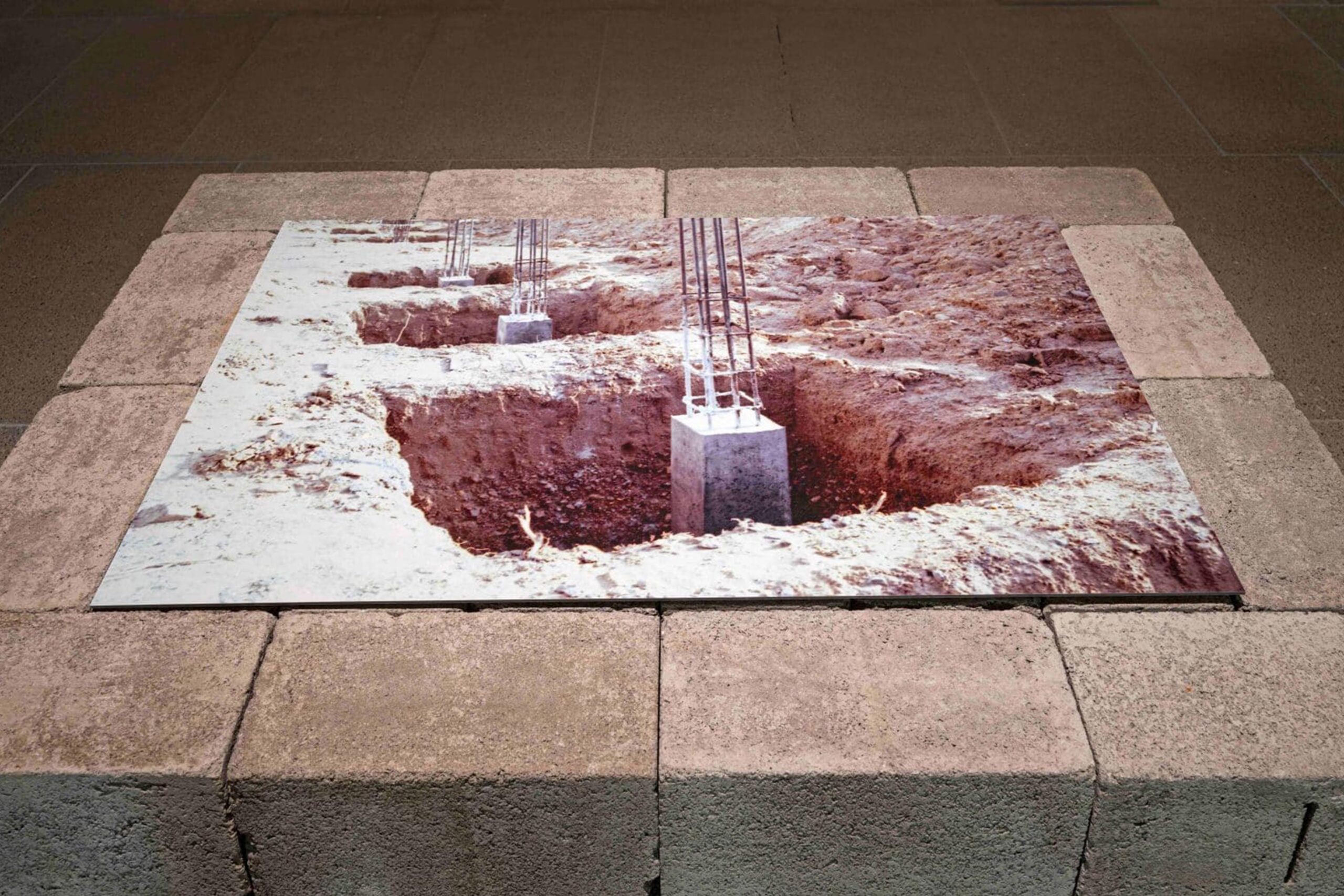
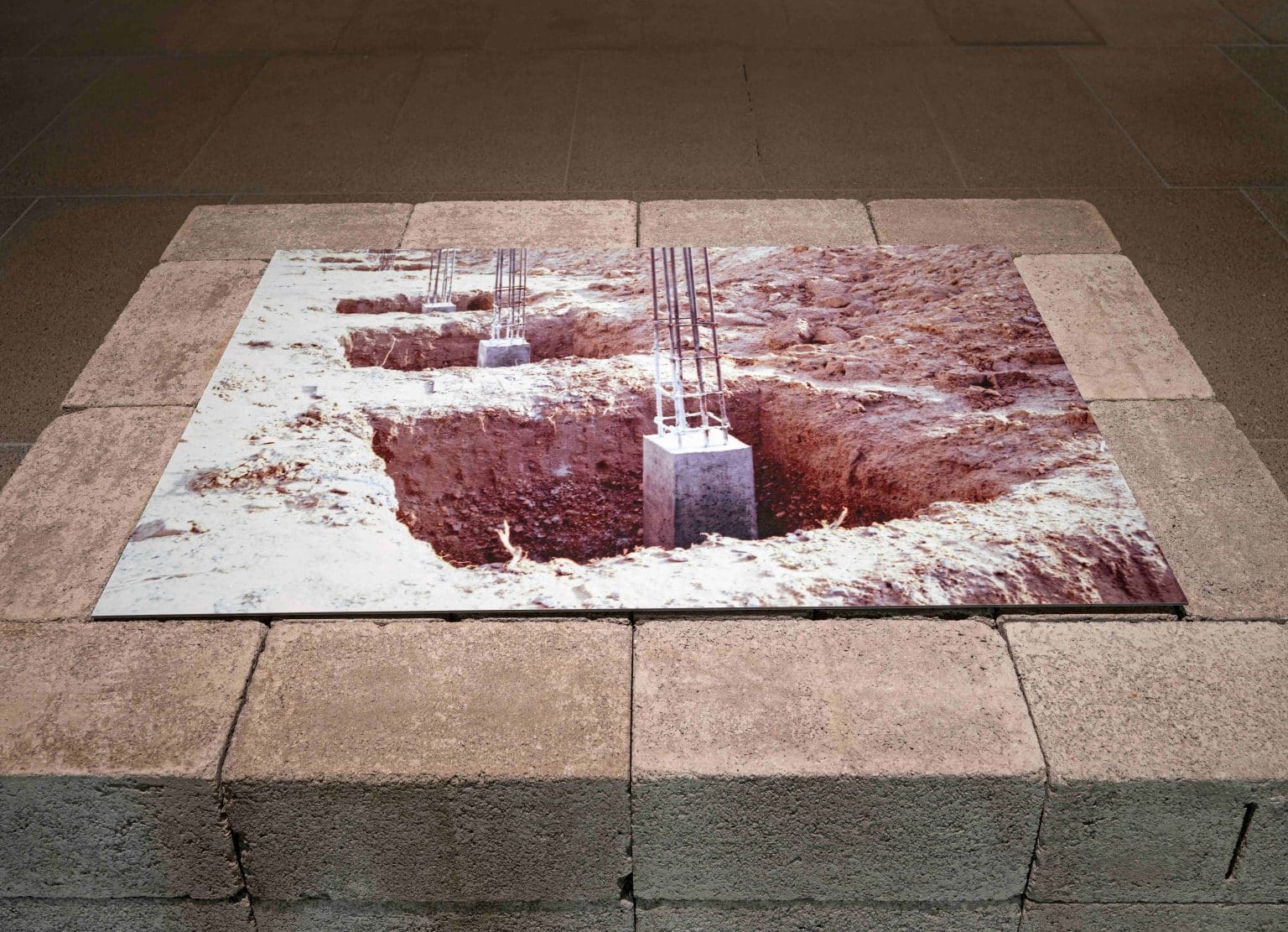
For Indian photographer Sathish Kumar, documentary photography becomes a way of tracing family, migration, and the idea of home. His series Bond (2025–2026) centres on his brother, who has spent more than a decade working in the Gulf. Photographs made in Al Ruwais, Abu Dhabi, show his brother with his family in domestic and recreational settings. Another group of images takes the viewer to Bengaluru, Kumar’s hometown. There, photographs of the construction of the family home sit alongside the family pictures. Displayed on enlarged metal sheets and, in some cases, cement-block structures, the photos connect the everyday intimacy of family life with the physical labour and long-term aspirations associated with migrant work.
Palestinian-American photographer Adam Rouhana presents his project Permission to Narrate (2025–ongoing), which responds to ruptures in Palestinian visual history through portraiture. Rouhana travelled across several cities in the West Bank with a mobile studio and photographed a wide range of people, such as workers, artists, families, children, religious figures, and community leaders. The project draws on the legacy of Palestinian photographer Khalil Raad, whose early photographic documentation of Palestine challenged the colonial conditions under which much of the region was represented. Rouhana’s portraits similarly place questions of authorship and self-representation at the centre of the photographic encounter.
Chinese-born artist Guanyu Xu approaches questions of identity through domestic interiors. His ongoing project Resident Aliens constructs temporary installations inside the homes of immigrants in the USA. It combines photographs of domestic spaces with personal and found images. In Vantage Point 13, the resulting photos are displayed at life size, allowing walls, furniture, doors, and archival fragments to merge into dense visual environments. Xu’s practice unsettles distinctions between public and private, familiar and foreign, and present experience and personal history.

The final project is Endinastawis Anirsa (Lest We Forget) (2026) by Ethiopian photographer and artist Maheder Haileselassie. She works with photographs of Arbegnoch fighters who resisted the Italian occupation of Ethiopia between 1936 and 1941. The images were sourced from archival Hamle 16 certificates: documents connected to a government initiative that distributed land to resistance fighters. In the exhibition, worn passport-like portraits are assembled into collages and presented within a light box, bringing faces from a fragile historical record into renewed visibility.
The projects featured in the Vantage Point 13 demonstrate how contemporary documentary photography can operate somewhere between evidence and interpretation. The works share an interest in the gaps surrounding an image: the memories attached to it, the histories it cannot fully contain, and the people whose perspectives determine how it is made. By foregrounding these processes, the exhibition treats documentary photography as a continually evolving practice. The show asks viewers not simply to look at photographs, but to consider how and by whom realities become visible in the first place.
You can learn more about Vantage Point 13 on its official web page.
Additionally, you might be interested in viewing Photographic Encounters along the Gulf Coasts.


