
In the DIFC, the fourth season of the Sculpture Park continues until 31 May 2026, with the open-air exhibition In the Wake of Time presented by RARARES Gallery as its key project. The route between offices, restaurants, and galleries turns into a sequence of encounters with large-scale sculptures that literally embed themselves into the everyday navigation of the financial centre.
The curatorial idea revolves around time, memory, and identity, dimensions that usually slip away in the rapid pace of the city. The organisers describe sculpture as a carrier of “traces of lived experience”, a form that records a state and yet continues to change in the viewer’s perception as light, route, and distance shift. This approach makes the city not just a backdrop for the works but an active participant in the exhibition: architecture, wind, and the footsteps of passers-by become part of the composition.
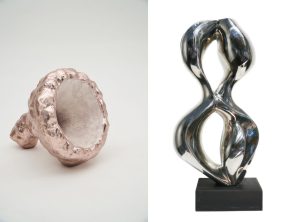
Three artists take part in the project, each engaging with the idea of time in their own way. Swiss-Canadian artist Evelyne Brader-Frank creates reduced figures in stone, bronze, and steel, distilling the human body into smooth, almost iconic forms. Her sculptures convey a sense of suspended movement, as if a gesture has already been made but still reverberates in the material, not a static statue, but a trace, a shadow of action.
Emirati artist Salim Abdullah Al Kaabi shifts the conversation about time into the realm of materials and ecology. He experiments with eco-friendly processes, light-sensitive surfaces, and chemically active media, turning matter itself into a kind of chronicle; its reactions to light, weather, and the urban environment become a visual record. In his works, memory extends beyond the personal and moves to the level of the environment, which “remembers” everything that happens to it.

Visual artist Natalie Katwal, who divides her time between Russia and Germany, offers a more psychological perspective. Combining functional sculpture with photography and video, she works with fragile states: emotional, identificational, and interpersonal. Her structured compositions, in which form and function constantly comment on each other, transform familiar objects into carriers of personal stories and turn public space into a stage for subtle, barely noticeable inner narratives.
The RARARES team emphasises that it was crucial to place these works in the open setting of the financial centre rather than in the sheltered environment of a white cube. The curatorial text describes the exhibition as an invitation to “read sculpture through the scale and rhythm of the city”: the viewer’s route, their daily trajectories and accidental pauses become part of the concept. For the DIFC itself, the sculpture park is essentially a statement that a financial centre can be not only a place of deals and office towers but also a space where art is part of everyday life rather than a festive exception.

In the Wake of Time remains open and freely accessible, which is particularly significant for Dubai. One can pass through on the way to a meeting, linger for a few minutes between calls, or return in the evening in a different mood. The exhibition benefits from this: the time it speaks about is not just a metaphor but a lived experience, the way one takes this route today, in a week, at the end of May, noticing new nuances in the same sculptures every time.
To get more information about In the Wake of Time, please visit the official web page of the exhibition.
Additionally, you might be interested in viewing Al Duroor by Mattar Bin Lahej, Guardian Elevation by Xavier Magaldi, and Wave of Imagination by Dr Jassim Alawadhi.


