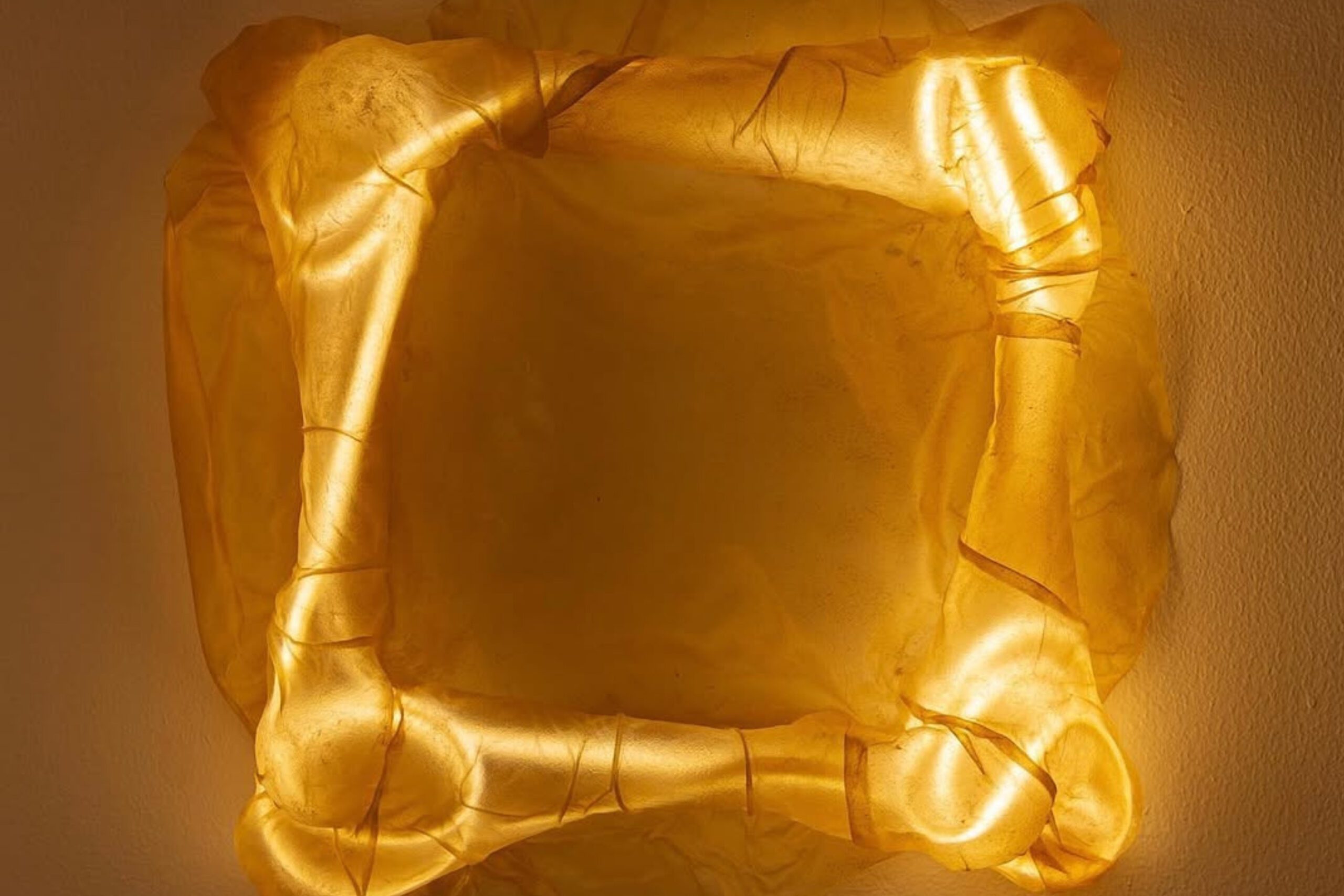
On view at Media Majlis Museum until 14 May 2026, What’s between, between? is an ambitious, thought-provoking group exhibition that examines how the future of the Gulf is imagined, represented, and contested. The show aims at familiar visual clichés of futurity, like gleaming skyscrapers, neon skylines, and robots, and asks a more urgent question: whose future do these images describe, and who gets to participate in shaping them?
Curated by Jack Thomas Taylor and Amal Zeyad Ali, the exhibition uses the concept of Gulf Futurism as its point of departure. The term, associated with artists Sophia Al-Maria and Fatima Al Qadiri, emerged to describe the unique conditions of life in the Arabian Peninsula, where accelerated modernisation, global consumer culture, inherited traditions, and speculative development coexist in striking ways. In many popular representations, Gulf Futurism has often been reduced to surface aesthetics: luxury malls, dramatic skylines, and mirrored towers. The exhibition moves beyond these simplified readings by focusing instead on lived realities, contradictions, and overlooked voices within the region.
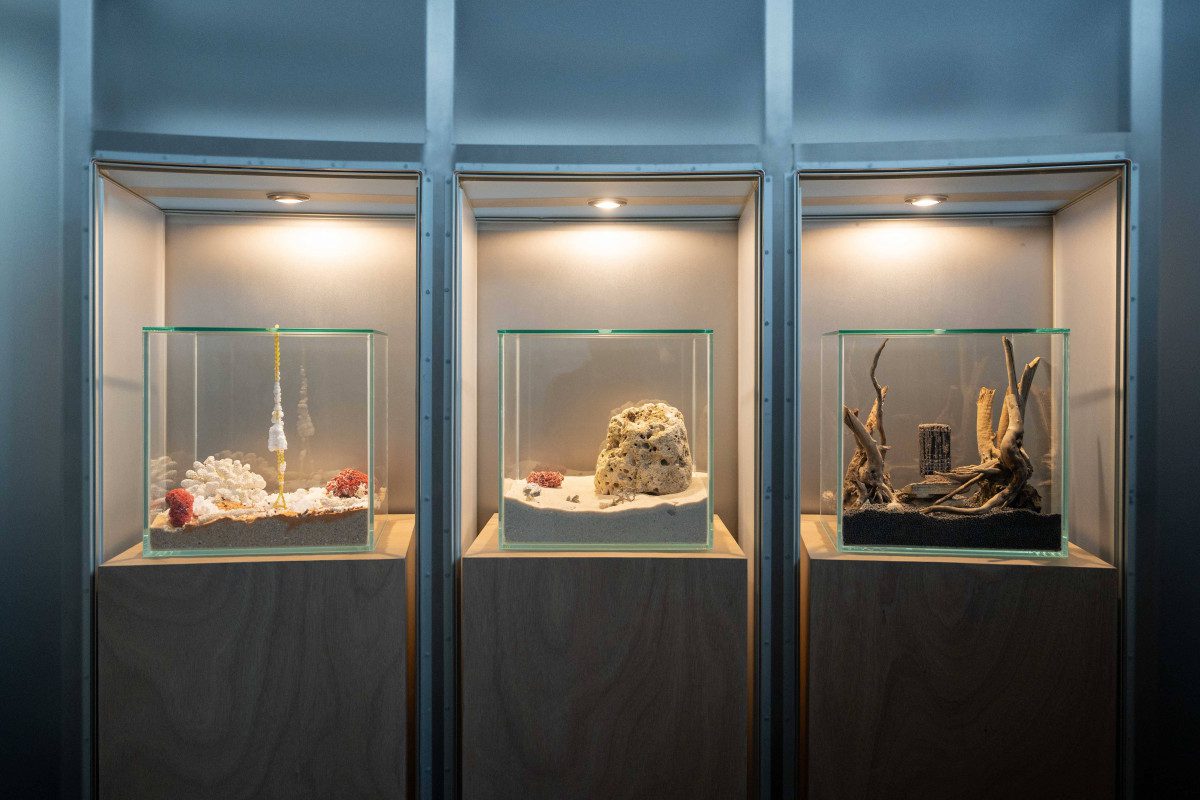
The show brings together more than twenty artists from across the Gulf and neighbouring contexts, rejecting any singular definition of regional identity or futurism. Instead, it presents the Gulf as a place of multiple temporalities and overlapping conditions: desert and metropolis, heritage and innovation, labour and leisure, local memory and global ambition. Many of the participating artists themselves inhabit “in-between” positions (between nations, languages, cultures, and social structures), which makes the title especially resonant.
One of the most compelling aspects of the exhibition is its use of salt as a central metaphor. In the Gulf, salt carries deep historical and ecological significance: it evokes maritime trade routes, pearl-diving histories, desert survival, coastal labour, and the region’s ongoing dependence on desalination technologies. By choosing salt as a conceptual anchor, the curators connect the material histories of the Gulf with present concerns about extraction, environmental change, and technological adaptation. Salt becomes a symbol of continuity amid transformation.
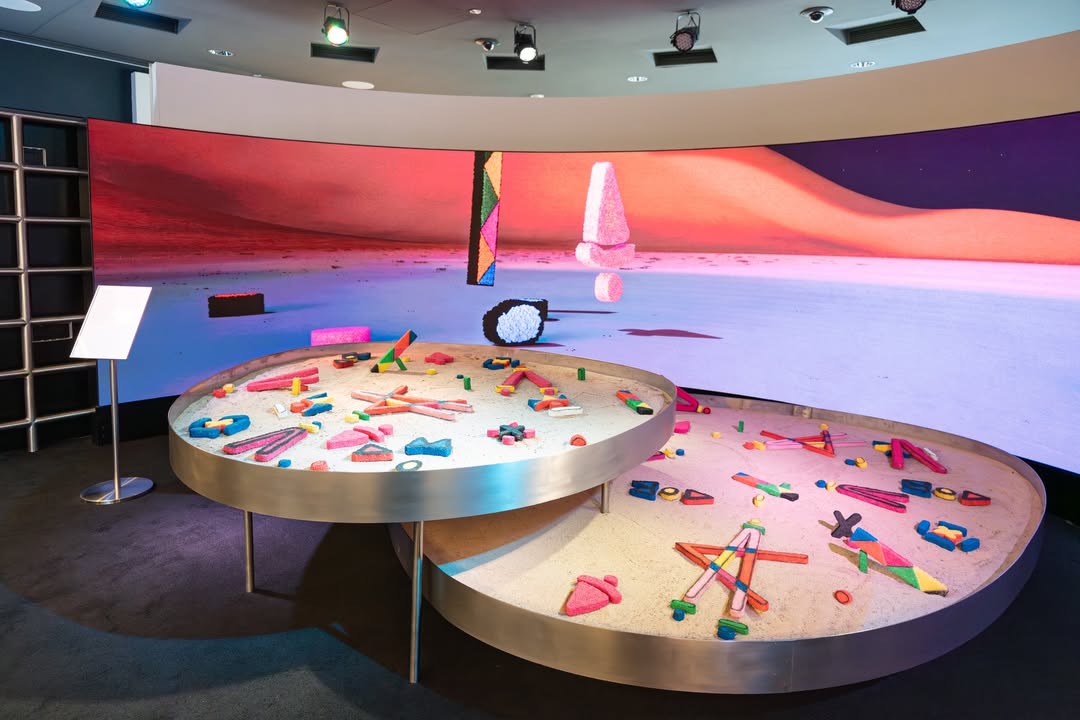
The exhibition’s spatial structure draws on another layered system: Earth’s atmosphere. Visitors move through conceptual zones inspired by atmospheric strata, from the dense troposphere to the satellite-filled thermosphere. These layers serve as metaphors for different forms of pressure, aspiration, and connectivity shaping contemporary Gulf societies. At one level, the framework references infrastructure, communication systems, aviation, and space ambitions: fields in which Gulf nations have invested heavily. At another, it suggests invisible systems of governance, commerce, and media that organise daily life.
The participating artists explore themes including migration, memory, labour, gender, architecture, surveillance, ecology, and speculative futures. Their works span film, photography, installation, digital media, sculpture, and new commissions created specifically for the exhibition.
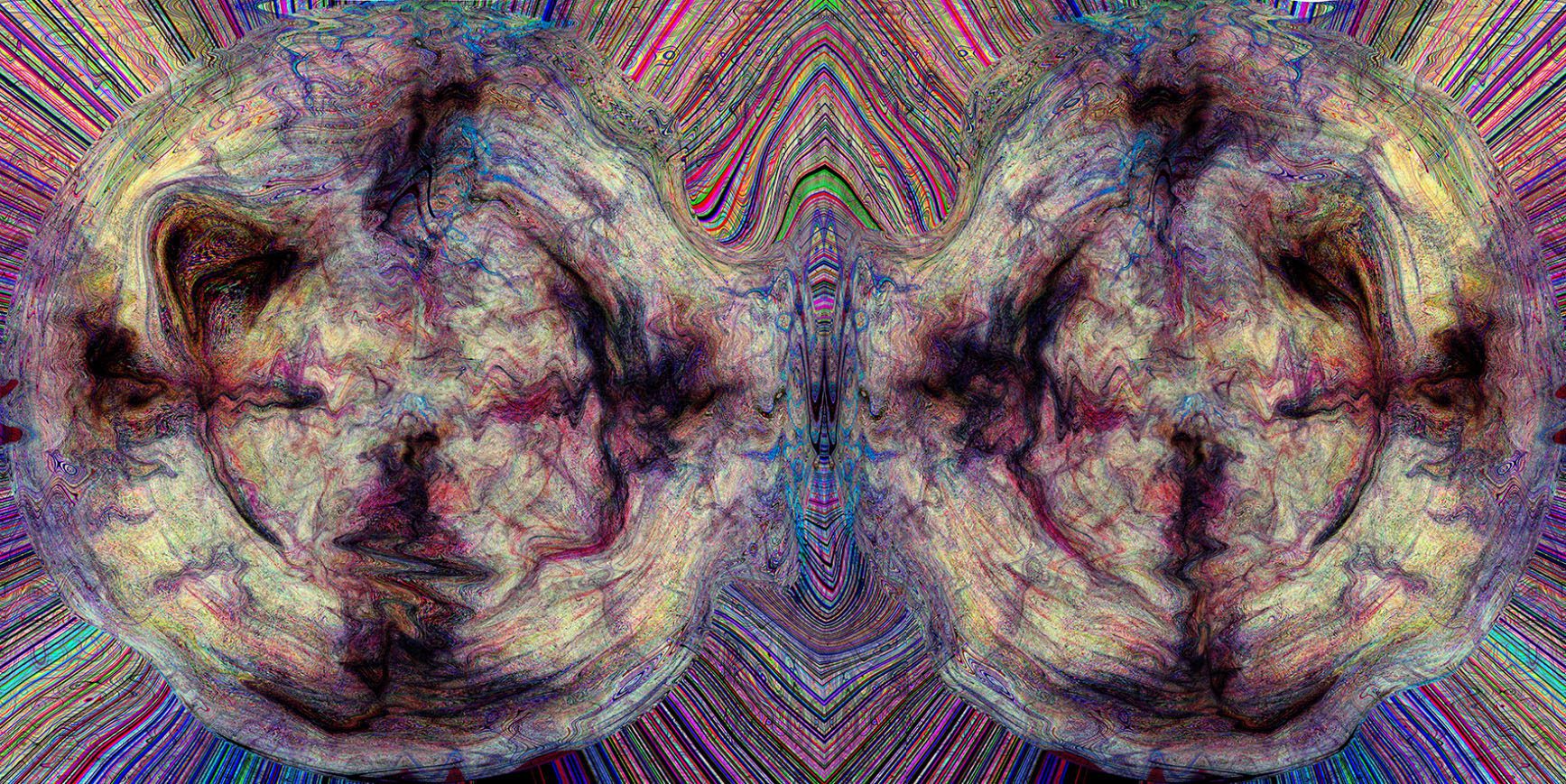
Among the featured creatives is Ayman Yossri Daydban (Saudi Arabia/Palestine), whose practice examines national symbolism through the lens of globalisation. Ahaad Alamoudi focuses on the history and representation of her homeland, Saudi Arabia, while Manal AlDowayan explores collective memory, archival absence, tradition, and the visibility of Saudi women through a multidisciplinary approach.
Also on display are works by Emirati artists Farah Al Qasimi, celebrated for her vividly saturated images that reveal the surreal qualities of everyday life in the Gulf and the United States, and Talal Al Najjar, whose work combines research, archiving, and distortion to produce speculative and often absurd reflections on postmodern existence. Saudi artist Sarah Abu Abdullah addresses gender roles and female experience while reflecting on the broader social and cultural conditions of Saudi Arabia.
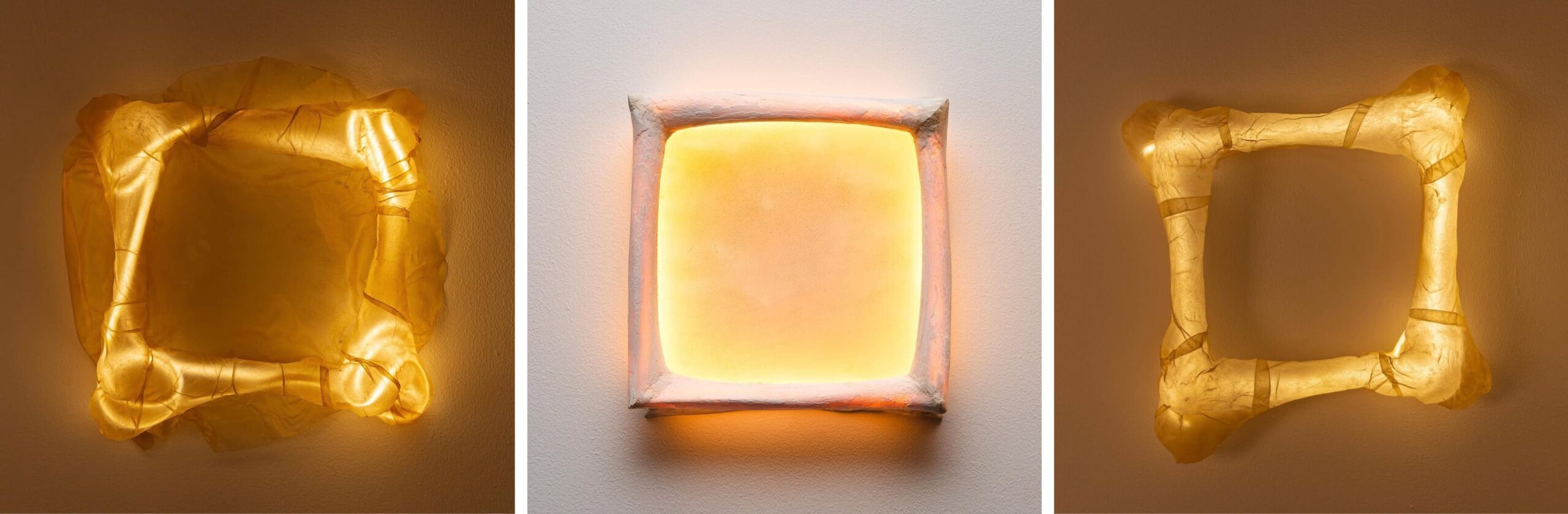
Zahrah Alghamdi, also from Saudi Arabia, investigates cultural identity, memory, history, and loss through references to traditional architecture. With embodied memory at the centre of her practice, she works with natural materials such as soil, clay, pebbles, and leather, employing traditional methods to create site-specific installations.
Other featured artists include:
- Ahmad Makia and Sheikh Maktoum Al Maktoum (UAE);
- Amna AlBaker, Fatima Mohammed, Tarek Darwish, and Voyyd (Qatar);
- Aseel AlYaqoub (Kuwait);
- Faisal Saeed Al Zahrani, Khaled Bin Afif, Lulua Alyahya, Nasser Al Salem, and Rashed AlShashai (Saudi Arabia);
- Larissa Sansour (Palestine);
- Sarah Aradi (Bahrain) and Eman Ali (Oman/Bahrain).
Importantly, What’s between, between? is not a conventional technology exhibition, despite its interest in futurity. It examines who benefits from progress, who is excluded, and what is lost in periods of rapid change. It also challenges the notion that the future is a single destination toward which all societies move uniformly. Instead, the show argues that futures are plural: shaped by class, geography, memory, labour, and power. Different people experience the future differently, even within the same city or nation.
This critical perspective aligns closely with the mission of Northwestern University in Qatar and its museum, which often bridges academic research, media studies, and public engagement. A bilingual publication accompanies the exhibition, featuring essays, dialogues, and reflections on Gulf futures from artists, writers, and scholars. Public programming includes curator-led tours, workshops, and discussions designed to expand the exhibition’s themes beyond the gallery walls.
To get more information What’s between, between?, please visit the exhibition’s official web page.
You might also be interested in visiting Of Land and Water: Works from SAF Collection and Hotel Aporia by Ho Tzu Nyen.
To stay connected with the latest art news, you should follow our Telegram channel.


