Artbooth Gallery presents Reimagined, a solo exhibition by Palestinian-Syrian-Dutch artist Oussama Diab. Open until 31 October 2026, the show features a series of reinterpretations of famous works by Pablo Picasso, Vincent van Gogh, and Anthony van Dyck, among others. Diab transforms familiar compositions through a visual language shaped by personal experience, political upheaval, and an enduring belief in humanity.
The exhibition represents the culmination of a project that has occupied the artist for more than a decade. Diab says that the Reimagined series began in 2013 with the New Guernica mural. Thirteen years later, the project arrives in Abu Dhabi as an extensive body of work that connects different periods of art history with the urgent questions of the present.
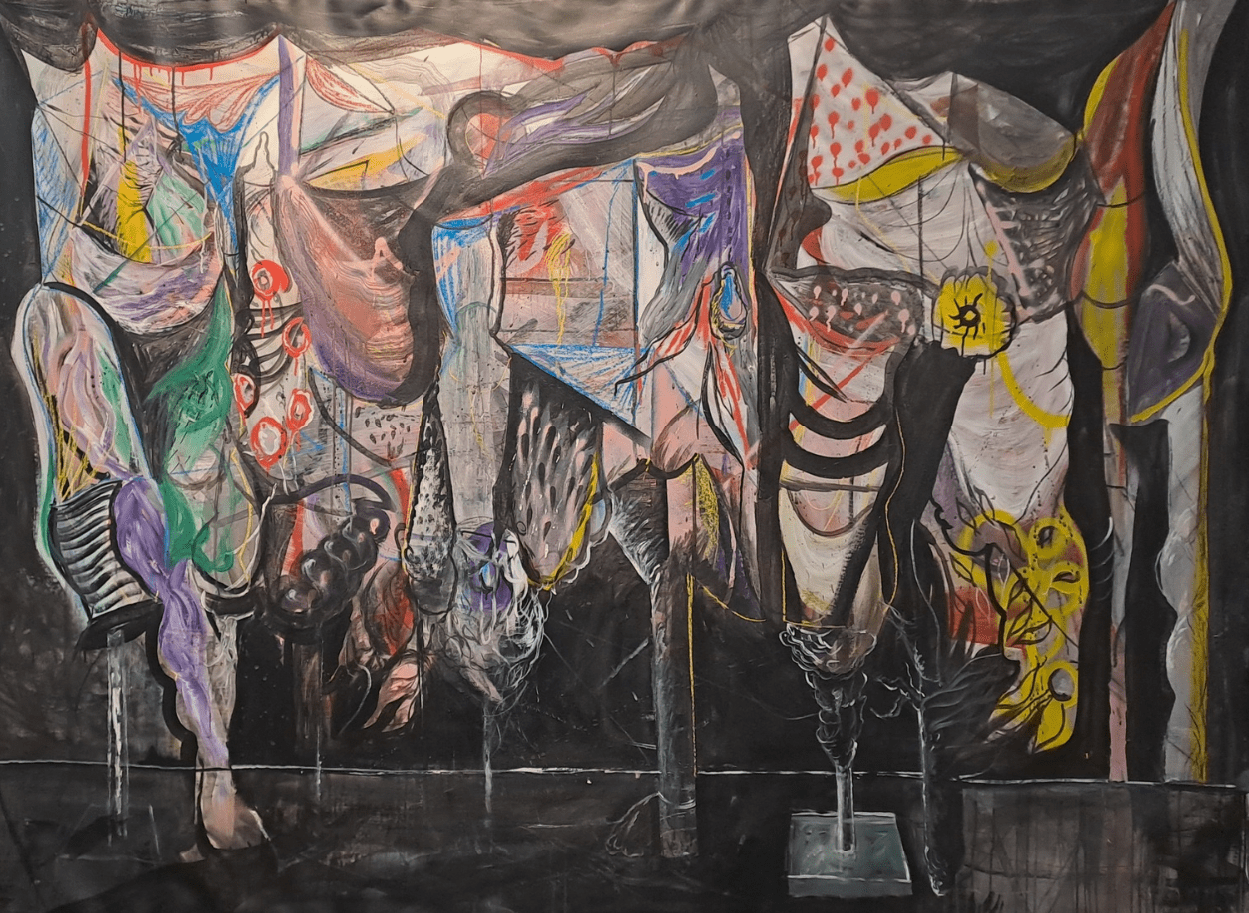
One of the central artworks on view is Middle Eastern Guernica (2026). Inspired by Picasso’s Guernica (1937), it revisits one of the 20th century’s most influential artistic responses to the violence of war. Diab’s experience of a region marked by conflict and displacement informs his engagement with the subject, allowing him to approach the anti-war masterpiece as an image whose message remains relevant. The reinterpretation connects different experiences of violence. It suggests that the hardship represented in art cannot be confined to a single place or historical moment.
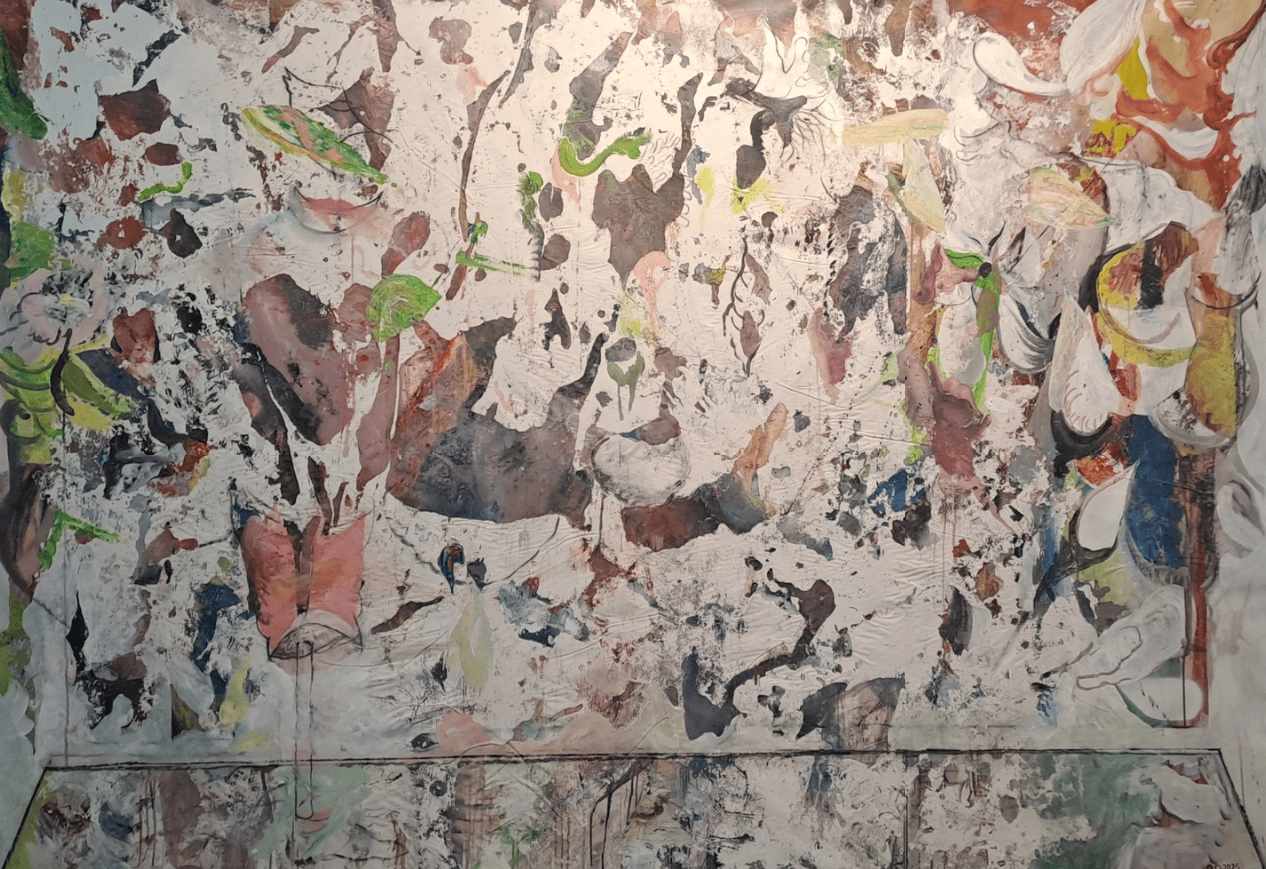
Diab’s painting La Coiffure After Picasso (2026) draws on another aspect of the Spanish artist’s visual legacy. Here, the act of reinterpretation offers a different way of examining how an established image can be reworked and given new meaning. Diab approaches art history as an evolving visual vocabulary, open to reinterpretation across generations and cultures.
The exhibition also turns to the work of Flemish Baroque painter Anthony van Dyck. Diab’s Moses and the Serpent (2024) and Samson and Delilah (2026) are inspired by the dramatic compositions and biblical narratives associated with the earlier artist. These references introduce another dimension to Reimagined: the transformation of historical and religious imagery through a contemporary perspective.
The works bring together distinct artistic traditions, from modernism’s expressive fragmentation to the theatricality of Baroque painting. By revisiting these images, Diab creates space for new associations between their original narratives and what audiences experience today. His approach is less concerned with faithful reproduction than with exploring how established visual forms can communicate across historical and cultural boundaries.
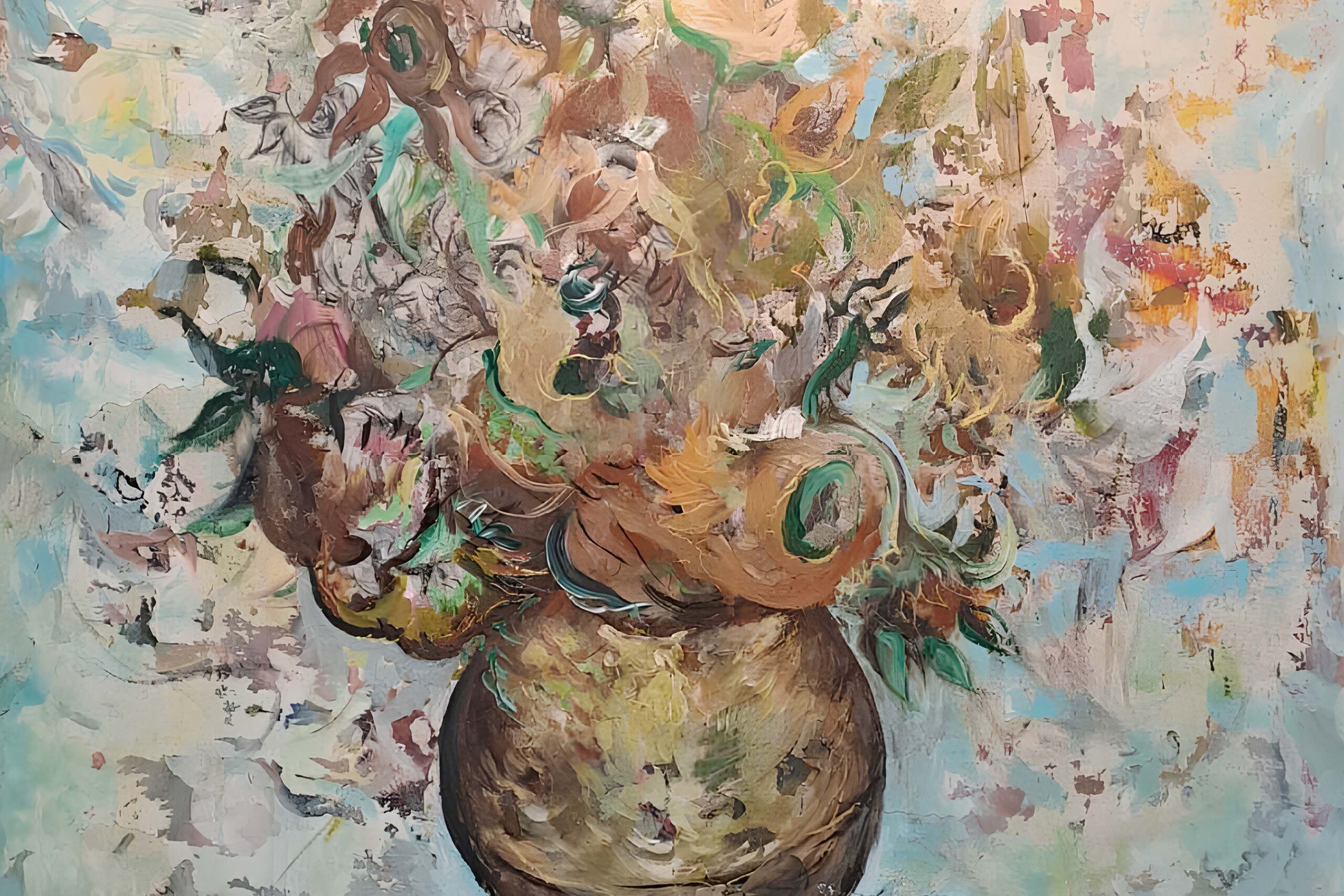
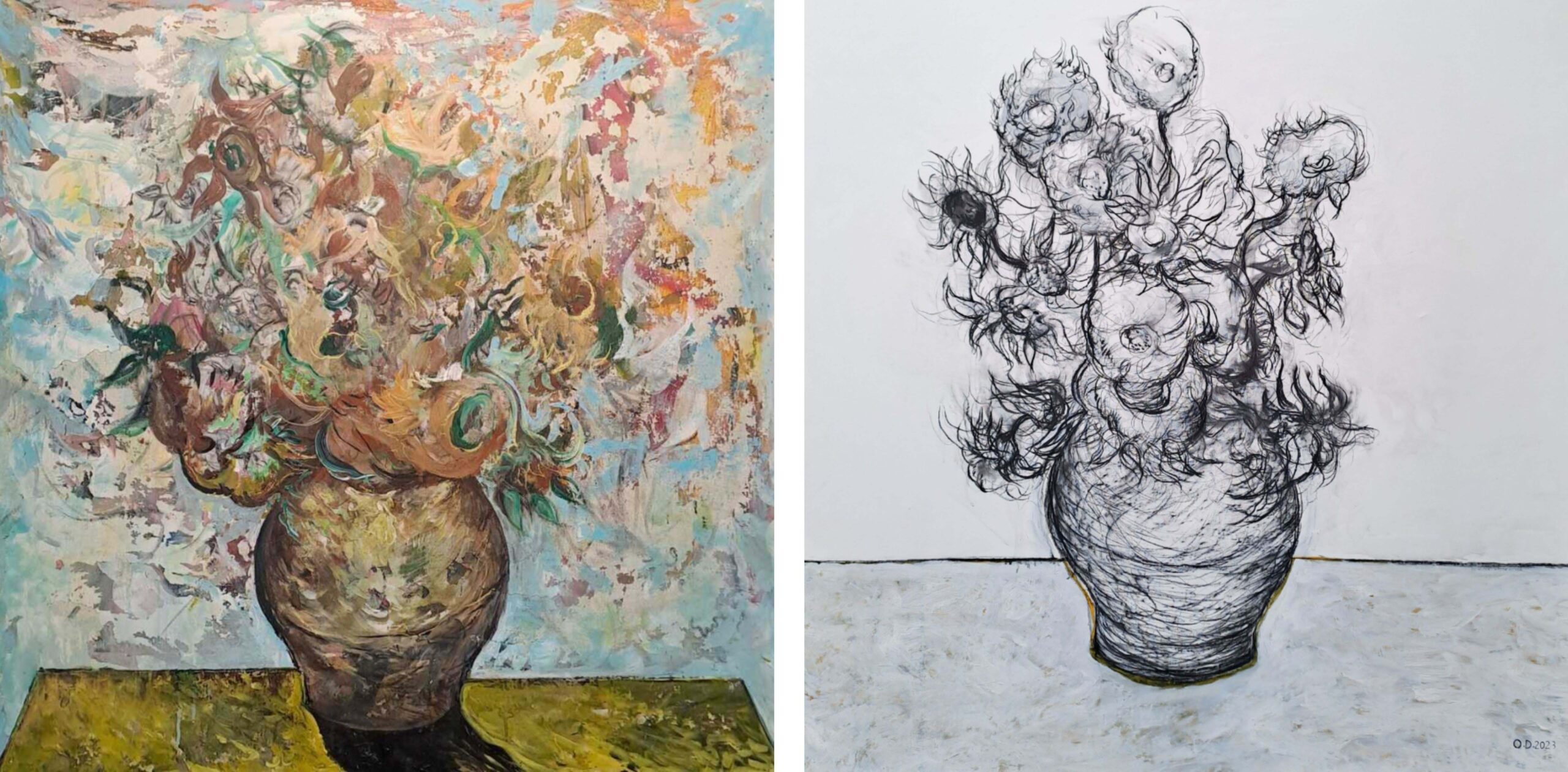
Also on display are Diab’s two sunflower paintings, inspired by Van Gogh’s iconic series; they offer a counterpoint to the anguish of Guernica and the dramatic narratives drawn from religious painting. Together, the references to Picasso, Van Dyck, and Van Gogh reveal the breadth of Diab’s engagement with art history, encompassing various approaches to composition, emotion, and the representation of human experience.
By returning to images that have circulated across generations, Diab considers how their meanings change when viewed through different lived experiences. A painting created in response to one historical crisis may acquire new urgency when encountered in another context; a familiar religious narrative can become an opportunity to reflect on vulnerability or survival.
At the same time, the exhibition does not rely exclusively on tragedy. The sunflower paintings introduce a contrasting register, while revisiting these masterpieces suggests that artistic traditions remain open to renewal. The past is neither discarded nor treated as untouchable: it becomes a starting point for creating new connections between people, places, and historical moments.
All in all, Reimagined proposes that art history is not a closed archive of established images but an ongoing conversation. Through expressive brushwork, dynamic compositions, and emotionally charged colour, Diab brings familiar subjects into dialogue with contemporary experience. His reinterpretations invite visitors to look beyond the recognition of celebrated images and consider what they might mean now, particularly in a world shaped by displacement, conflict, and the search for a sense of belonging.
About the artist
Oussama Diab (b. 1977, Damascus, Syria) graduated from the Faculty of Fine Arts at Damascus University in 2002. His practice developed across the Middle East, particularly Syria and Lebanon, before he moved to Europe in 2015. He subsequently settled in the Netherlands, where his experiences of migration and displacement continued to inform his work.
In his work, the artist explores the human consequences of political conflict, the instability of identity, and the relationship between personal memory and collective history. His paintings combine recognisable figures with symbolic imagery, decorative patterns, and references to pop culture. The resulting compositions occupy a space between figuration and abstraction, creating suggestive narratives.
Diab’s approach is also notable for its stylistic versatility. He adapts his painting style to the concerns of individual series. Historical references and familiar images become tools for examining contemporary social and political realities. This allows him to address difficult subjects without limiting his work to straightforward documentary representation.
Diab has presented his artworks in multiple exhibitions, which include Art Cairo (Grand Egyptian Museum, Cairo, Egypt, 2026); Surrealistic Dream (solo) (Sanaa Gallery, Utrecht, Netherlands, 2025); Syria Off Frame (Fondazione Giorgio Cini, Venice, Italy, 2015); and Fluid Forms II (Samsung Blue Square, Seoul, South Korea; Busan Museum of Art, Busan, South Korea, 2014), among others. His accolades include the Jury Prize in the 3rd Young Artist’s Exhibition (Ayyam Gallery, Dubai, 2002) and two grants from Mondriaan Fonds (Netherlands).
To learn more about Reimagined, please go to the exhibition’s official web page.
In addition, you might also be interested in visiting Unseen Script, a group exhibition at RAi, and the Isra Arabesque Gallery.


