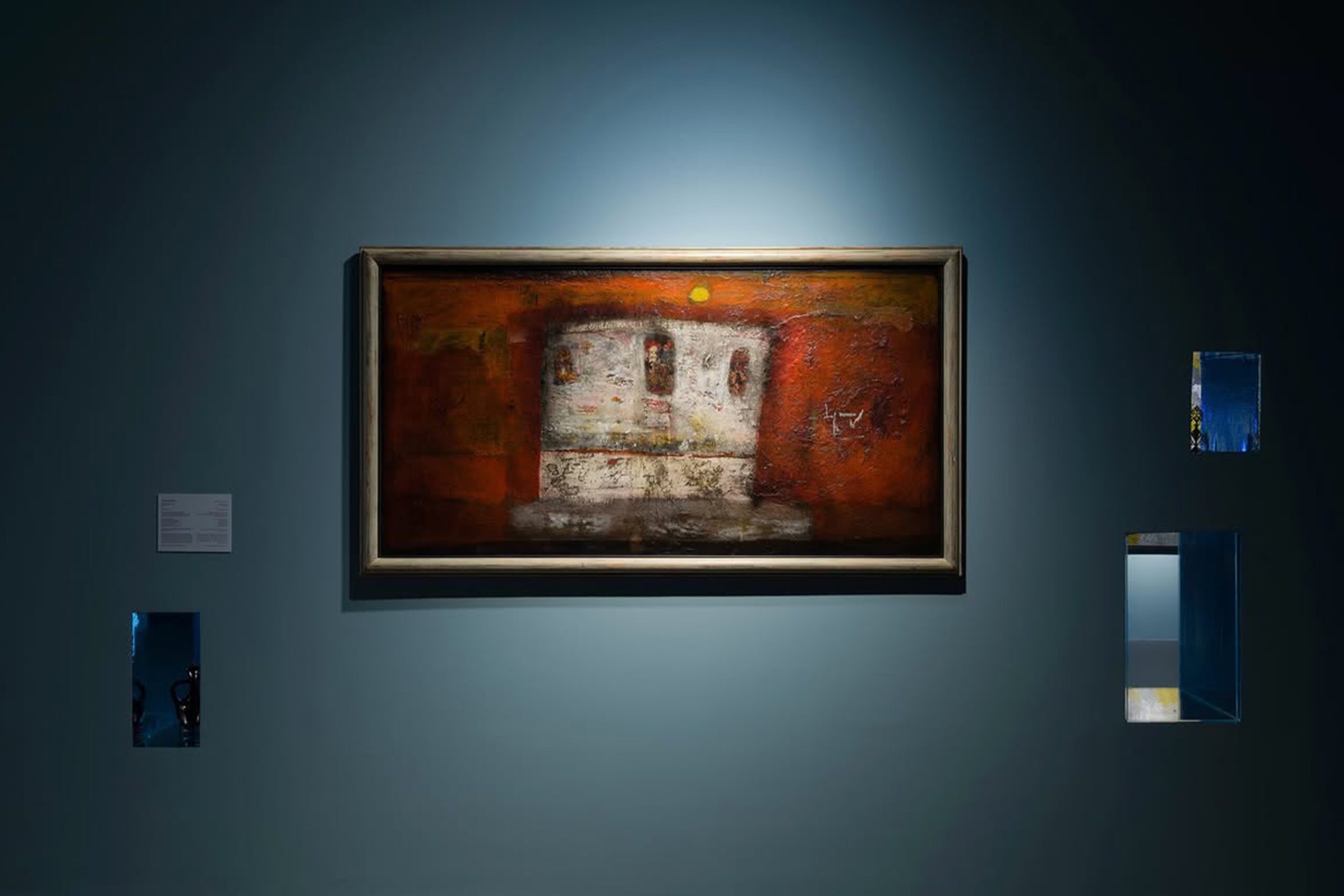
On display at the Hayy Arts gallery in Hayy Jameel, Red Wind, Coral Worlds examines the Red Sea as a meeting point of histories, cultures, communities, and ecological systems. This collective exhibition moves beyond conventional geographical boundaries to explore the relationships formed through centuries of trade, pilgrimage, migration, and displacement. Curated by Huda Tayob and Miriam Hillawi Abraham, the show will end on 26 October 2026.
Rather than treating the Red Sea as a body of water separating neighbouring territories, Red Wind, Coral Worlds situates it within a wider oceanic network connecting East Africa, the Arabian Peninsula, the Indian Ocean, and the Gulf. The exhibition traces the movement of people, materials, ideas, and cultural traditions across these regions, spotlighting the stories that conventional historical narratives have often overlooked.
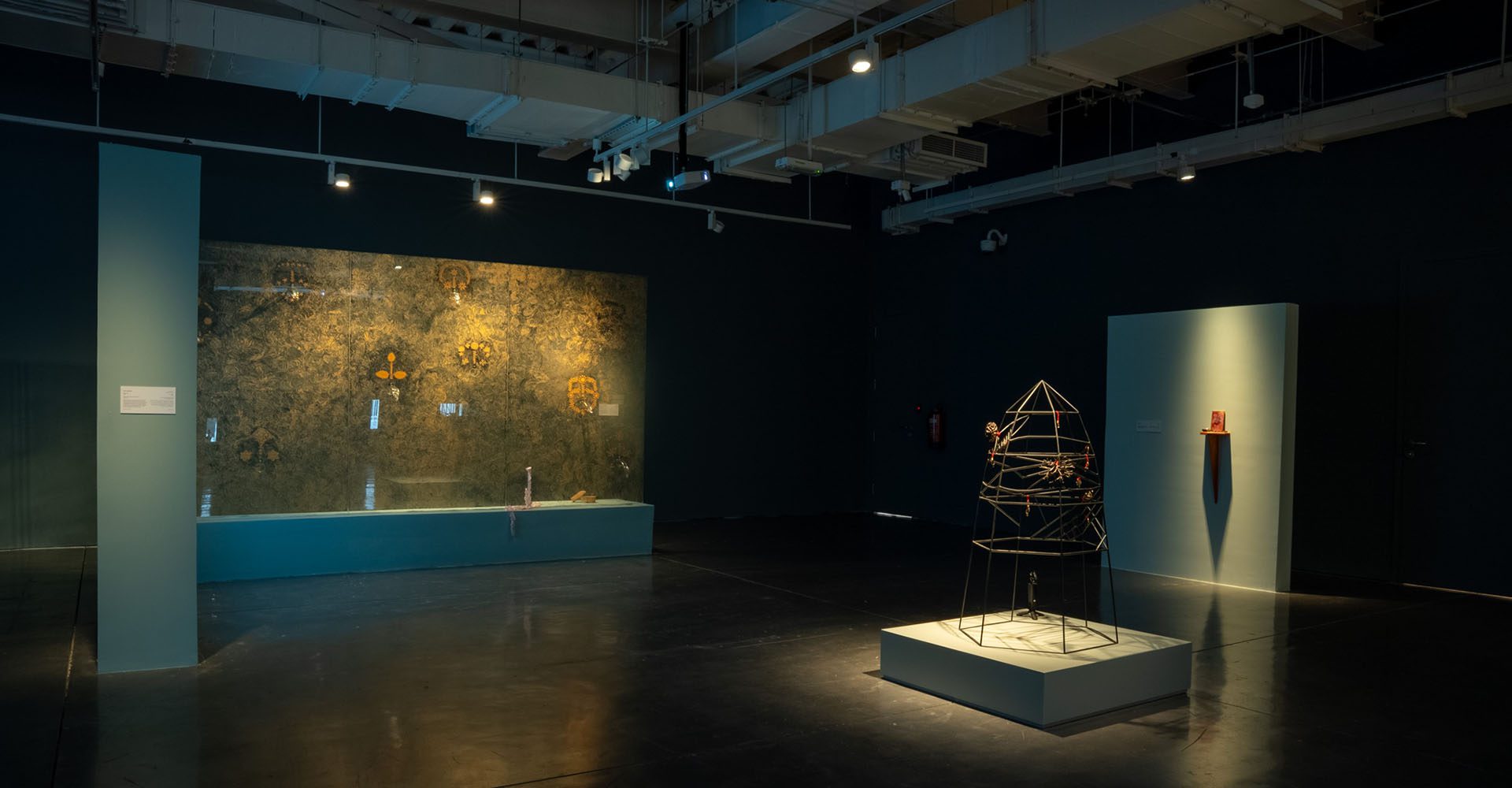
A central concern of Red Wind, Coral Worlds is the relationship between historical events and their lasting traces. Trade, pilgrimage, enslavement, and scholarly exchange are explored not only as large-scale historical processes but also through the objects, gestures, and sensory experiences that remain in their wake.
The emphasis on sensory knowledge broadens the ways history can be understood. Memory does not reside exclusively in written documents or monumental structures; it can also be carried through music, material culture, ritual, and oral transmission. By bringing these forms of knowledge into an exhibition space, the curators invite visitors to consider how the past persists in the present, including through practices whose origins and meanings may have been obscured over time.
The show’s material and spatial approach reinforces this perspective. Working across different scales and textures, the artists engage with residue, scent, and sound, placing contemporary works in dialogue with historical and found objects. This arrangement allows different temporalities to coexist: the ancestral and the contemporary, the everyday and the ceremonial, the intimate and the oceanic.

Among the participating creatives (18 in total) are Saudi multidisciplinary artists Abeer Sultan and Basmah Felemban. Sultan explores themes of identity, introspection, and the body as a site of transformation. Her work employs abstraction, material experimentation, and gestural forms to process grief, isolation, and the search for grounding in a shifting world. Basmah Felemban’s practice engages with cultural memory, identity, and the ways inherited narratives can be reinterpreted through contemporary visual language.
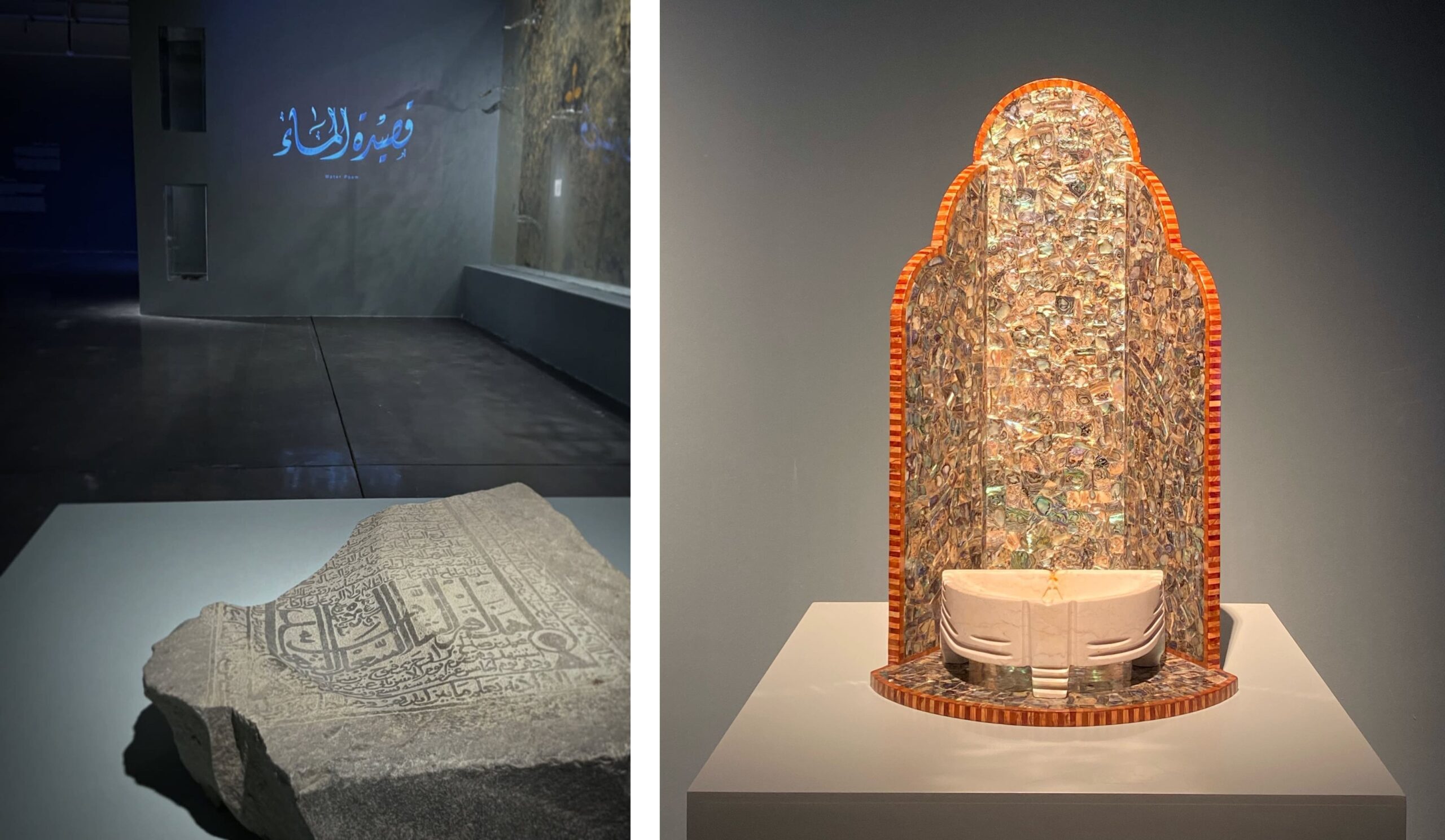
Palestinian artist Dima Srouji, whose work investigates archaeology, architecture, and contested histories, offers another perspective on the relationship between material remains and the stories they carry. Her practice considers how objects and built environments can reveal the political and cultural forces that shape collective memory. Srouji contributes Anointed Shrine 4 (2025), an artwork from her eponymous series of carved, iridescent structures inspired by those in her grandmother’s home.
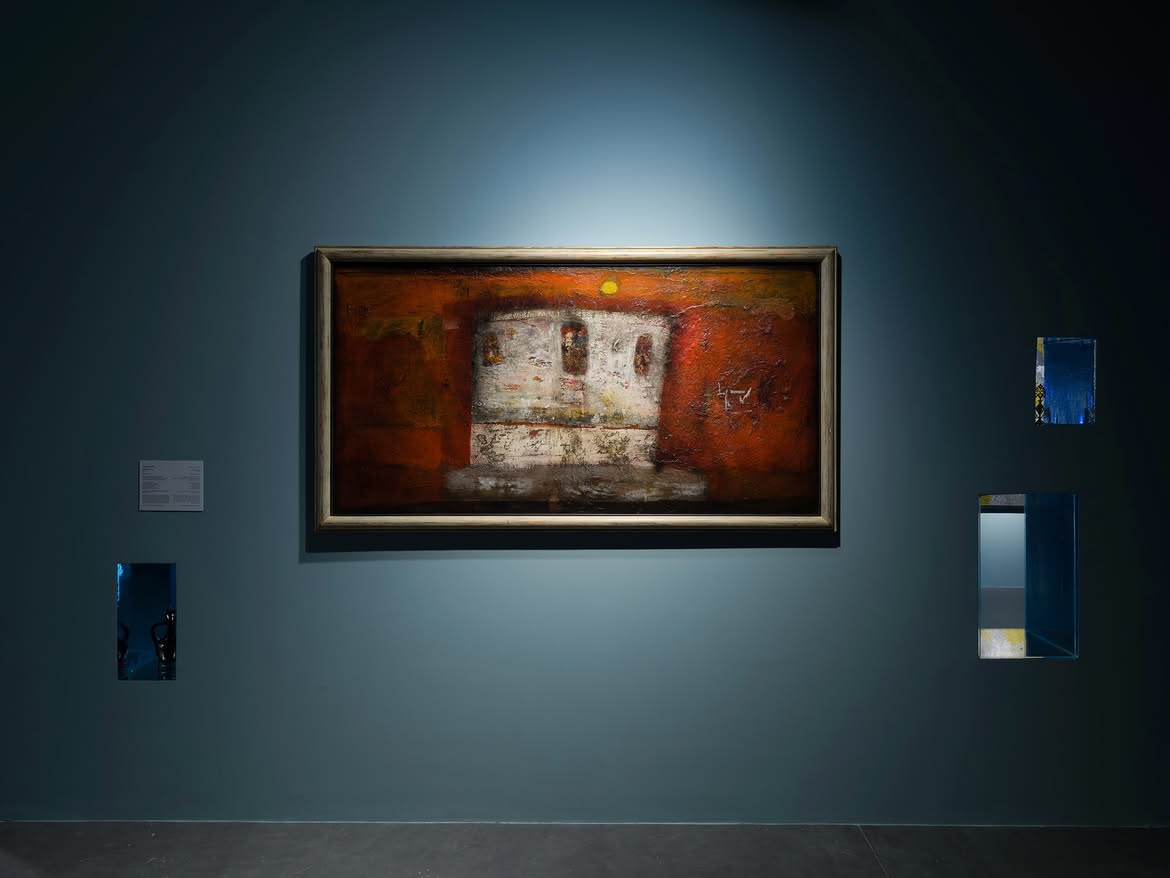
Also on view is MM of North Wind (1960), an oil painting by renowned Sudanese filmmaker, artist, and poet Hussein Shariffe (1934–2005). His multidisciplinary career connected visual experimentation with Sudanese cultural and political histories, while his later films explored themes of exile and displacement.
Saudi artist Sarah Alabdali, meanwhile, explores the cultural heritage of the Hijaz, a western region of Saudi Arabia. Her practice, inspired by Arab culture, Islamic philosophy, and traditional crafts, uses historical research and material culture to examine identity, belonging, and histories that have been overlooked or marginalised. She presents Water Poem (2023), a video installation created in collaboration with Hamida Issa that connects the Red Sea’s maritime history with personal grief and the fragility of historical memory.
The exhibition also features works by artists such as Henok Melkamzer (Addis Ababa, Ethiopia) and Mustafa Saeed (Somaliland). Melkamzer is the leading contemporary artist of telsem, an ancient Ethiopian talismanic art form that incorporates elements of astrology, religion, and spirituality. Meanwhile, Mustafa Saeed, whose practice spans photography, graphic design, and sound, addresses sociopolitical issues, conflict, and the environment.
Other participants are Ameena Aljerman Alali (UAE), Gouled Ahmed (Djibouti) and Asmaa Jama (Somalia), Hashim Nasr (Sudan/Egypt), Hoda Afshar (Iran), Joseph Kamaru (Kenya), Madiha Sikander (Pakistan), Myriam Omar Awadi (France/Comoros), Rund Alarabi (Sudan), Sara Abdu (KSA/Yemen), and Shiraz Bayjoo (Mauritius/UK). Together, they represent varied approaches to the histories and environments of interconnected coastal and oceanic worlds.
Sound is an important dimension of the exhibition, extending its investigation beyond visual representation. Its accompanying Hayy Sounds programme, developed in collaboration with Frequency Room, presents listening stations and a photo display exploring sonic histories and musical encounters across the extensive geography of the Red Sea.
The programme includes Rotations of Bismillah, curated by music journalist, DJ and researcher Atiyyah Khan; Index of Edges – Watery Stories, featuring more than 20 artists; Ibtihalat by sound artist Mhamad Safa; and a selection of recordings released by Ostinato Records, including albums that explore musical traditions from Somalia and Sudan. These materials foreground forms of cultural expression that can travel across borders and generations without necessarily being captured by conventional historical records.
Red Wind, Coral Worlds presents the Red Sea as a living environment shaped by both human movement and ecological exchange. The show suggests that the histories of the region cannot be understood through isolated national narratives alone. Instead, they must be approached through the currents, encounters, and enduring connections that continue to bind its shores together.
To learn more about Red Wind, Coral Worlds, please visit the exhibition’s official web page.
Additionally, you might be interested in viewing Artists’ Rooms: Kamarulzaman Shadhin and Photographic Encounters along the Gulf Coasts.


