NIKA Project Space presents Infrared, a meditative exhibition that features four UAE-based artists: Amna AlMemari, Lubnah Ansari, MG (Sue Ng), and Andrew Riad. It focuses on the act of looking and the ways observation can transform what, and whom, it encounters. Curated by Rahel Aima, the show runs until 31 October 2026 and presents new projects developed during the 2nd edition of NIKA’s Open Studio programme.
Rather than asking artists to respond to a predetermined theme, NIKA’s Open Studio invited them to continue developing investigations proposed in their original applications. From June through August, the gallery became a working studio, and visitors were allowed to encounter the artists and their projects while they were still evolving. Infrared, the resulting exhibition, places artistic process alongside the finished works and brings together four practices that approach questions of memory, language, identity, ritual, and spectatorship through very different materials.
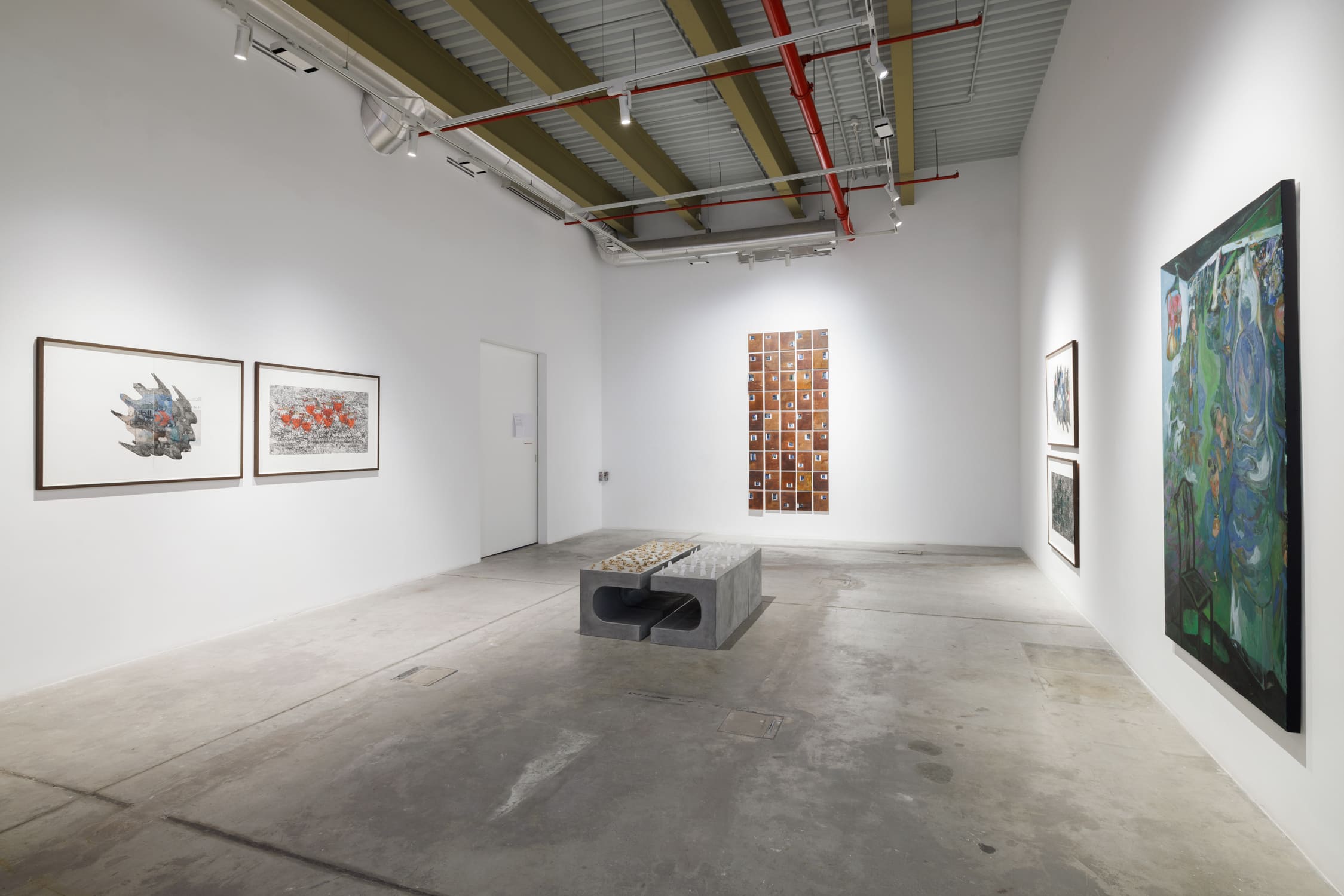
A central idea in Aima’s curatorial framework is the observer effect: the notion that observation does not necessarily leave its object unchanged. In Infrared, looking becomes reciprocal. The exhibition moves between being watched, watching others, and becoming conscious of oneself as an object of someone else’s gaze. Surveillance appears in several forms: from the intimate experience of being observed by family or peers to the more abstract presence of the state or the divine. The gallery describes this as a feedback loop in which the knowledge of being seen can alter behaviour and internal states.
The exhibition is held together by recurring references to copper, which appears as both a colour and a physical substance. Its presence evokes the history of copper extraction in the Gulf while also connecting the artists’ different investigations.
Artist and researcher Lubnah Ansari investigates language, transliteration, memory, and political imagination. Her recent research project Mere Dil, Mere Musafir: Afterlives of Haq traces the migrations of the word haq (truth) across South and Southwest Asia. It considers how meanings mutate as words travel between languages, cultures, and historical contexts.
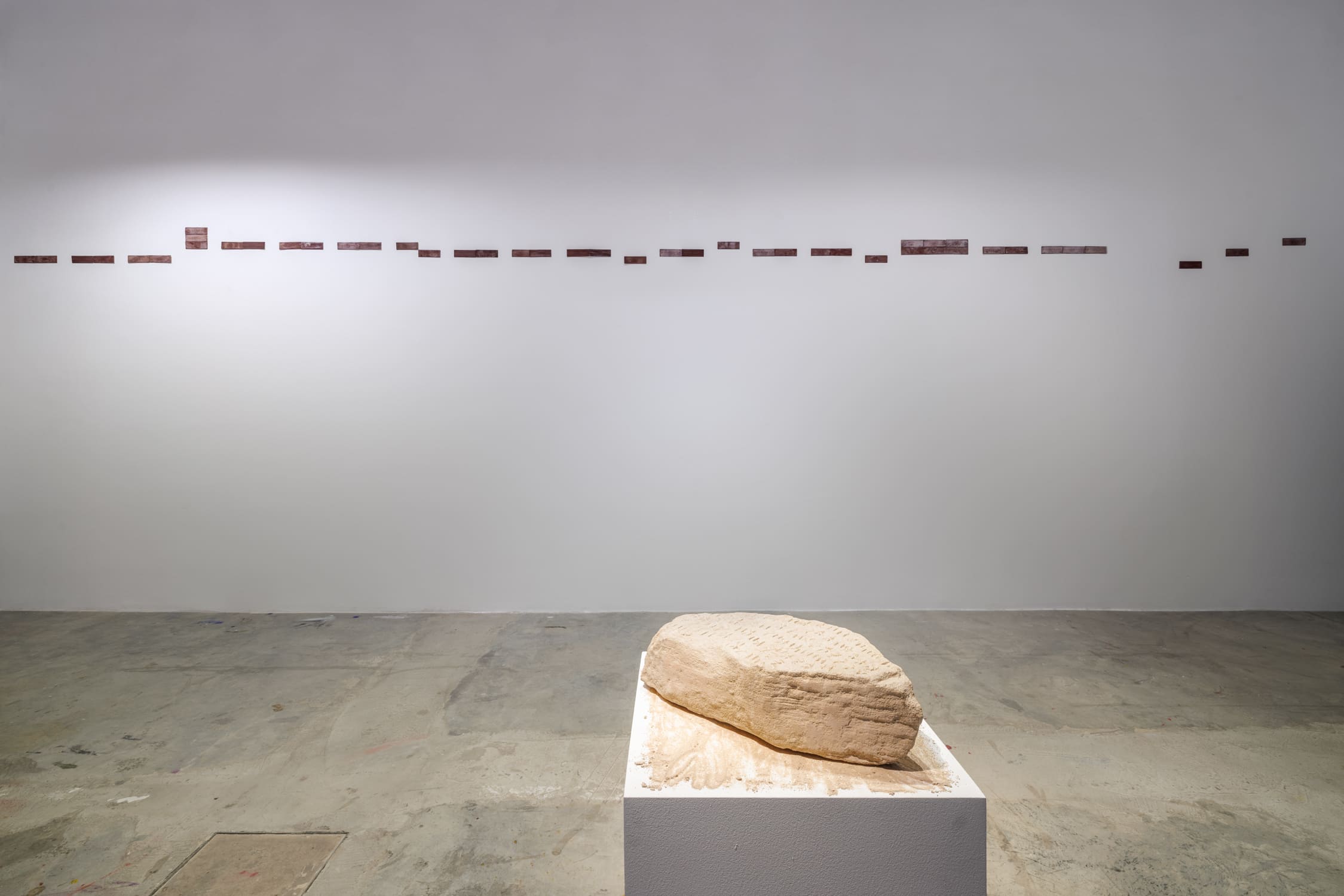
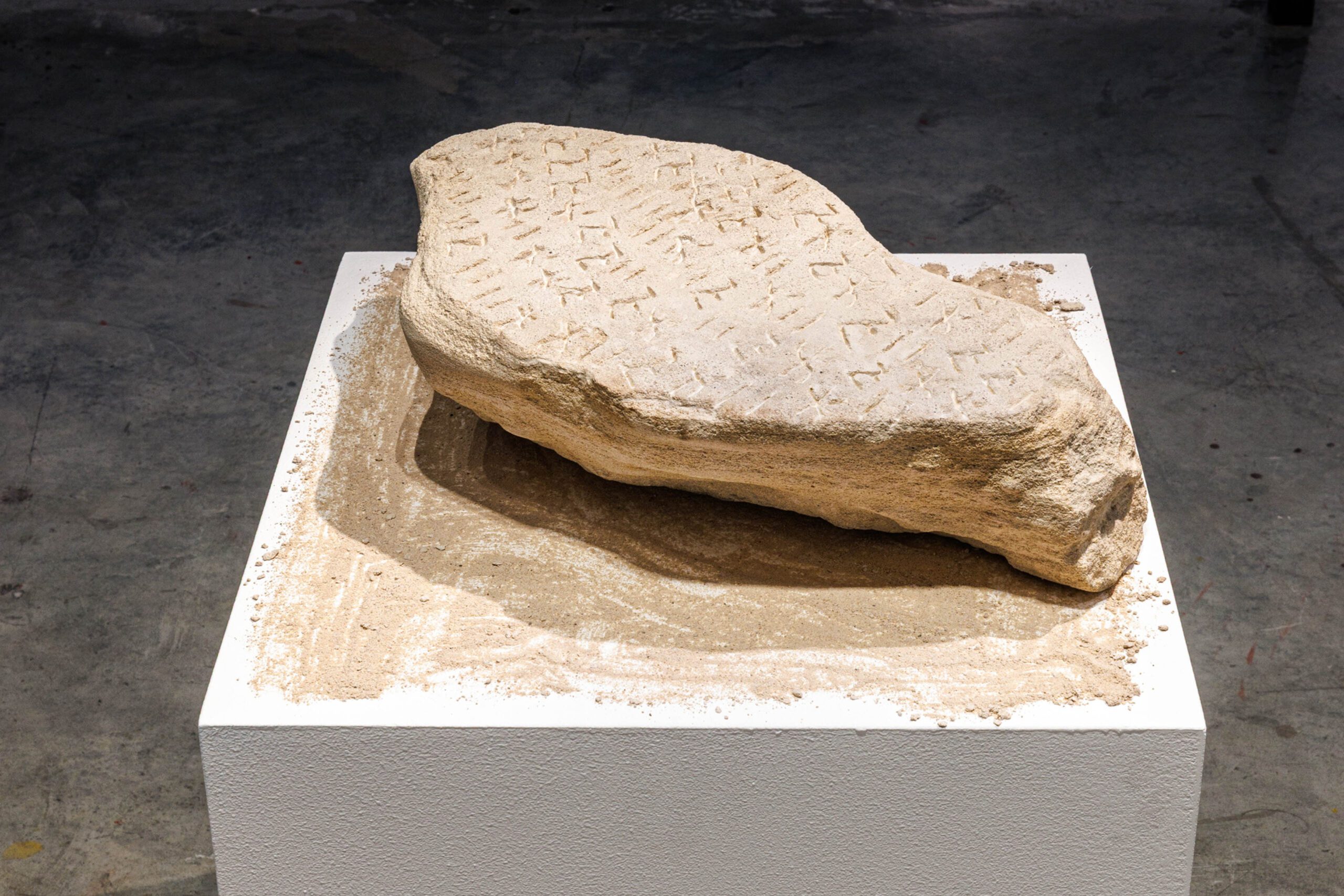
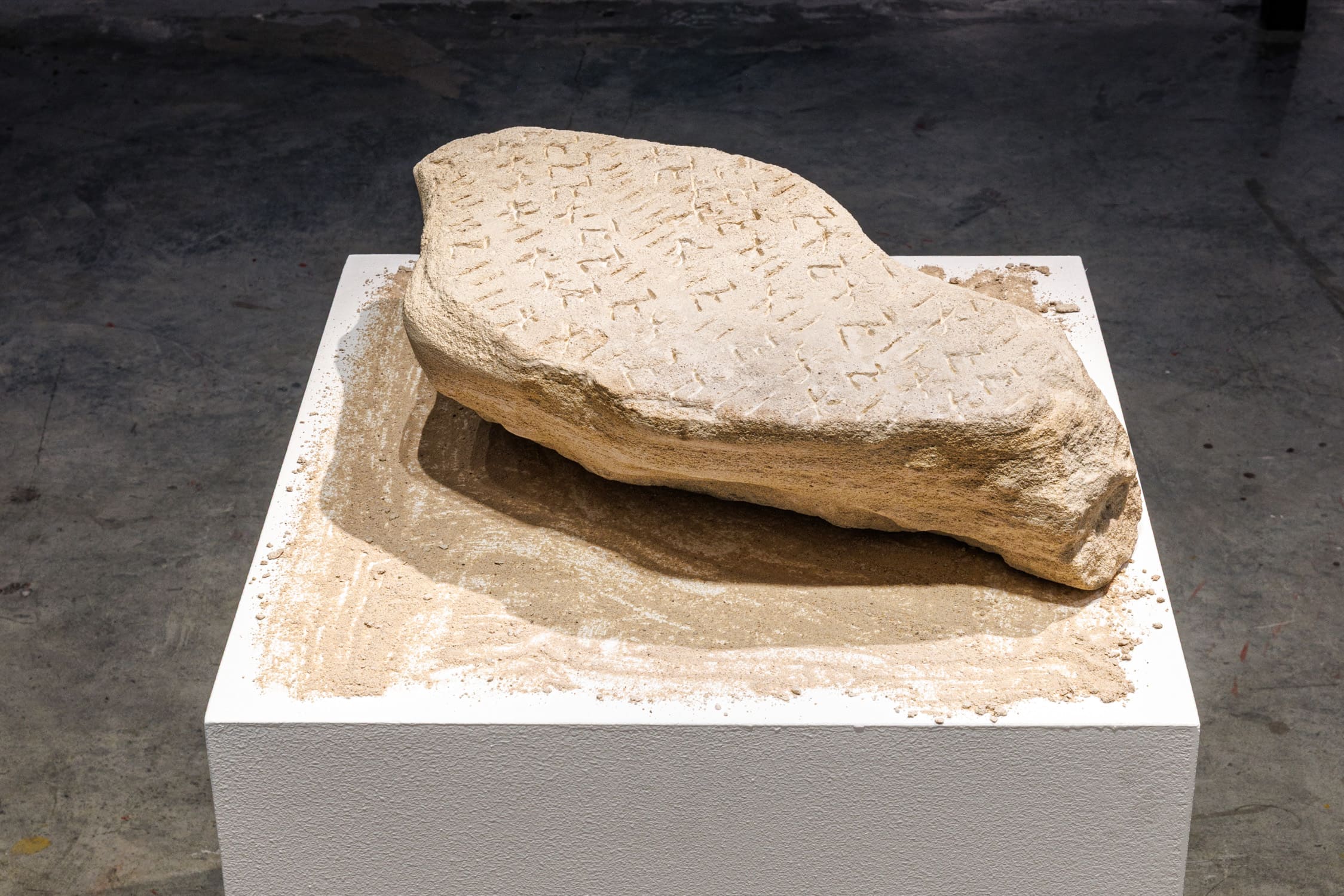
In Infrared, Ansari extends this research through sculpture, photography, video, and mixed media. Her Sand Scale (2026) photographs and resin-and-sand works Mere Dil Mere Musafir and Mere Zubaan Mere Musafir turn the tongue into a recurring image, linking speech, landscape, and material residue. In Wake of Haq (2026), she works with sandstone and an invented alphabet, leaving behind the physical residue produced by the act of inscription. Another work, JHARAJHARA (2026), is deliberately withheld from straightforward viewing: access is tied to a timed conversation with the artist.
Singaporean artist MG‘s practice examines how desire, identity, and psychological experience are shaped by interiors and systems of looking. For Infrared, she presents paintings from her ongoing Collecting the Collectors series, which enters the usually private interiors of art collectors. MG turns these rooms into psychologically charged environments populated by artworks, furniture, and objects.
The exhibition also includes The Apartment (2026), which imagines the domestic space of neighbours and the multitude of unseen stories that might exist behind its walls. In Collecting the Collectors, MG disrupts conventional perspective and composition and asks what happens when the supposedly peripheral details of an interior become central.
Coptic-Nubian-Egyptian multidisciplinary artist and poet Andrew Riad works across poetry, research, performance, archives, moving image, photography, and sound. Interested in language as ritual and gesture, he uses artistic research to revisit marginalised or suppressed histories.
For Infrared, Riad turns to ancient Egyptian mythology, Coptic traditions, and the history of copper. The figure of Hathor, a goddess associated with music, dance, copper mining, and the passage between life and death, becomes a central reference. Riad’s installation combines sculpture, painting, text, and ritual gesture, incorporating materials like copper, dried roses, milk, and rosewater. Works such as Coptic Burial (2026), Sistrum (2026), Metallurgy (2026) and HATHOR (2026) explore the relationship between material objects, language, and embodied ritual.
Riad’s interest in the survival of language also appears in DANCE! (2026), a video poem, and in the performance Impermanence (To Continue Dancing), presented at the exhibition opening in collaboration with Anthony Girgis and Ren Martin. Together, these works connect the voice, the body, and movement to the question of what survives when a language or ritual is considered obsolete.
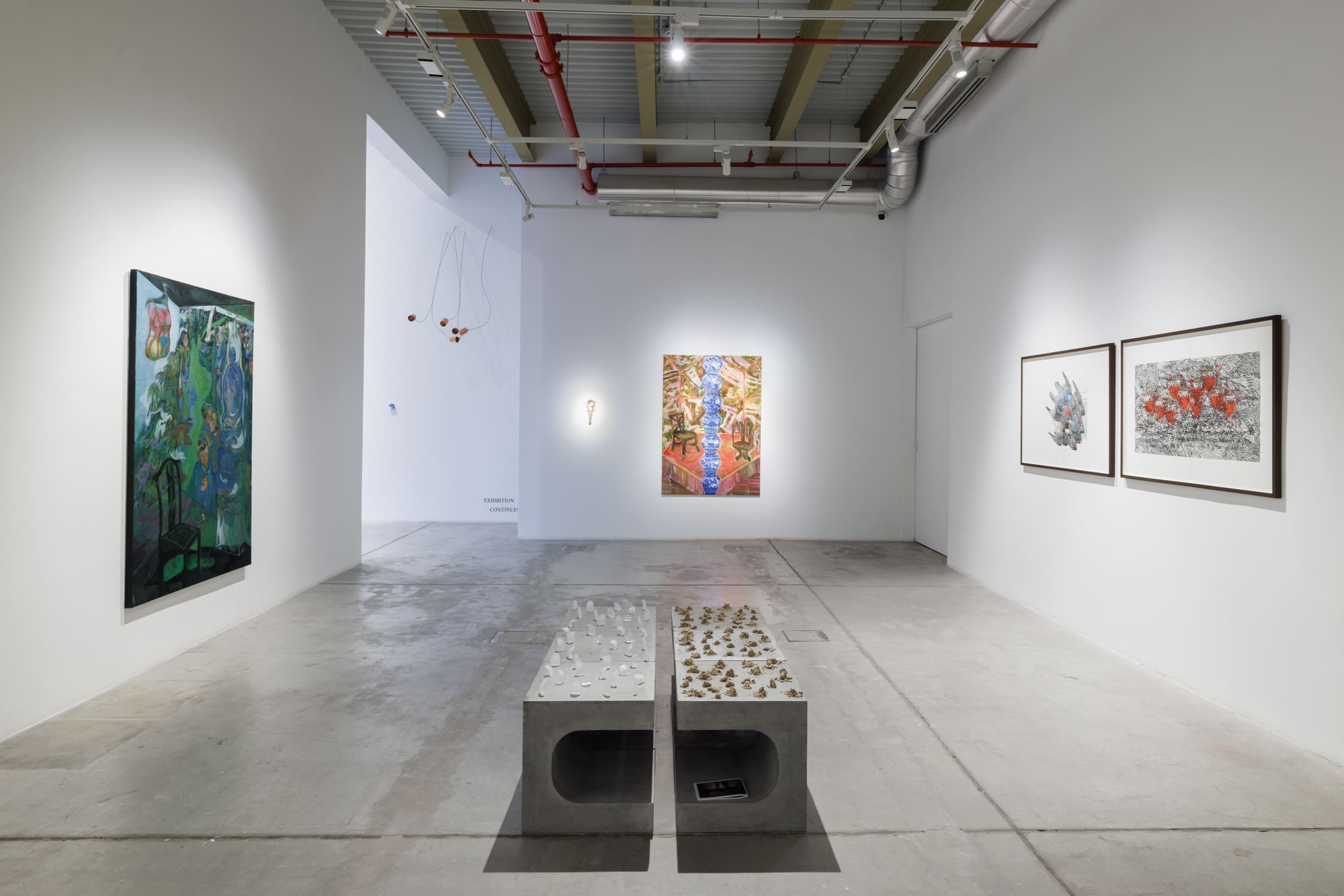
Emirati artist Amna AlMemari‘s practice draws on embodiment, Sufi traditions, Islamic mysticism, and the relationship between body and spirit. She contributes a new chapter of her Tarflowers series that imagines fictional ecologies shaped by the transformations brought to the Arabian Peninsula by oil.
AlMemari combines photography, drawing, and mixed media to construct hybrid terrains in which camouflage becomes both a visual device and a form of protection. Fragments are layered until they become difficult to decipher. They resist straightforward classification and encourage the viewer to look more closely without necessarily revealing everything at once.
Infrared makes looking less a passive activity than a physical and psychological encounter. The show asks what changes when the observer becomes part of the observed and what might remain hidden in the space between the two.
To learn more about Infrared, please visit the exhibition’s official web page.
You might also be interested in visiting Precarious Beings by Hamad Almuzaini and Floating by Aaron Johnson.


