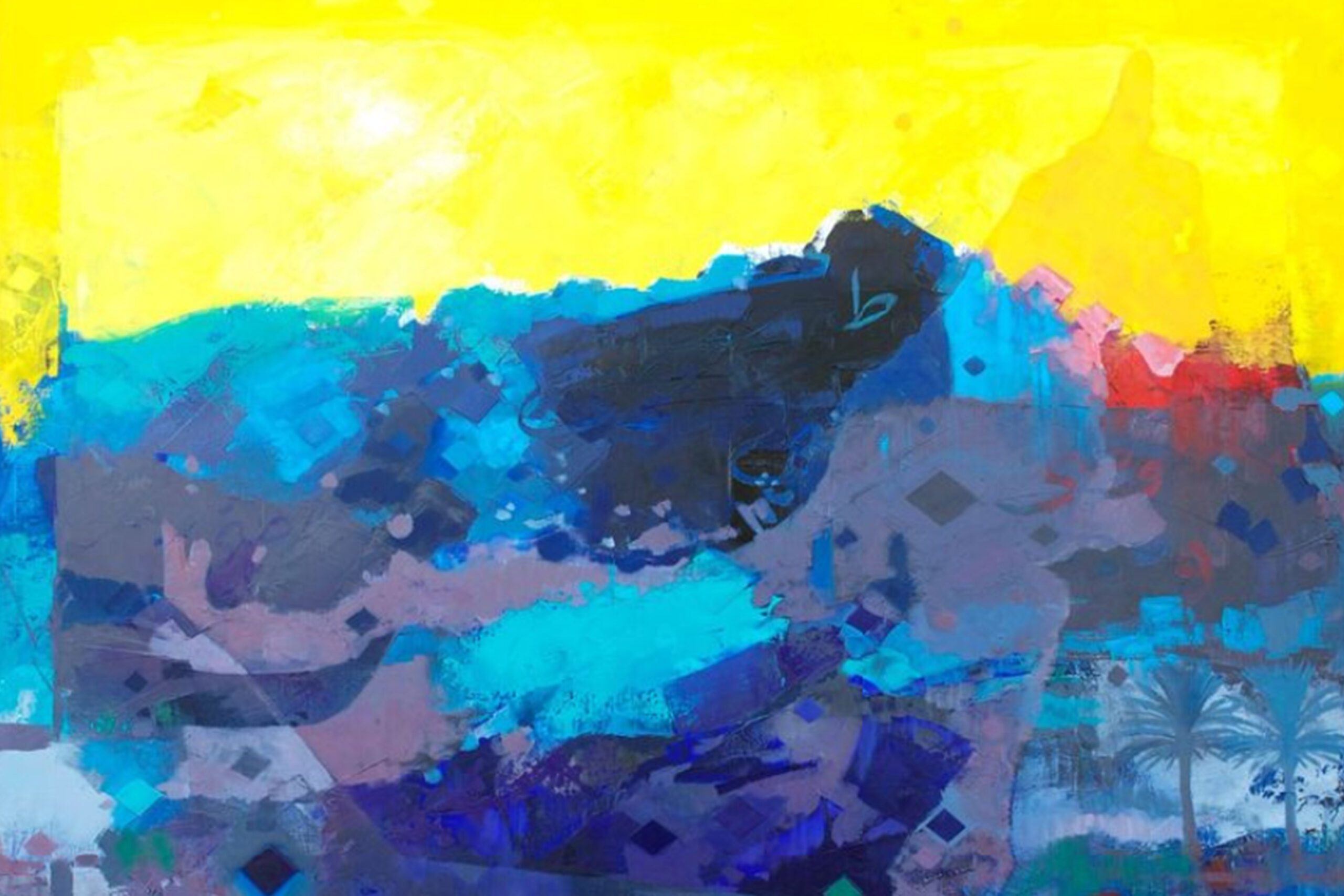
Opera Gallery Dubai is holding Al Nayed, a solo exhibition by Abdulqader Al Rais, one of the foundational figures of modern and contemporary art in the UAE. Open until 30 October 2026, the show brings together his artworks spanning more than five decades. Alongside significant works from Al Rais’s private collection, the exhibition includes newly produced pieces, offering a view of both his artistic legacy and his continuing practice.
Al Nayed explores how cultural memory can inform contemporary artistic expression. Al Rais’s paintings connect familiar architectural forms and natural environments with a modernist interest in colour, composition, and abstraction. The result is a body of work that reflects the transformation of the UAE while maintaining a strong connection to the visual identity of the region.

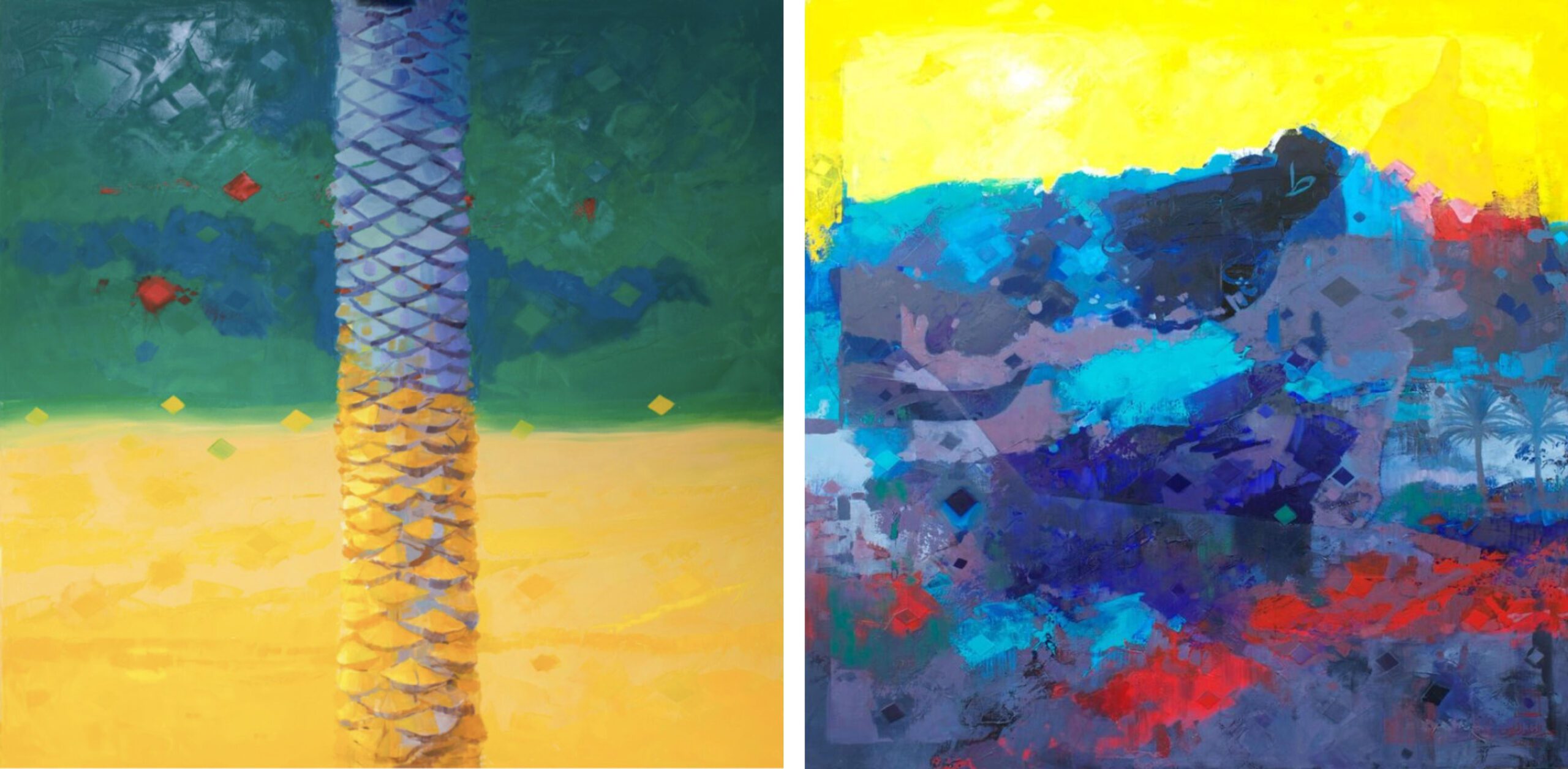
The exhibition is organised around five bodies of work: Alghaf, Calligraphy (Hurufiyya), Impressionism, Alhaa, and Abstract. The Alghaf Series draws inspiration from the ghaf tree, a species associated with the UAE’s natural environment and recognised as a national symbol. Its significance extends beyond botanical imagery: the tree’s ability to withstand arid conditions makes it an evocative reference point for continuity and resilience. Al Rais’s engagement with the subject connects his practice to the landscape and natural heritage of the Emirates.
In the Calligraphy Series (Hurufiyya), Arabic letters become visual elements in their own right. Instead of treating writing solely as a means of conveying language, Al Rais examines the expressive potential of its forms, rhythms, and spatial relationships. The approach belongs to a broader tradition of modern Arab art in which calligraphy has been reinterpreted through abstraction. In Al Rais’s practice, the letter offers a connection to cultural and spiritual traditions while also functioning as a component of contemporary composition.

The Impressionism Series focuses on the artist’s earlier interest in depicting Emirati architecture and landscapes. These works revisit the built environment through a more observational approach, with atmospheric brushwork and attention to the appearance of buildings and their surroundings. Seen alongside Al Rais’s abstract paintings, they provide a useful perspective on the development of his visual language. They demonstrate that his interest in abstraction emerged from a sustained engagement with the visible world rather than a complete departure from it.
The Alhaa Series, comprising watercolours on paper, highlights another dimension of Al Rais’s practice. Watercolour allows for a different relationship with the painted surface, placing emphasis on transparency, the movement of pigment, and the qualities of the paper itself.
Finally, the Abstract Series brings geometric forms to the foreground, which include the square motifs that have become characteristic of Al Rais’s work. These shapes interact with landscape-based compositions, creating a visual dialogue between recognisable references and more simplified arrangements of colour and space. The resulting paintings invite viewers to consider how a place can be evoked without being described in literal terms.

One of the exhibition’s particular strengths is its presentation of works from different stages of Al Rais’s career alongside newly produced pieces. The selection allows to follow the development of his approach while considering the ideas that persist across different periods: the relationship between landscape and architecture, the expressive potential of geometric form, and the continued relevance of cultural heritage to modern artistic practice.
For Al Rais, modernity and tradition are not necessarily opposing forces. His paintings suggest that a contemporary visual identity can emerge through the reinterpretation of inherited forms, whether these are found in Arabic script, traditional architecture, or the natural landscape. This approach has helped establish his place in the history of modern Emirati art, at a time when the country’s cultural institutions and artistic communities have developed alongside its rapidly changing urban environment. By bringing together rare works from the artist’s collection and pieces created specifically for the exhibition, Al Nayed offers an opportunity to encounter this evolution in depth.
About the artist
Abdulqader Al Rais (b. 1951, Dubai) studied Sharia law at the United Arab Emirates University in Al Ain, graduating in 1982, while pursuing art independently. His first solo exhibition took place at Dubai Public Library in 1974. He subsequently stepped away from painting for a period before returning to his practice in 1986, the year associated with the development of the abstract style for which he is best known. He also became a founding member of the Emirates Fine Arts Society, an organisation that has played an important role in the development of the UAE’s art scene.
Al Rais’s career has gained recognition both regionally and internationally. In 2006, he received the Sheikh Khalifa Prize for Art and Literature. His work has been presented in retrospectives at Sharjah Art Museum in 2012 and the Institut du monde arabe in Paris in 2018, and he participated in the UAE Pavilion at the 56th Venice Biennale in 2015. His paintings are part of esteemed collections including the British Museum (London, UK), Mathaf: Arab Museum of Modern Art (Doha, Qatar), and Sharjah Art Museum.
To get more information about Al Nayed, please go to the official web page of the exhibition.
In addition, you might also be interested in viewing Interwoven at House of Arts and Fahrelnissa and the Institutes: Towards a Sky, one of the online exhibitions at the Cultural Foundation.


