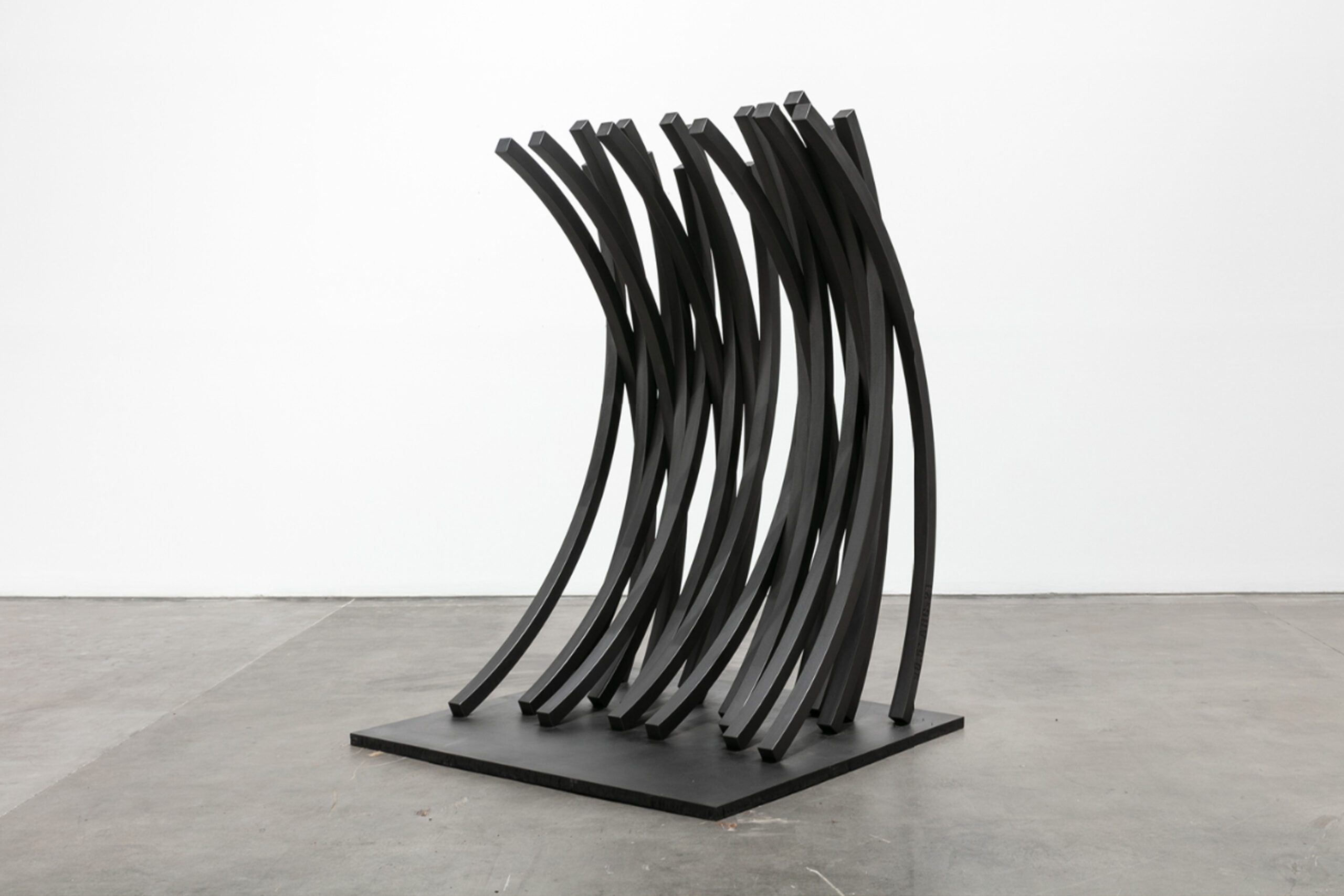
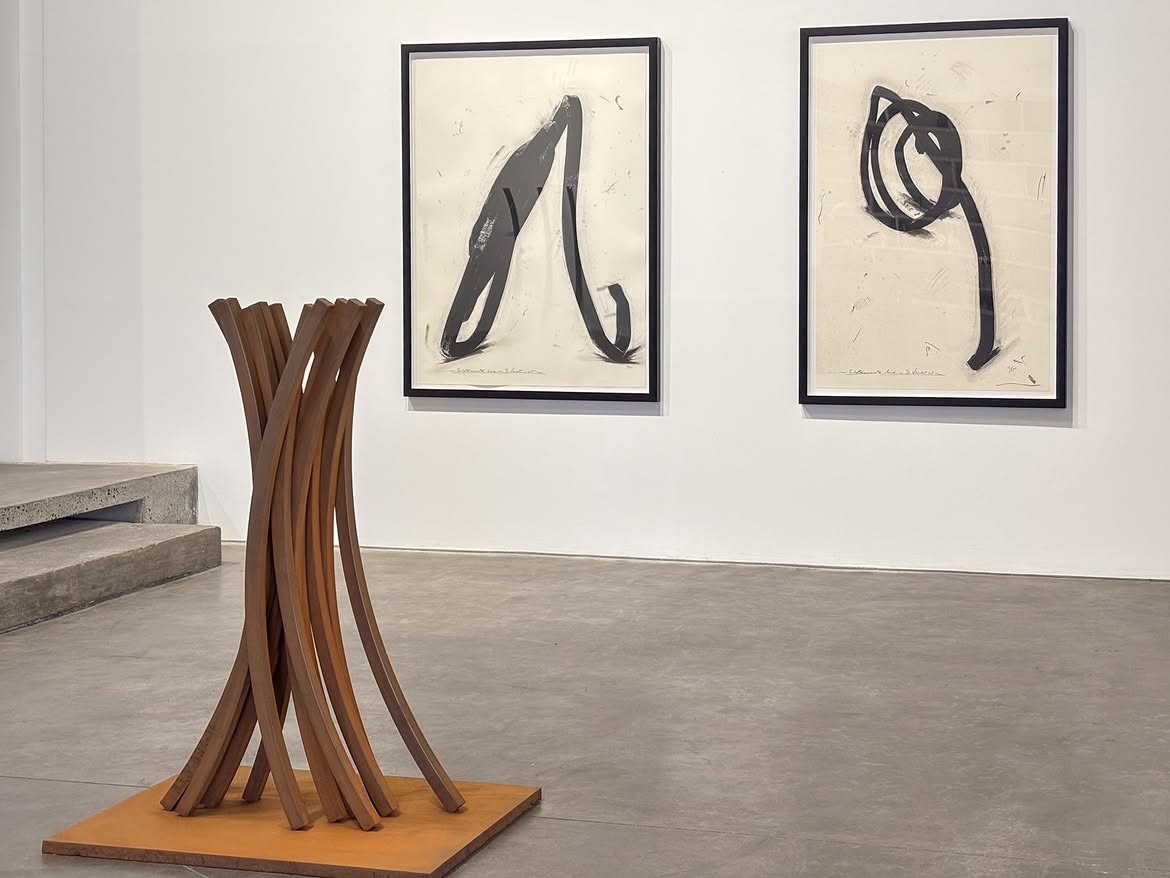
At Waddington Custot Dubai, Sculptures, Furniture and Works on Paper, a solo exhibition by renowned French artist Bernar Venet, brings together three connected strands of his practice. Running through 31 October 2026, the show is a compact survey of an artist whose six-decade career has challenged conventional ideas of what an artwork can be. Venet’s practice has moved between sculpture, drawing, painting, photography, sound, performance, poetry, and theatre, with mathematics and scientific language providing an important conceptual framework.
Venet (b. 1941, Château-Arnoux-Saint-Auban, France) showed an early interest in art and, at 17, moved to Nice, where he worked as a set designer for the Opéra de Nice. During the early 1960s, he began developing an experimental practice that questioned the traditional visual and material expectations of sculpture. His work Tas de charbon (Pile of Coal) (1963), for example, was a heap of industrial coal. It had no predetermined geometric shape and indicated the artist’s interest in stripping sculpture down to an idea or proposition. His experiments of the period also included tar paintings and works on cardboard.
In 1966, Venet settled in New York, where he joined the local avant-garde art scene and encountered artists such as Donald Judd, Dan Flavin, and Sol LeWitt. His conceptual approach increasingly incorporated the languages of mathematics and science. Venet used equations, diagrams, and mathematical definitions as subjects in their own right. His work thus participated in the broader development of Conceptual Art.
The line eventually became one of the central protagonists of Venet’s practice. From the late 1970s onwards, he developed series based on straight lines, angles, and arcs, before introducing the Indeterminate Lines for which he is particularly famous. Unlike a mathematically defined straight line or angle, an indeterminate line has no fixed geometric parameters. Venet thereby introduced chance, unpredictability, and disorder into a practice previously associated with mathematical precision.
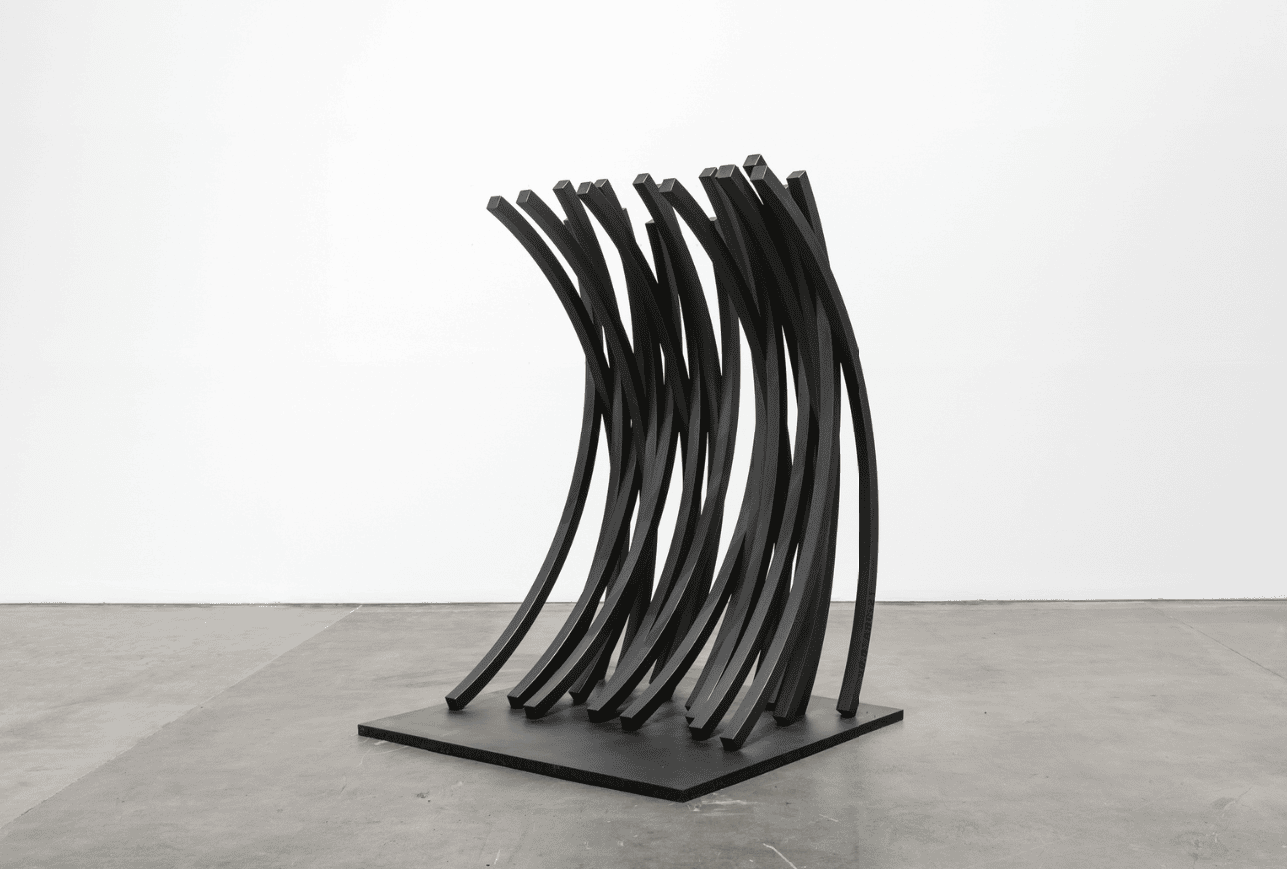
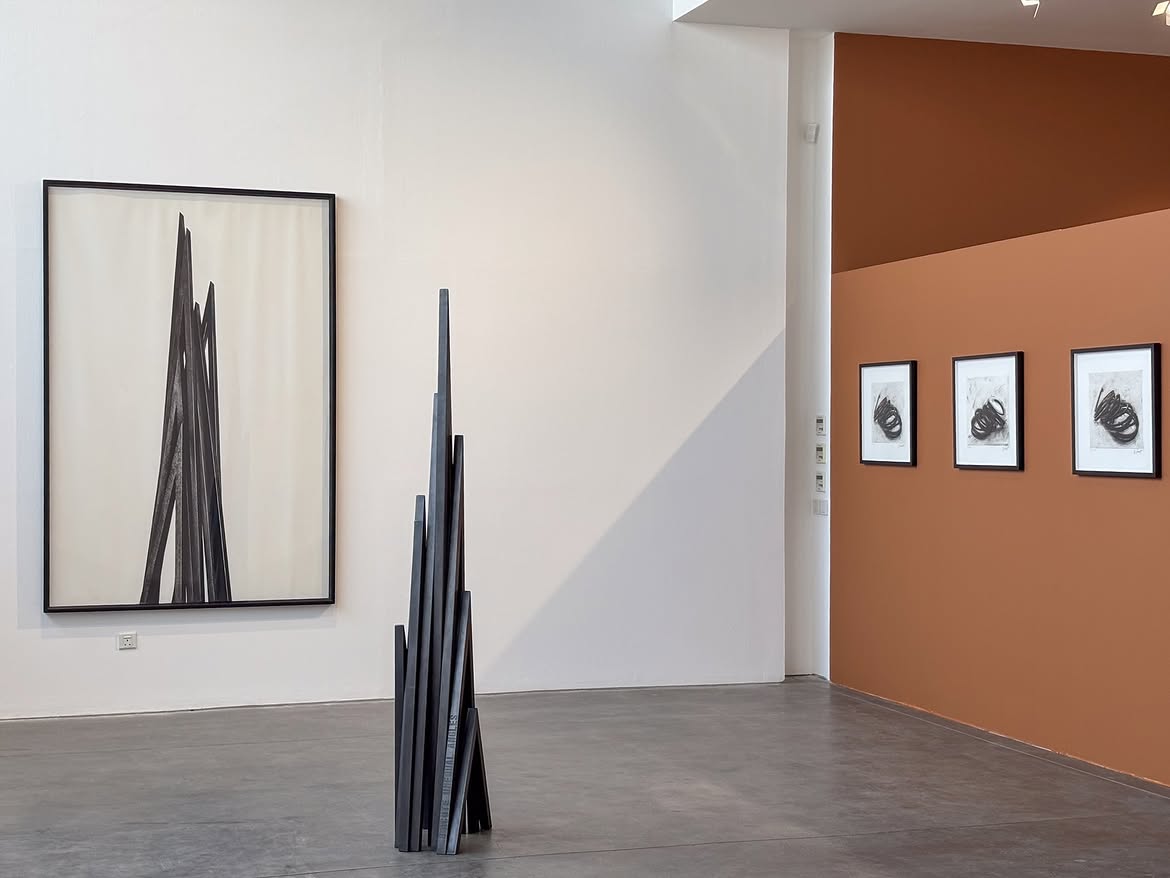
The tension between order and accident remains especially visible in his sculptures made of Cor-Ten steel. Venet’s monumental forms can seem simple, yet their apparent simplicity conceals an investigation into gravity, balance, geometry, and physical force. In the Indeterminate Lines, the rigid industrial material is transformed into apparently spontaneous curves, while works from the Arcs and Angles series translate mathematical structures into three-dimensional space.
The exhibition at Waddington Custot Dubai expands this dialogue beyond sculpture. Venet’s furniture translates the geometric vocabulary of his sculptures into objects with a functional dimension. The exhibited furniture creates a direct connection between the gallery object and everyday use. This shift is characteristic of Venet’s broader interest in questioning established categories: the same conceptual structures can exist as sculpture, drawing, or a functional object without necessarily losing their identity.
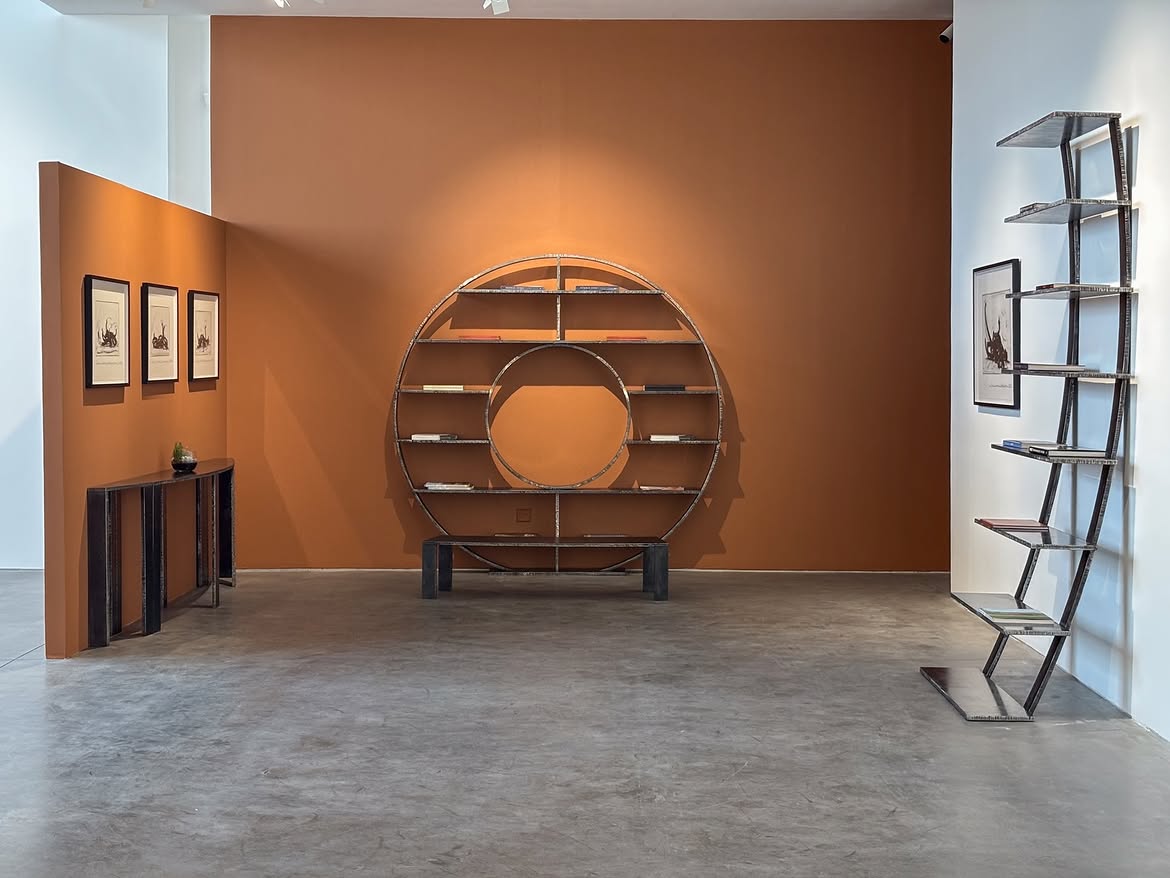
The works on paper offer a more intimate counterpart to the steel pieces. Drawing has played an important role in Venet’s practice as both a medium and a way of investigating lines, mathematical structures, and chance. His paper art pieces are created using diverse media and often explore the same visual vocabulary that appears in his sculptures. A work such as Random Combination of Indeterminate Lines (1997), for instance, uses oilstick, pastel, and collage on paper to transpose the artist’s interest in unpredictable combinations into a more modest scale.
Seen together, the three components of Sculptures, Furniture and Works on Paper reveal the continuity of Venet’s thinking across different forms. The artworks demonstrate how a limited vocabulary of lines, angles, arcs, and mathematical relationships can generate very different physical and conceptual results. The transition from paper to steel, or from sculpture to furniture, becomes part of the inquiry itself.
Venet’s career has extended beyond the gallery environment. His sculptures have been installed in public spaces around the world, including the Château de Versailles (France). His enormous Arc Majeur (60 metres in height), inaugurated in 2019 between Namur and Luxembourg, is one of the most ambitious public sculptures in Europe. His works are also part of esteemed collections, such as the Museum of Modern Art and Solomon R. Guggenheim Museum (New York) and the Centre Pompidou (Paris), among others.
At Waddington Custot Dubai, however, scale is only one part of the story. Sculptures, Furniture and Works on Paper offers a concentrated view of Venet’s enduring investigation into the relationship between concept, material, mathematics, and chance. Across all three forms, the apparently simple line becomes a vehicle for exploring order and disorder, precision and unpredictability, control and accident: ideas that have remained at the centre of Venet’s art since the 60s.
To learn more about Sculptures, Furniture and Works on Paper, please visit the exhibition’s official web page.
You might also be interested in reading our articles about Guardian Elevation by Xavier Magaldi and Formation III: The Dappled Light of the Sun by Conrad Shawcross.
To stay connected with the latest art news, you should follow our Telegram channel.