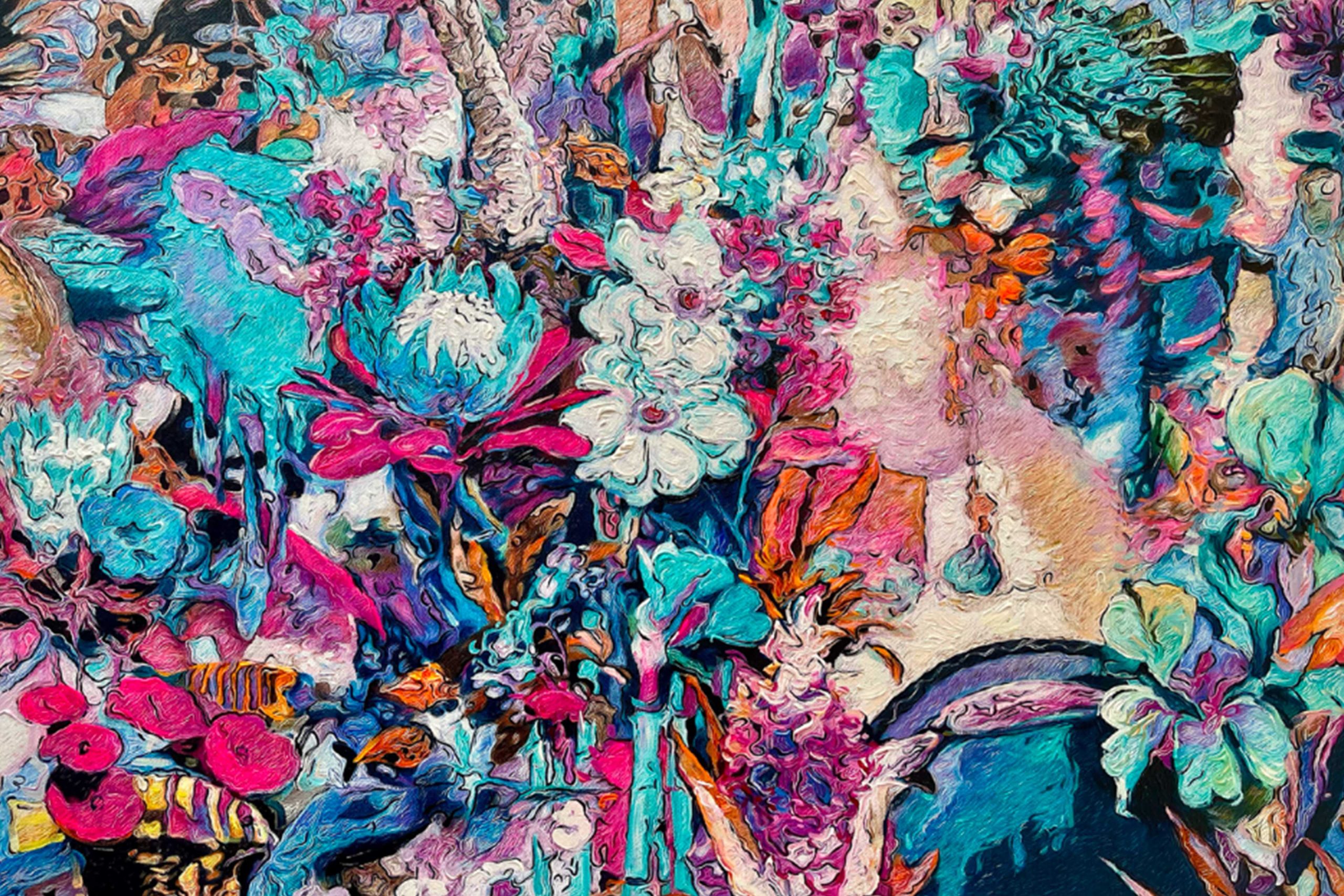
Until 16 July 2026, XVA Gallery is hosting After the Image, a solo exhibition by artist, photographer, writer, and sociologist Charlie Koolhaas. It explores how photography can preserve, transform, and reactivate the memory of a rapidly changing city. Developed in relation to the UAE Modern Architectural Heritage Grant, the show moves beyond conventional photographic presentation. Images are transformed into immersive environments, wearable objects, and domestic installations that encourage visitors to experience Dubai’s architectural history in new and unexpected ways.
For more than two decades, Koolhaas has documented cities undergoing profound transformation, with Dubai occupying a particularly significant place in her practice. Since first photographing the emirate in 2005, she has amassed an extensive visual archive of buildings, façades, interiors, streets, and architectural details, many of which have since disappeared as the city has continued its rapid development. After the Image asks what happens to an image after it has fulfilled its documentary purpose. Can photography become something more than a record? Can it remain active within everyday life and continue to shape the way we remember places?

The exhibition answers these questions by expanding photography beyond the printed image. Occupying both the gallery and a room within the XVA Art Hotel, the project turns the hotel into an intimate archive of Dubai’s modern architectural heritage. Koolhaas invites visitors into a lived environment where photographs become part of furniture, textiles, garments, sculptures, and mundane objects. The result is an installation that blurs the boundaries between exhibition space and domestic interior. It encourages audiences to experience cultural memory through touch, proximity, and everyday use rather than distant observation.
At the heart of the exhibition is Koolhaas’ ongoing Foto-Couture series, in which photos of urban environments are transferred onto clothing and textiles. Architectural surfaces become dresses, curtains, bedding, and other functional objects, allowing the city itself to be worn and inhabited. Through this process, buildings lose their fixed, monumental character and become soft, mobile, and personal. The artist uses clothing as a medium through which urban memory travels with the body, suggesting that architecture can continue to exist long after physical structures have vanished.
The choice of venue plays an important role in the exhibition’s narrative. Located in Dubai’s Al Fahidi Historical Neighbourhood, XVA Art Hotel occupies one of the few remaining areas where much of the city’s older architectural fabric survives. This setting creates a compelling dialogue between preservation and transformation and provides an appropriate context for an exhibition concerned with heritage, memory, and urban change. By installing the project within a functioning hotel room rather than an isolated gallery space, Koolhaas challenges conventional ideas of the archive as something static or inaccessible. Here, history becomes something visitors can inhabit: temporary, intimate, and continually evolving.

Throughout the show, everyday objects collected during Koolhaas’ research into Dubai’s material culture further enrich this narrative. The domestic items carry traces of hospitality, migration, commerce, labour, and daily routines; they reveal that the story of architecture is inseparable from the lives of the people who occupy it. Together with the photos, textiles, and sculptural works, they construct a layered portrait of Dubai that extends beyond iconic skylines and ambitious development, instead highlighting the textures and experiences that often disappear alongside demolished buildings.
After the Image is less concerned with nostalgia than with the future of memory itself. In a city where transformation is constant and familiar places can disappear almost overnight, Koolhaas proposes new ways of preserving architectural heritage: by allowing it to evolve through new materials, new contexts, and new forms of experience. Photography becomes something dynamic, capable of moving through daily life instead of remaining confined to archives or museum walls. By inviting audiences to live among images rather than simply observe them, After the Image offers a thoughtful reflection on how cities remember themselves, and how art can help preserve what urban development leaves behind.
About the artist
Born in London (UK), Charlie Koolhaas lives and works in Rotterdam (the Netherlands). She studied sociology before pursuing media art at Goldsmiths, University of London. Her multidisciplinary approach has consistently challenged traditional definitions of photography. Koolhaas combines documentary practice with critical research to explore how cities are shaped by globalisation, migration, architecture, and cultural exchange. Her projects frequently merge photography with writing, installation, fashion, and publishing, creating complex narratives that examine urban environments from multiple perspectives. She investigates cities as living systems constantly reshaped by economic, political, and social forces.

The artist has exhibited internationally at esteemed institutions, including Kunstinstituut Melly (Rotterdam), and major art events, such as the Shenzhen Biennale (China, 2015) and the Venice Architecture Biennale (Italy, 2014), as well as many galleries across Europe and Asia. Among her publications is City Lust (2020), which combines photography and essays to examine the social and economic realities of global cities. Dubai has remained a recurring focus throughout her career, with previous projects including Dubai Then (2011), making After the Image both a continuation and an evolution of her long-standing engagement with the city’s urban landscape.
For more information about the exhibition, please visit its official web page.
You might also be interested in viewing Photographic Encounters along the Gulf Coasts.