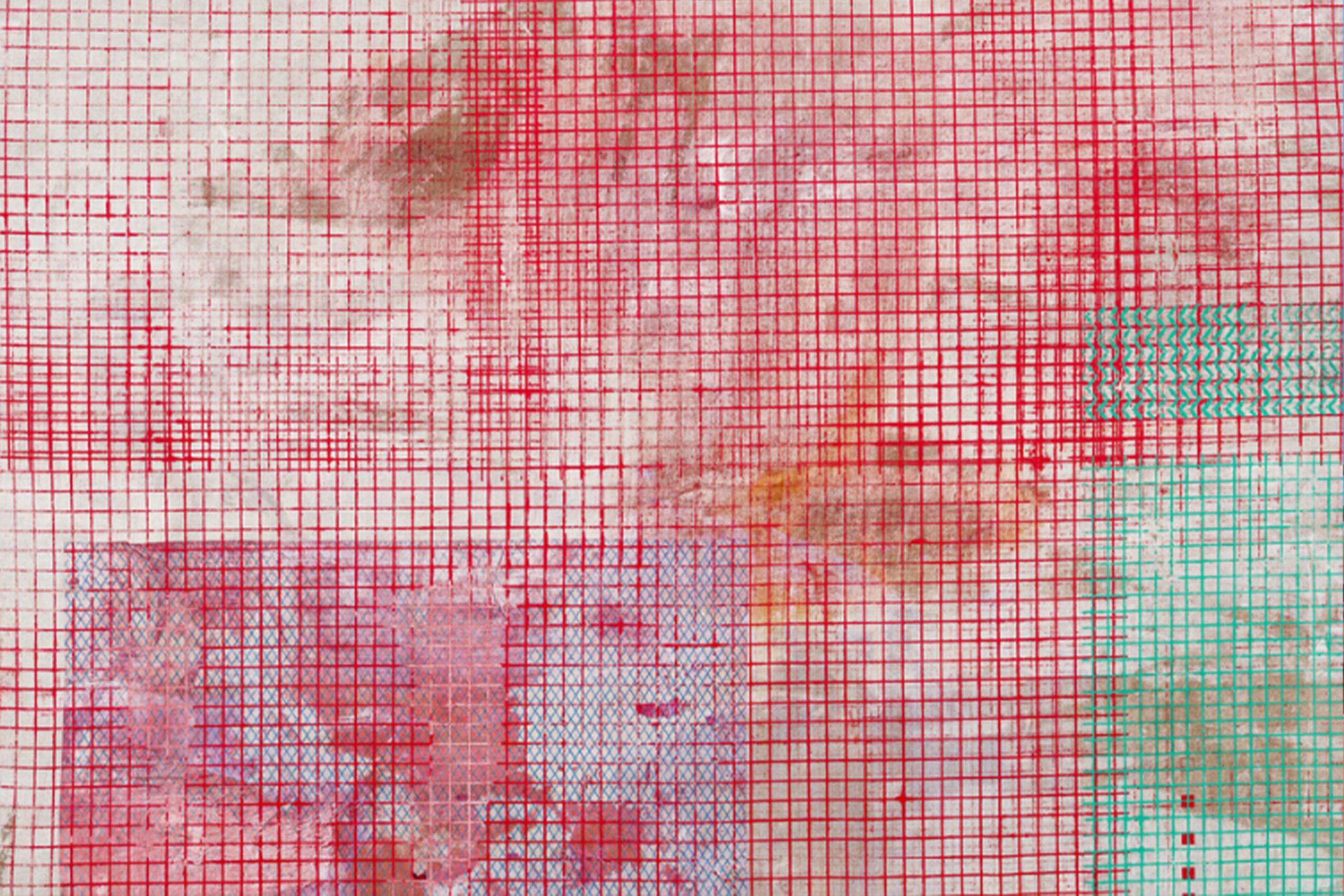
Until 9 May 2026, Lawrie Shabibi is holding Unfixed Ground, a group exhibition that brings together six artists from across the Arab world and its diaspora. It uses the idea of “ground” not as something stable or fixed, but as a shifting condition: physical, political, emotional, and symbolic. Spanning painting, sculpture, installation, and material assemblage, the show unfolds as a rich meditation on how meaning is made, interrupted, and remade — and on what survives when structures come apart.
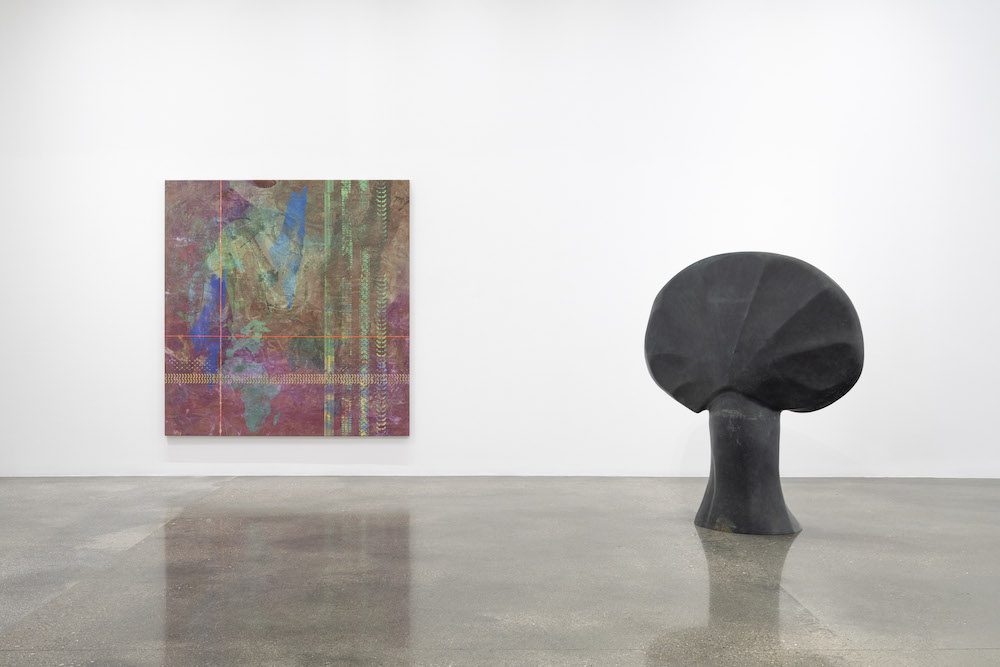
The presentation is spread across two gallery spaces. The first one focuses on density, accumulation, and transformation. Here, works by Mandy El-Sayegh, Mohamed Ahmed Ibrahim, Omar Al Gurg, and Rand Abdul Jabbar explore how surfaces hold traces of gesture, labour, and repetition. Grids dissolve into layered fields, sculptural forms hover between body and landscape, and materials reveal processes of making rather than hiding them. Ground becomes something continuously negotiated rather than permanently settled.
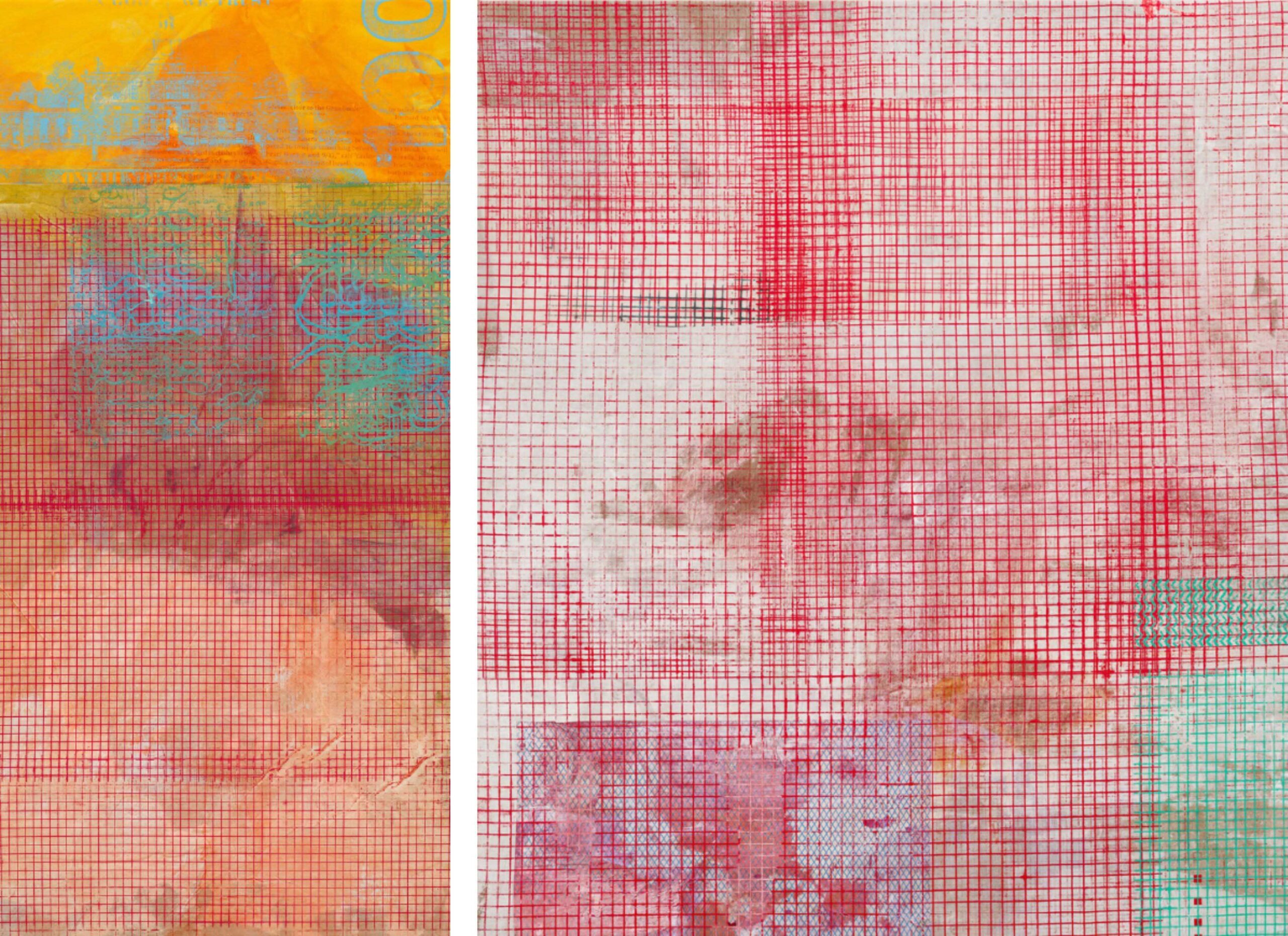
Mandy El-Sayegh, a British-Malaysian artist of Palestinian descent through her father, is internationally recognised for paintings and installations that combine printed matter, language, bodily marks, and systems of classification. El-Sayegh’s works often resemble unstable archives, where newspaper fragments, calligraphy, diagrams, and painted gestures overlap. In her Net-Grid canvases, overpainted grids simultaneously structure and obscure the detritus of pop culture, referencing the primacy of the grid in Modernist art while questioning the cultural and institutional frameworks that determine how meaning is produced and legitimised. In Unfixed Ground, El-Sayegh’s compositions suit the show’s interest in surfaces that carry multiple histories at once.
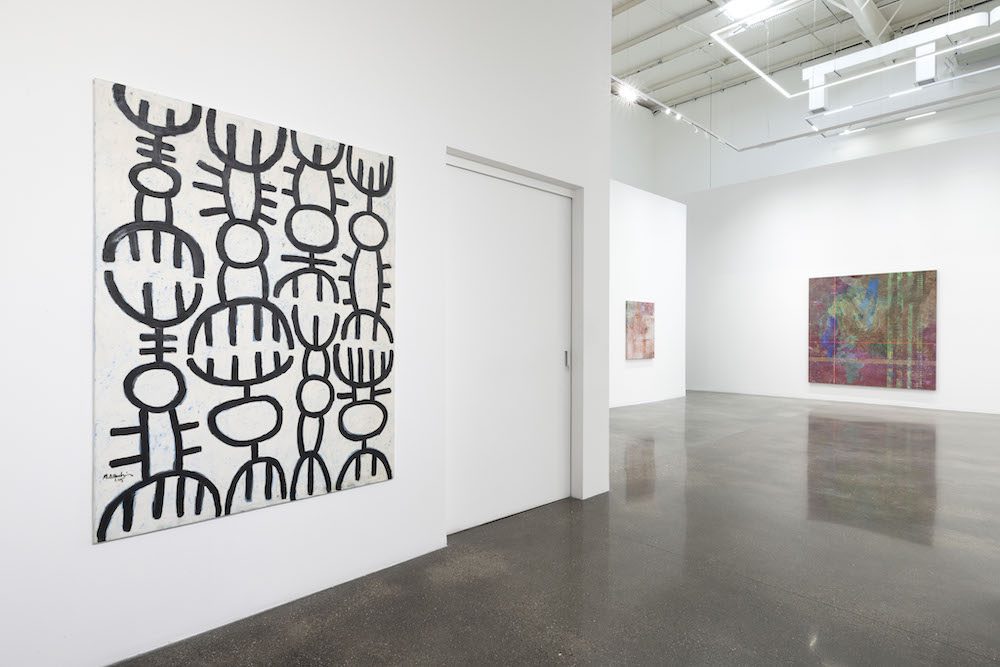
A foundational figure in contemporary Emirati art, Mohamed Ahmed Ibrahim has long drawn inspiration from the landscapes of Khor Fakkan, where he was raised. Known for organic sculptures, handmade forms, and richly coloured assemblages, Ibrahim transforms humble materials into objects that feel simultaneously ancient and futuristic. His presence in the exhibition anchors its theme of ground as terrain: something shaped by memory, ecology, and lived experience.
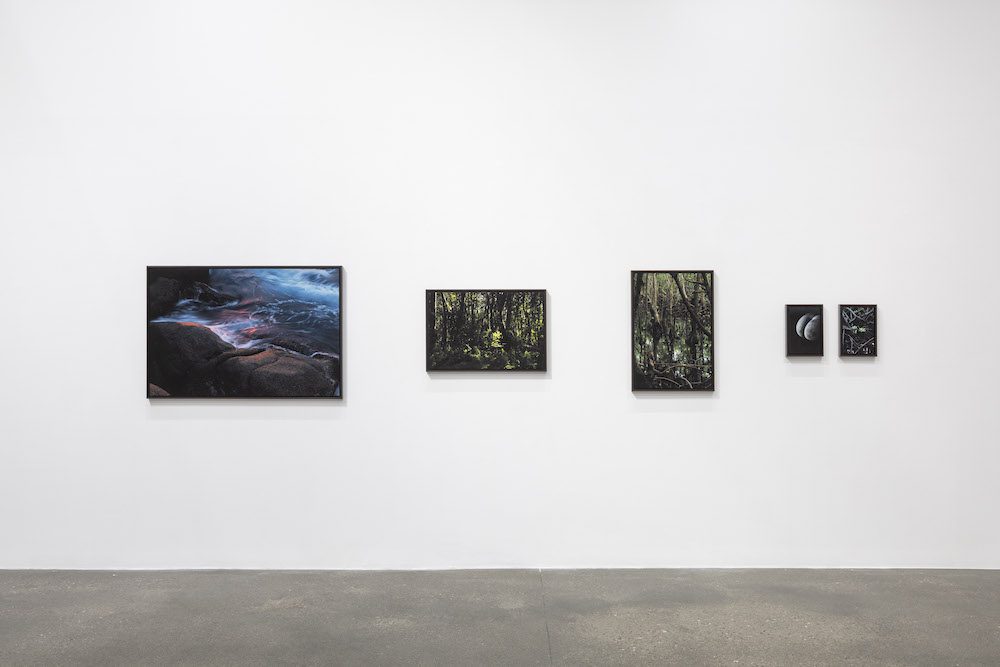
Emirati artist Omar Al Gurg works fluidly between design, architecture, and photography. His photographic practice centres on nature and strangers encountered in everyday life, revealing a quiet curiosity and sensitivity to the world around him. Marked by a keen attention to detail and atmosphere, his images often capture fleeting moments of light, resilience, and transformation within the landscape.
Meanwhile, Iraqi artist Rand Abdul Jabbar employs sculptural and symbolic language to reconstruct layers of past events as they intersect with personal experience. Reflecting on her relationship to place and landscape through the lens of displacement, Jabbar challenges both individual and collective memory while engaging with the legacies of archaeology, mythology, and material culture through extensive research in archives and museum collections. In the context of Unfixed Ground, her sculptures suggest that land is never neutral: it absorbs violence, ritual, and remembrance.
The second gallery space shifts into a quieter, more contemplative register with works by Asad Faulwell and Dima Srouji. Here, the exhibition turns from accumulation toward residue, fracture, and endurance. Cycles of repetition and rupture, where broken elements are not restored into wholeness but allowed to remain open and unresolved, unfold through painting and material fragments.
Iranian-American artist Asad Faulwell is known for works that revisit historical narratives, particularly around gender, revolution, and representation. His paintings often repeat figures and gestures across patterned surfaces, creating a tension between ornament and political violence. In this setting, repetition becomes a form of persistence
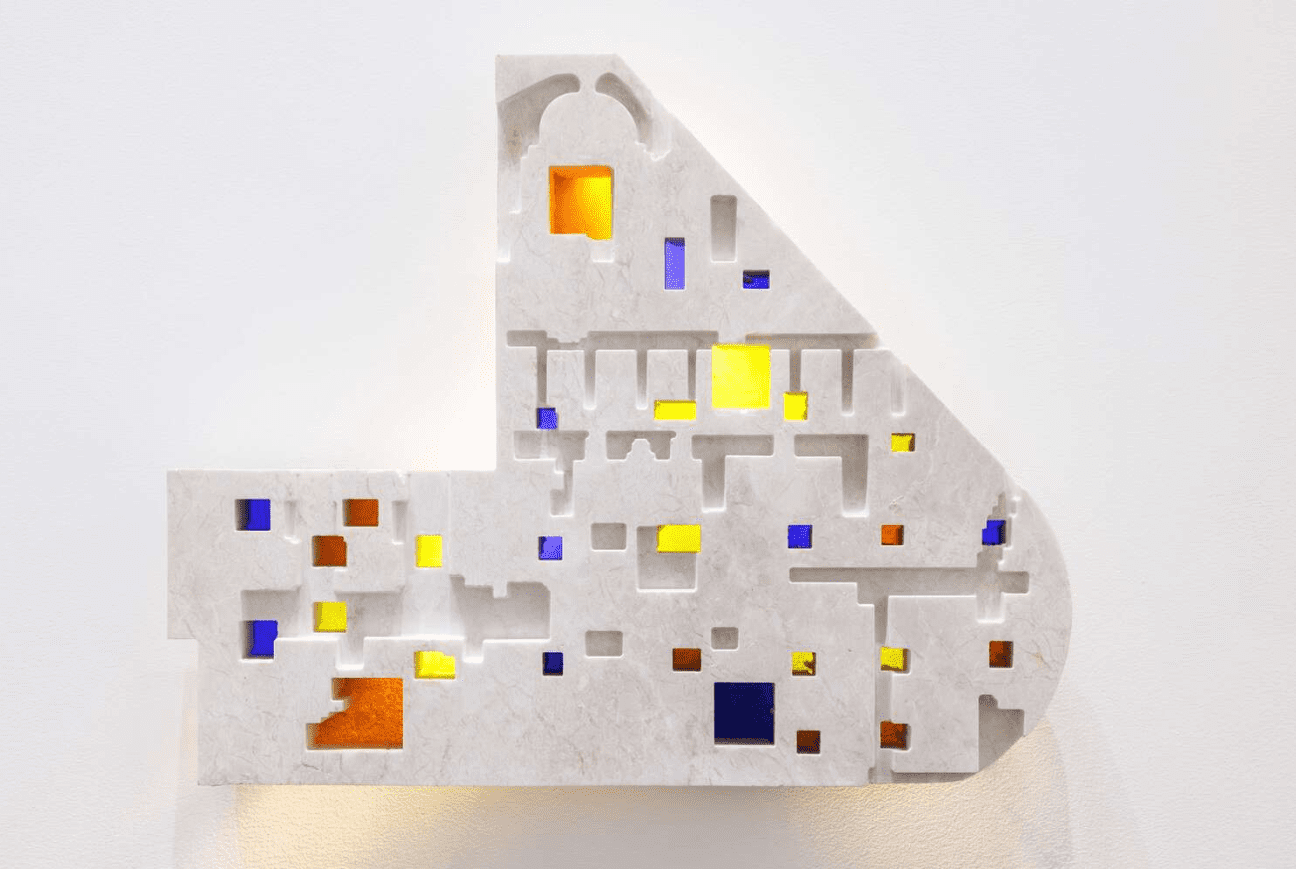
Palestinian artist Dima Srouji, who works across glass, architecture, research, and installation, explores the ground as a deep space of cultural and historical weight, looking for ruptures where imaginary forms of liberation become possible. She treats materials as emotional and evocative objects that help question what cultural heritage and public space mean in the larger context of the Middle East, with a particular focus on Palestine.
What makes Unfixed Ground compelling is its refusal to offer a single reading of instability. Rather than treating uncertainty as failure, the exhibition proposes it as a generative state. Forms are built, undone, and rebuilt; histories remain incomplete; materials carry scars without losing vitality. In a city like Dubai, where landscapes, skylines, and identities are constantly evolving, the show feels particularly timely.
To learn more about Unfixed Ground, please visit the official web page of the exhibition.
In addition, you might be interested in exploring In the Wake of Time and the Inaugural Exhibition at Tatintsian Gallery.
To stay connected with the latest art news, you should follow our Telegram channel.


