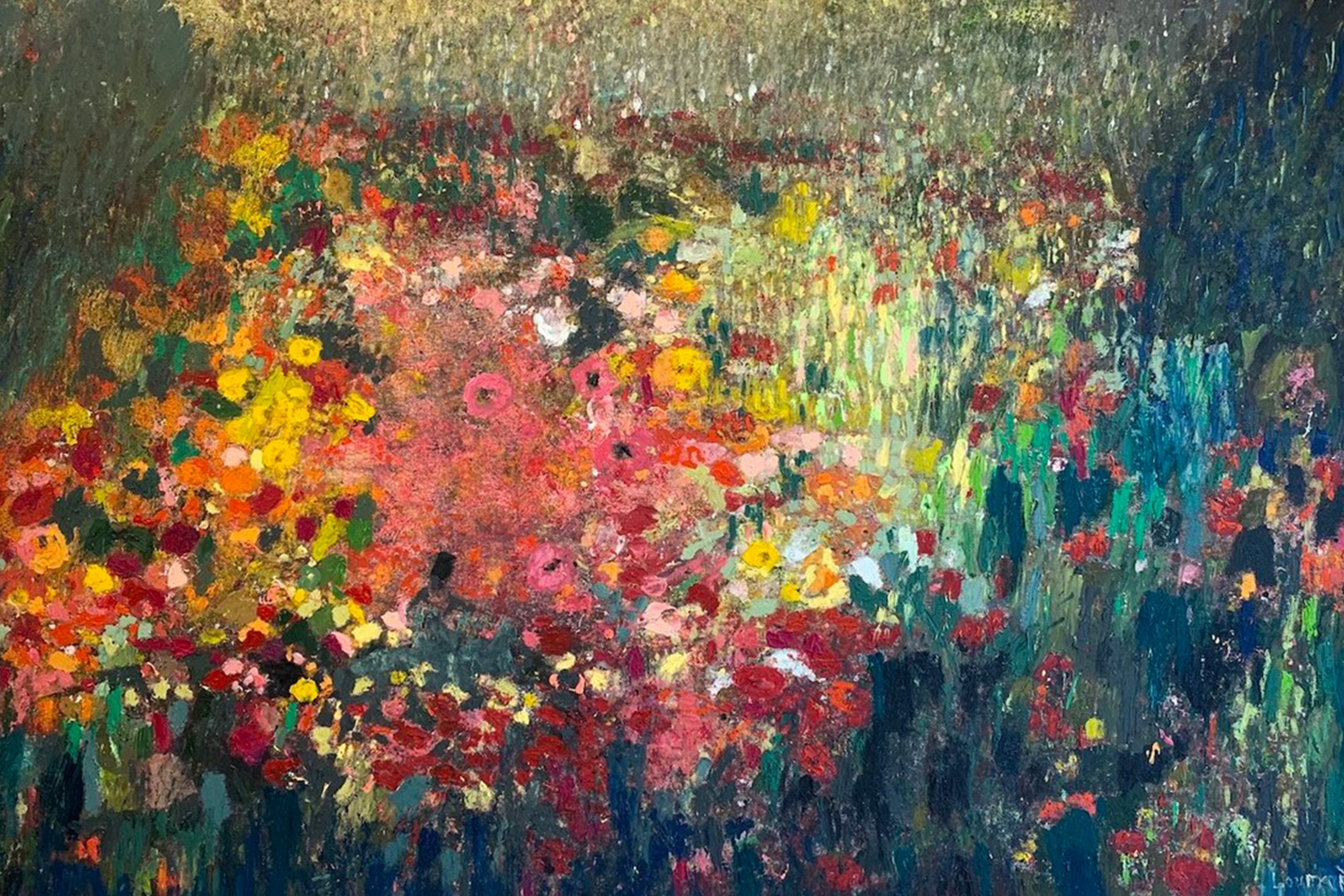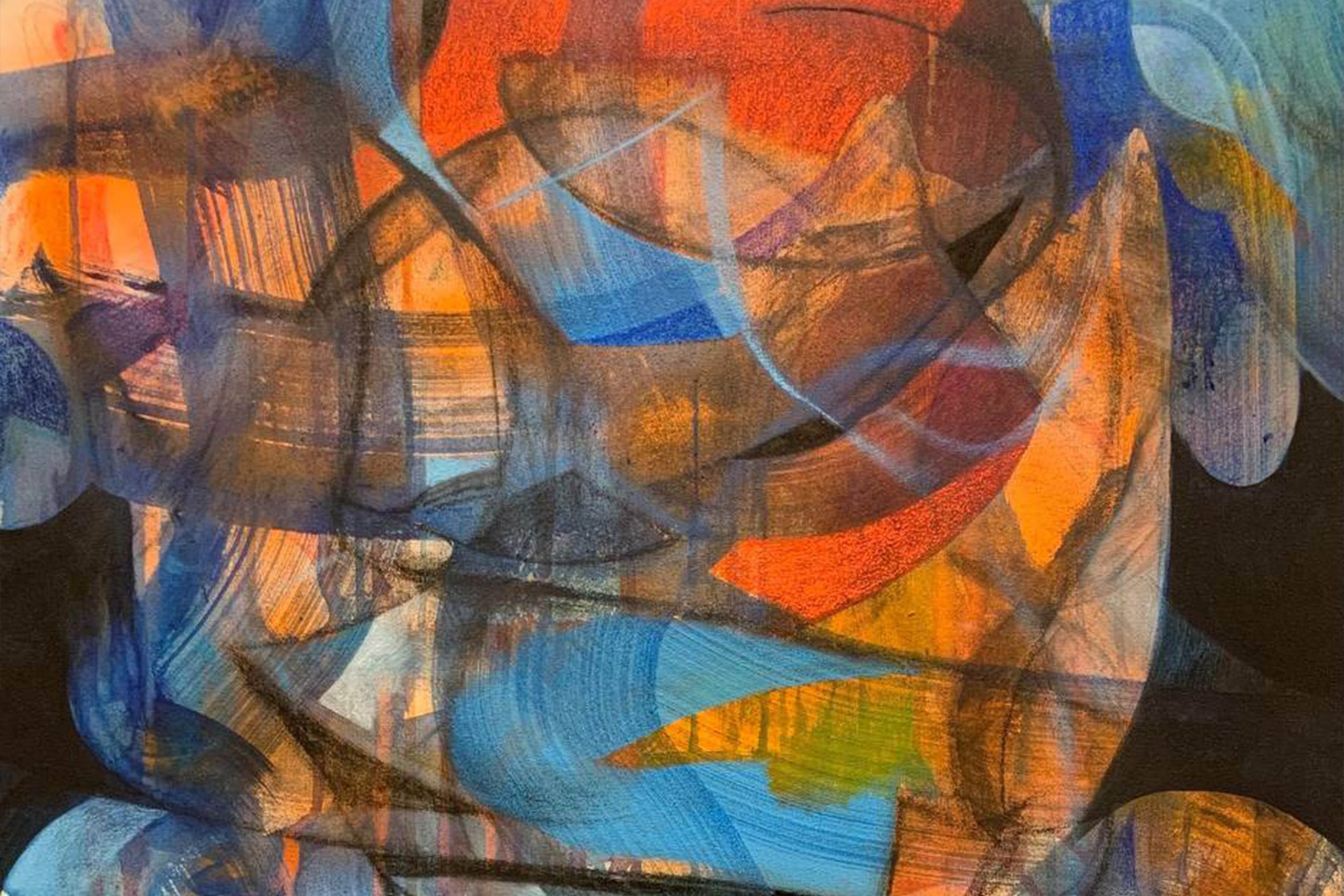
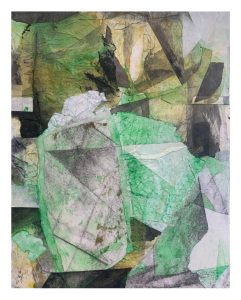
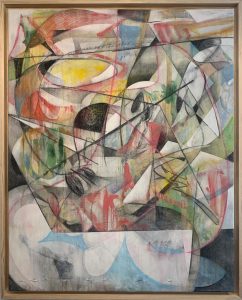
American artist Seth P. Benzel is one of the most distinctive figures in contemporary abstract painting, working between New York, Dubai, and Florida, where he also runs and curates his own space, 8th Ave Gallery. In his practice, a deconstructive approach bringing both the “ground” and successive painterly layers to the surface turns the canvas into an open system that resists any fixed final statement and instead acts as a point of departure for new ways of seeing.
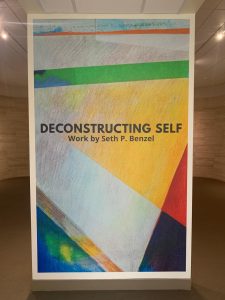
Benzel describes painting as a space of continual becoming: his linear structures echo architecture, while free, chromatic passages channel the energy of the surrounding spiritual environment, as much as natural, held in a state of constant flux. This visual language unfolds both in intimate exhibition projects in New York, Ocala, and across Europe, and in large-scale series such as “Deconstructing Self,” where questions of identity and perception are articulated through fragmentation, pauses, and deliberately “unfinished”.
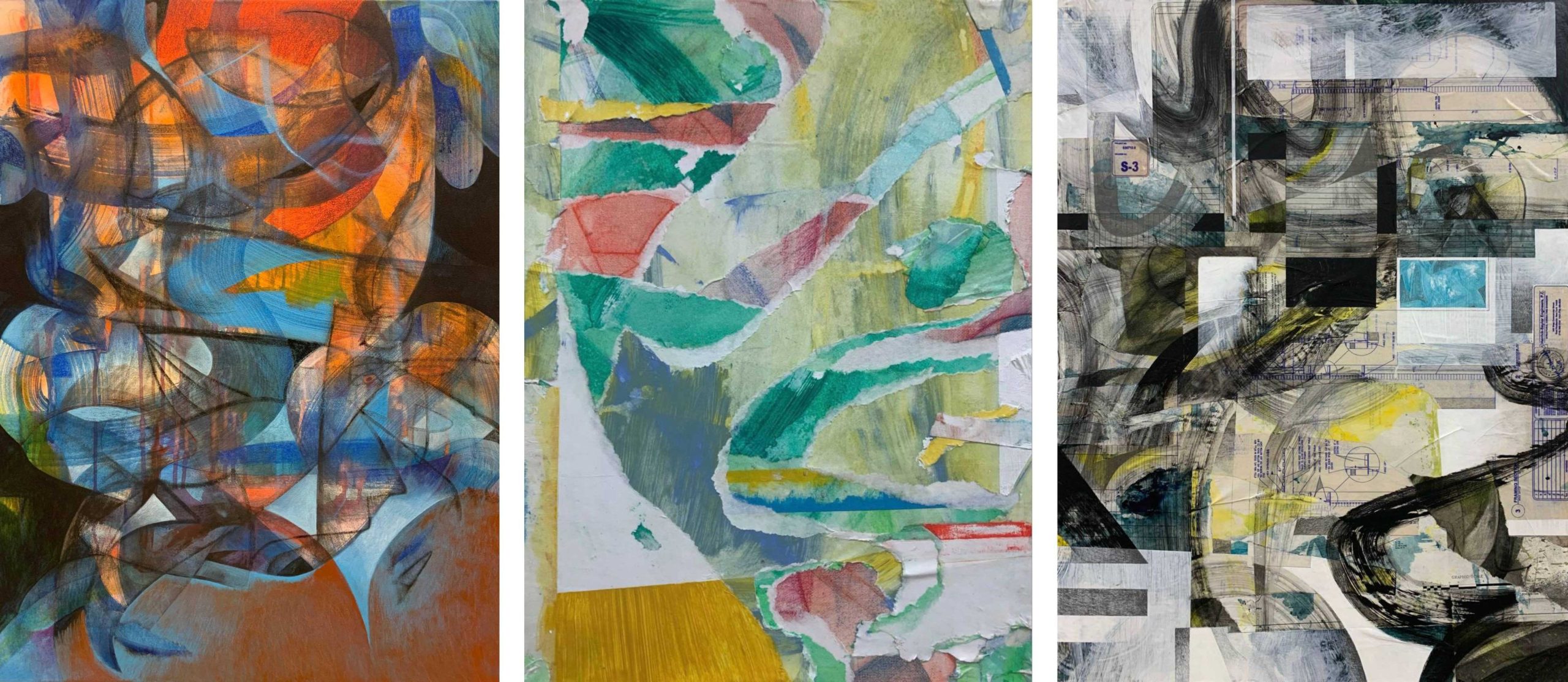
Today, we speak with Mr. Benzel about his artistic language, international career, and his thoughts on the role of art in today’s society.
Julia Smolenkova: Mr. Benzel, you work in layers, and every layer you apply is significant: from the initial underpainting layer to the finishing touches. Your painting is multi-level, spatial, and deep. What emotions, concepts, and experiences inspired you to develop such a unique, original, and complex technique?
Seth Benzel: I believe that each layer of a painting is like the chapter of a story, so I believe in building from back to front. The first layers are the first part of the story, then you move into the middle layers, which develops more of the story, and then you have the final story that’s completed in the last layers. Within that, there are many reactions, but I don’t think thought is necessarily part of it. It’s more about an intuitive reaction to how the layers interact with themselves and how they tell a broader story.
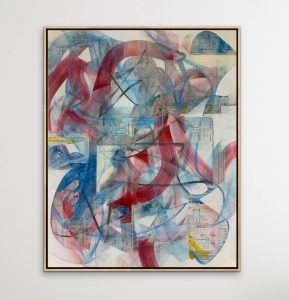
JS: Your art is abstract; it has dynamics and momentum. However, the compositions are balanced and stable. How long did it take you to find your artistic language? How did you understand that you had found it?
SB: I was lucky that my father was an artist, and I began painting at a very early age. I think my artistic language really was inspired by him and some of the paintings that he did early on in his career. They were very washy abstracts, and there was something in that that resonated with me. I saw a beginning that could lead my artwork to many different endings, and I’ve really enjoyed that. I’ve enjoyed that my finished paintings can be very different, but they all start from the same place.
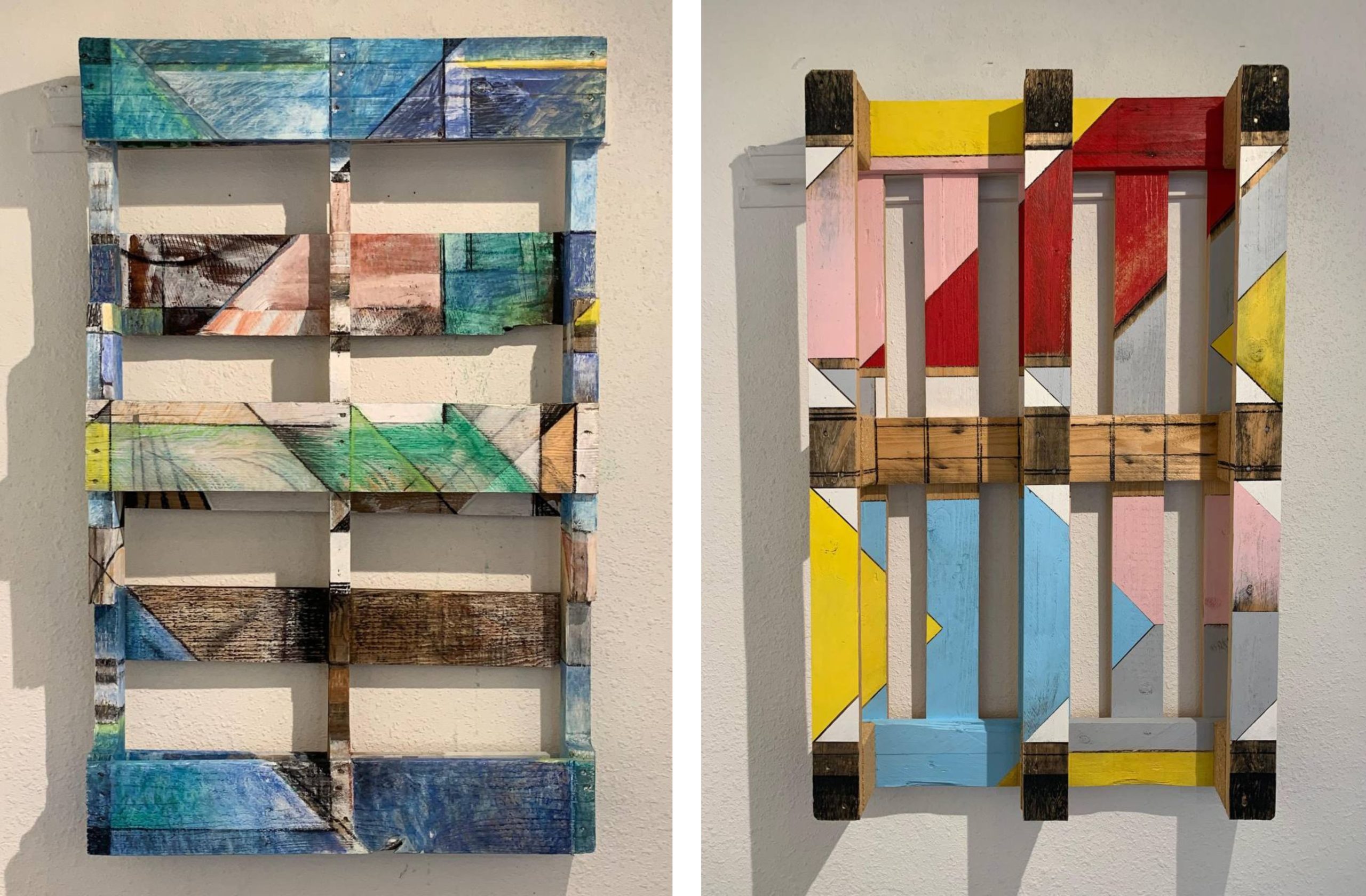
So I was lucky to find my artistic language very early on through the inspiration and direction of my father. At a certain point in my 20s, I realised that I had something unique in that language and that I could use it in many different ways, express it in many different ways through many forms of medium and even substrates, which now I work in everything, from canvas to paper to wood. I enjoy how my artistic language allows me to find a lot of different results through the basic principles and start of each painting.
JS: Your artworks are displayed in iconic places and at events in the Emirates. Your paintings decorated the hall of the futuristic Opus building by architect Zaha Hadid. It is a recognition from one of the most dynamic countries in the world. What does working in the Emirates mean to you? Is there something unique about working and being here?
SB: I came to the Emirates for the first time in 2012, and it made an immediate impression. What I’m very grateful to Dubai and Abu Dhabi for is that they’ve given me an opportunity to grow both as an artist and as a teacher. The reason why it’s a very special place to me is that they’ve given me the opportunity to grow as an artist and to react to the different culture, the different rhythm of life there, and I enjoy it very much. And as you mentioned, with my most recent solo exhibition in the Opus Building, that was really the pinnacle of many other opportunities that have been given to me, and I’m very grateful to the UAE for them.
Also, I would like to mention the specific opportunities of running Artist in Residence programmes for Jumeirah Hotel group, where in total we had six different international artists come and create in the UAE. From there, I worked with World Art Dubai as their Director of Artist in Residence to help start their own residency programme.
JS: Do you believe that contemporary art can influence society, the social environment, and public culture? Do you agree that art is a reflection of contemporary society and all its processes?
SB: Of course, art always reflects society, and the contemporary market is no different. I think that you can see that in many different forms. And yes, I do believe it does influence society. I would say that contemporary art has a little bit of an identity crisis, though, in the fact that, for me, I see trends where it wants to please and be part of fashion and popular culture. For me, I don’t feel like that’s where art belongs. I feel art should question culture and show all sides of life, not just the pretty and luxurious side.
I also believe that art is for everybody. I don’t feel like it should be a luxurious item. So, when I look at the major art markets and the major art world, I find a lot of fault in the contemporary scene because I see a lot of greed. And again, it’s this propensity towards money, which I don’t think art has any business worrying about how much people can make and how much value it has. I think it’s more about the message and the way that it affects society without being driven by the economic gains.
JS: We know that no one collects art with the same passion as the artist themself. Bourdelle had a collection of African headrests. Van Gogh collected Japanese prints. What art do you have in your home collection?
SB: I believe that every artist has other artists that inspire them, and although I’m inspired by a majority of the artists from the early to mid-20th century, I still enjoy other abstract artists’ work, especially up-and-coming ones. I have artwork by those artists that I feel are doing something unique, and that their art is saying something unique. Also, I’m in the position where I own an art gallery called “8th Ave Gallery”. As a part of that, it’s helping up-and-coming abstract artists, so my tastes are really towards the abstract. Through my gallery, I support younger artists in their quest to become better known in the market and better artists all around.
In conclusion, we would like to thank Mr Benzel for this fascinating conversation, for allowing us to glimpse into the inner world of the artist and to see his work in a new way. It is a great honor for us to have the opportunity to connect with his art and to share with our readers the sense of freedom, depth, and sincerity that lies behind each of his works.