Until 13 December 2025, Foundry Downtown Dubai is hosting Everything Comes to an End: A Reflection on Finitude, Transition, and Renewal, an exhibition presented by Inloco Gallery. Bringing together ten artists, this show offers a contemplative space where endings are not merely terminal but serve as portals to transformation.
At its core, the exhibition explores how finitude, whether personal, social, natural, or urban, intersects with processes of change and emergence. The displayed artworks craft a dialogue of presence and absence, renewal and decay, creating a space in which the notion of an “end” becomes a permeable threshold rather than a closed door.
The participating creatives include acclaimed Emirati scholar Dr Khaled Alawadi, who contributes his photographs of urban landscapes, reflecting his broader research into urban design, housing, sustainability, and how the built environment shapes lived experience. Tunis-born artist Karim Jabbari, who merges traditional Arabic calligraphy with contemporary light art, presents Interdimensional Mind Control (2025), a piece that evokes not only material transition but shifts in consciousness.

Omani conceptual artist Abdulrahim Al Kendi, best known for The Binary Quran, his translation of the Holy Quran into binary code, employs satire to challenge entrenched ideologies and the pressure of religious and societal norms. He contributes The Shahada (2023), a painting that translates the Islamic declaration of faith into a binary form, probing questions of ritual, legacy, and meaning. Saudi artist and researcher Maoth Alofi examines the complex intersections between landscape, heritage, and identity. His interdisciplinary practice uncovers traces of human presence across the vast terrains of the Arabian Peninsula.
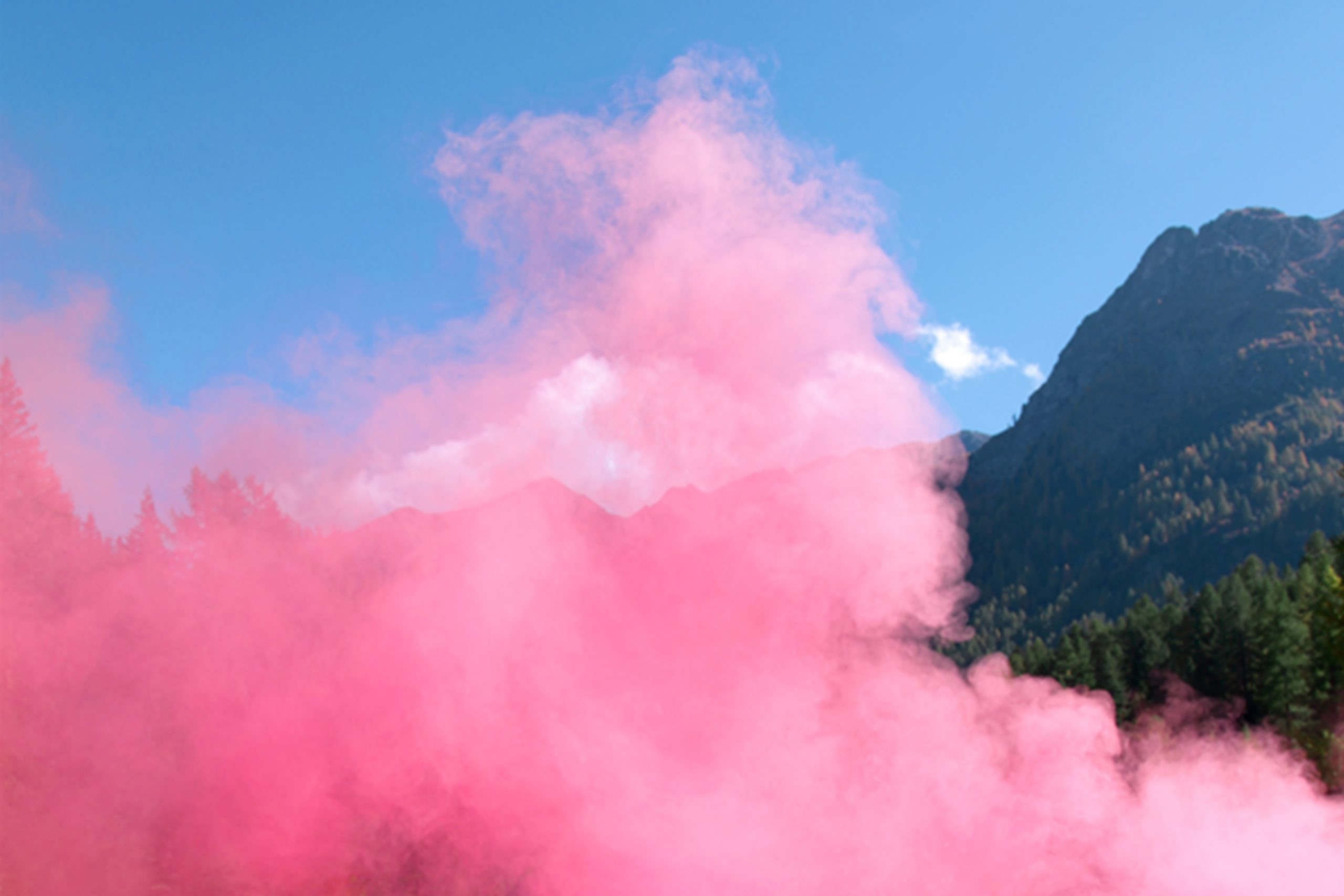
Tunis-born artist DaBro focuses on identity, memory, and the rhythm of urban life, capturing the tension between tradition and modernity in contemporary Tunisian society. His work Echo Before the Silence (2025) gestures toward erasure, reverberation, and emergence. Italian artist Filippo Minelli brings an aesthetic rooted in protest; his practice responds to political and social realities through poetic but charged visual language.

Algerian artist Lokher, who blends influences from street art and painting, contributes The Furthest Dream (2022), navigating distance, memory, and transition. Iranian designer and architect Neda Salmanpour, whose research-based practice integrates technology, material experimentation, and regional design vocabularies, highlights the conceptual interplay between mathematics and cultural expression.
The exhibition also features two Moroccan creatives. Artist Samir Toumi (Iramo), guided by a humanistic sensibility, captures the textures of everyday life. His works, made with wax and pigment on soap, underscore fragility and gradual dissolution. Photographer Ismail Zaidy, known for his vivid and poetic visual language, explores emotion, family, and identity with a distinctive sense of intimacy and colour.

The exhibition encourages visitors to reflect on the multiplicity of endings: a life-phase closing, a familiar space dissolving, a city in flux, an identity shifting. Yet, it suggests that from those endings there arises a possibility: renewal, reframing, transformation. All in all, Everything Comes to an End engages a vital question: how do we live with finitude, not merely survive it? And how might the aesthetic experience of ending lead us toward renewal?
To learn more about the exhibition, please visit its official webpage.
In addition, you might be interested in visiting Whispers of the Past at Sotheby’s Dubai and Prix Pictet: Storm at Ishara Art Foundation.


