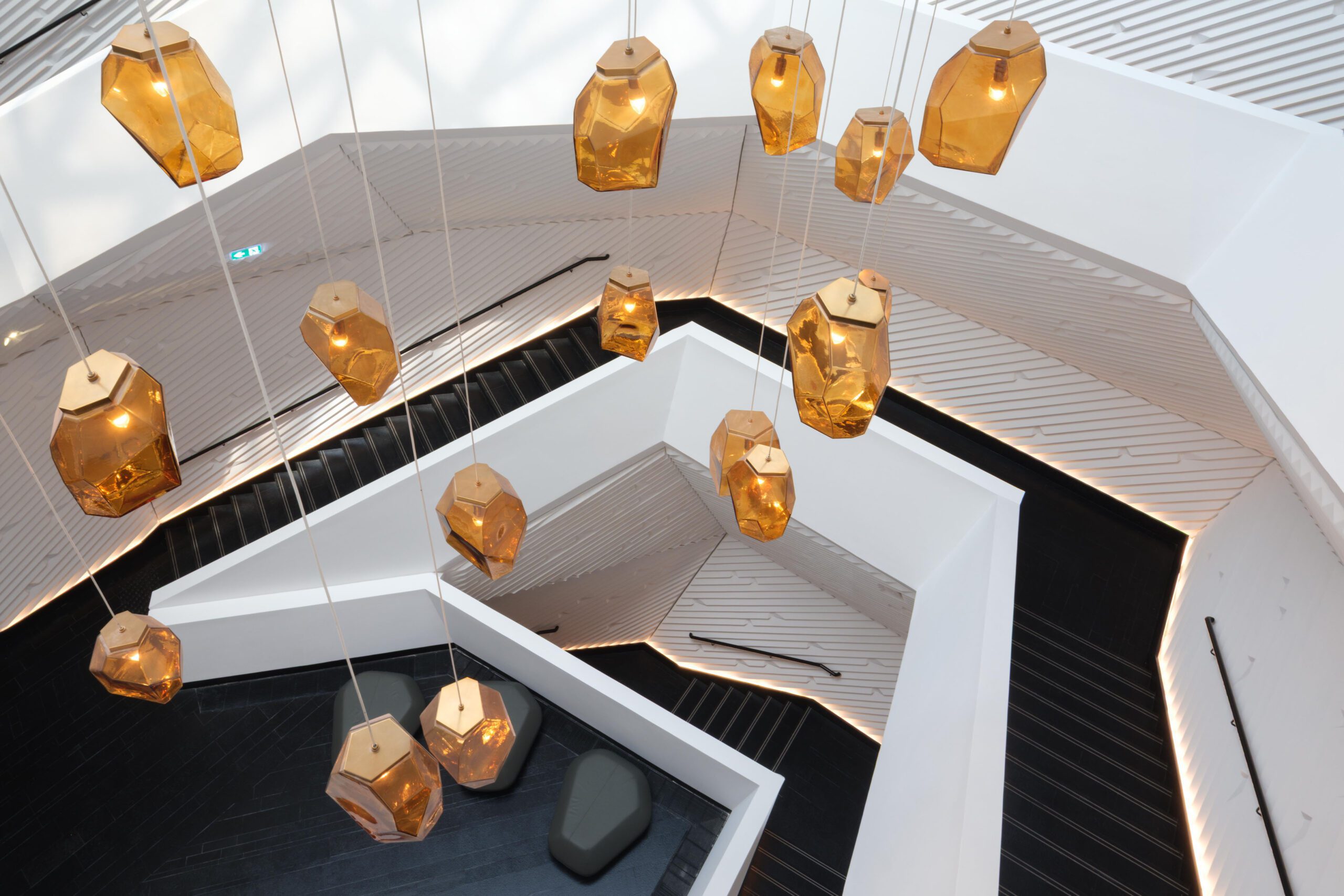
On April 7, 2026, the Black Gold Museum opened in Riyadh. It was inaugurated by Saudi Arabia’s Minister of Energy, HRH Prince Abdulaziz bin Salman bin Abdulaziz Al Saud, and the Minister of Culture, HH Prince Bader bin Abdullah bin Farhan Al Saud. The museum occupies one of the five buildings of the KAPSARC complex, designed by Zaha Hadid Architects and completed in 2017. The interiors were created by the London-based studio DaeWha Kang Design, founded in 2014. It is the first permanent museum in the world dedicated to oil and art — not as celebration, but as inquiry.
The idea behind the museum is at once simple and bold. “Our task is to tell the story of oil through the eyes of artists: a story that has, quite literally, transformed the way humanity lives on this planet,” says the museum’s director, Jack Persekian. Persekian is one of the most recognisable figures in contemporary curation: a Palestinian artist and curator born in Jerusalem in 1962, founder of the Al-Ma’mal Foundation for Contemporary Art in Jerusalem, former Head Curator of the Sharjah Biennial (2004–2007) and its Artistic Director (2007–2011), and Founding Director of the Sharjah Art Foundation. He brings to the Black Gold Museum not only deep institutional experience but also a long-standing conviction that art is capable of sustaining interdisciplinary dialogue.
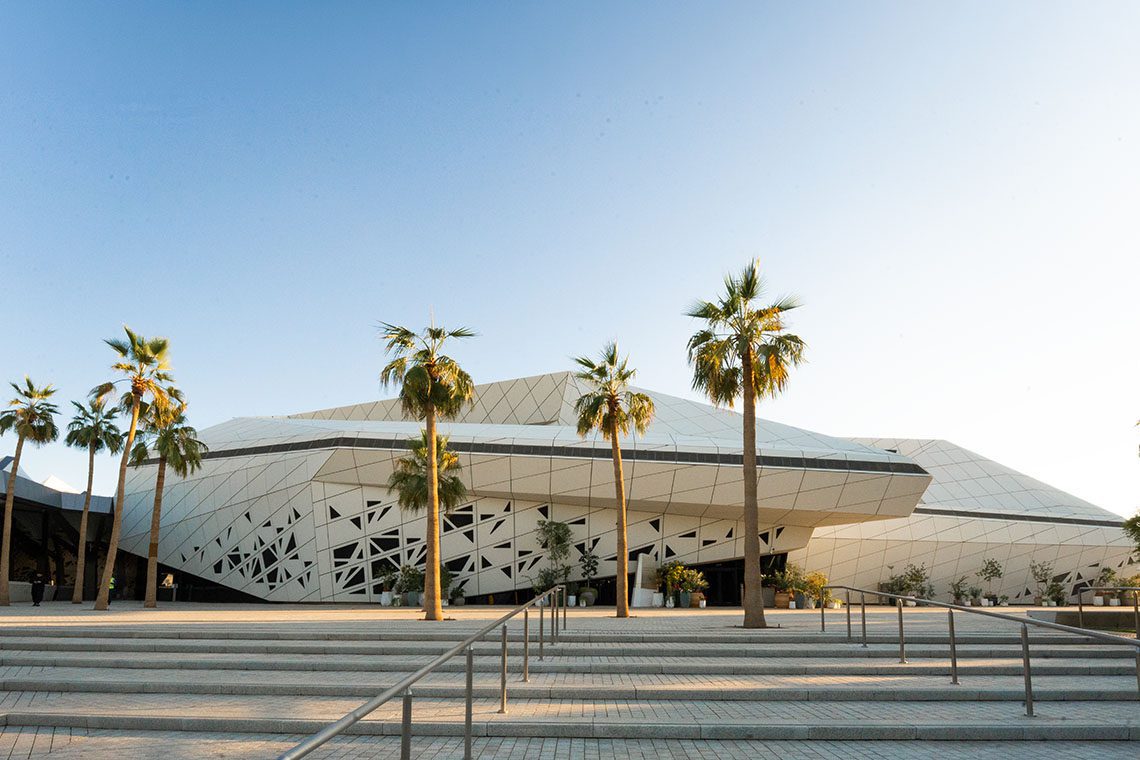
The museum is the result of a partnership between the Museums Commission of the Ministry of Culture and KAPSARC, supported by the Quality of Life Program under Saudi Vision 2030. At the opening, Prince Abdulaziz described it as a collaboration between “the cultural and energy ecosystems,” intended to construct “a comprehensive narrative of the history of oil and its impact on every aspect of life.” Prince Bader characterised the museum as “an unprecedented space for reflection and critical thinking.” The museum does not exist in spite of KAPSARC’s research mission — it exists because of it.
The collection brings together more than 350 works by over 170 artists from more than 30 countries: painting, sculpture, photography, video, archival materials. Among the participating artists are Manal AlDowayan, Ahmed Mater, Muhannad Shono, Mohammad Alfaraj, Ayman Zedani, Doug Aitken, Jimmie Durham, Dennis Hopper, Alfredo Jaar, and Pascale Marthine Tayou. The Saudi artist Ahmed Mater, whose body of work investigates oil as a force that shapes contemporary civilisation, says that the works he is showing in the museum “explore the idea of oil as a source of energy and as a symbol of the twentieth-century economy — before and after.” He adds: “My work always emphasises that oil is, above all, an organic material, a natural substance taken from the earth.”
The building itself carries part of this argument.
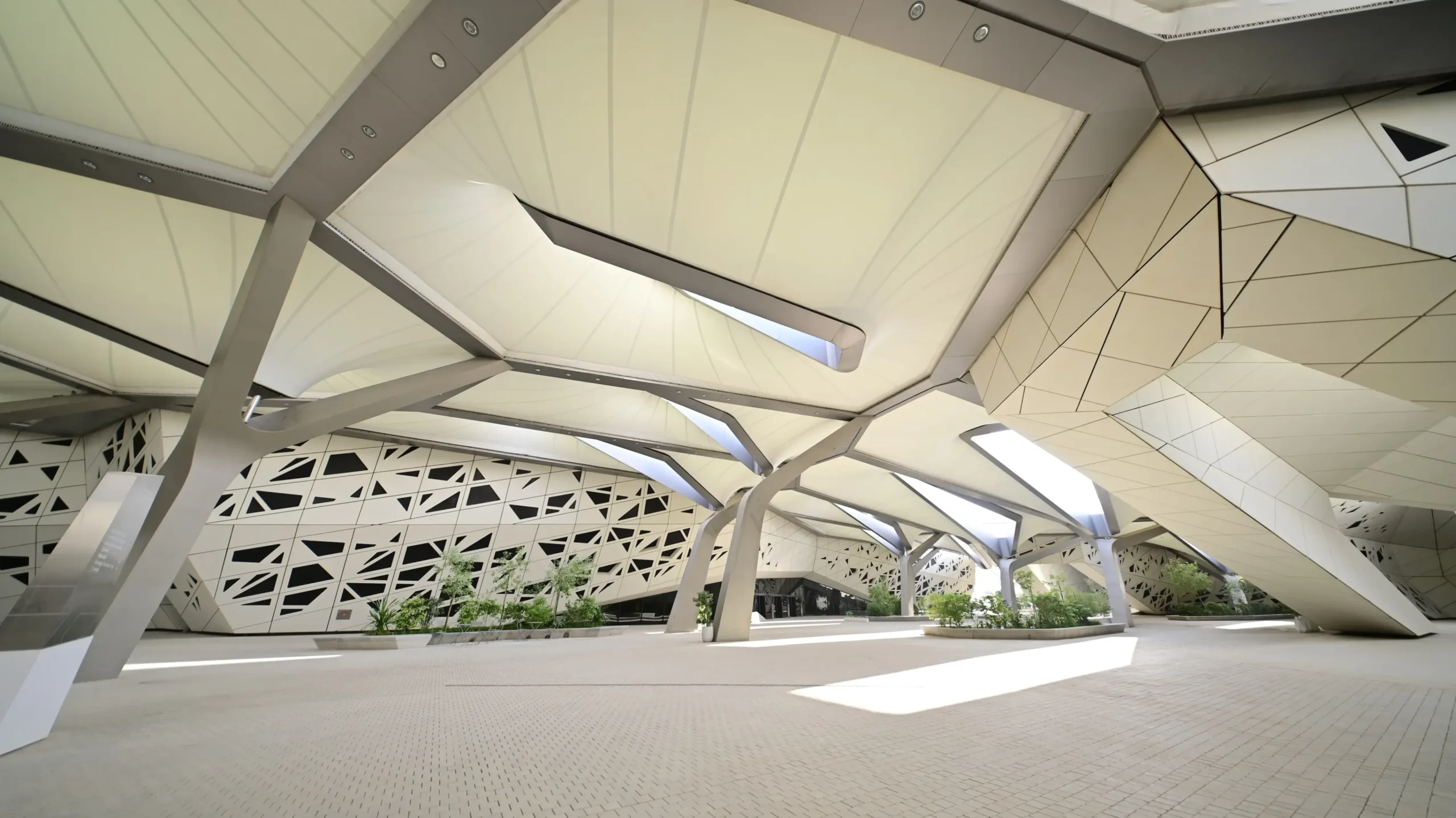
DaeWha Kang did not build the museum from scratch — he entered another architect’s building. The former KAPSARC research library was part of the complex created by Zaha Hadid Architects, and Kang himself spent ten years at that practice before founding his own studio. Michal Wojtkiewicz, the project’s lead architect, also worked at Zaha Hadid Architects — including on KAPSARC itself and on Western Sydney Airport — before joining DaeWha Kang Design in 2019. To enter a building created by the practice in which one was trained is a particular kind of responsibility. Kang neither argued with Hadid nor imitated her. He introduced a sculptural spiral staircase into a central atrium, drawing scattered spaces into a single route; he brought daylight where there had been none, and gave the visitor a sense of orientation. Hadid’s architectural language — dynamic surfaces, hexagonal geometry that refers simultaneously to the molecular structure of hydrocarbons and to traditional Arab ornamental systems — remains. But it now serves a different task: not the silence of a research library, but movement and the encounter with art.
The spiral staircase in the central atrium is Kang’s principal architectural gesture.
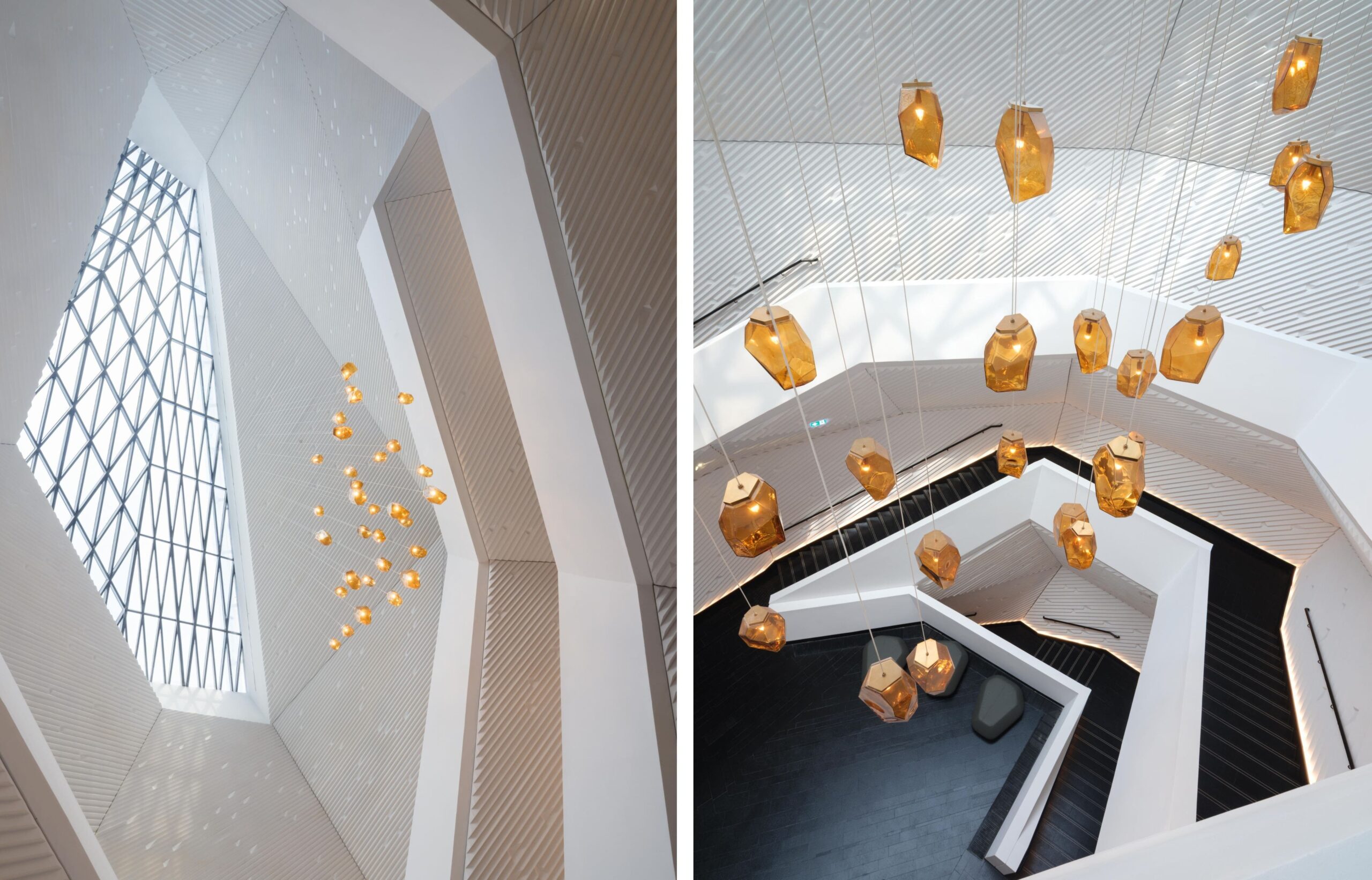
In the hexagonal matrix of KAPSARC, the vertical was never a compositional axis: what mattered to Hadid was the horizontal honeycomb structure, the logic of a campus. Kang introduces the vertical as a fundamentally different order: he translates the idea of vertical ascent into the logic of a research campus, so that the visitor literally rises through the strata of the oil age — encounter, dreams, doubts, visions.
Of the museum’s 6,800 square meters, only 440 — about 6% of the total area on a 5,585-square-meter site — are new construction. This is not an economy or budgetary restraint. It is a position. In a region where the cultural ambitions of the past two decades have most often been expressed through the creation of new iconic objects, Kang proposes a different logic: transformation is more demanding and more difficult than demolition and new building, because it requires precision, a dialogue with existing architecture and with the original idea. The existing structural frame, the façades, and the historical strata of the building are not effaced — they become part of the museum experience.
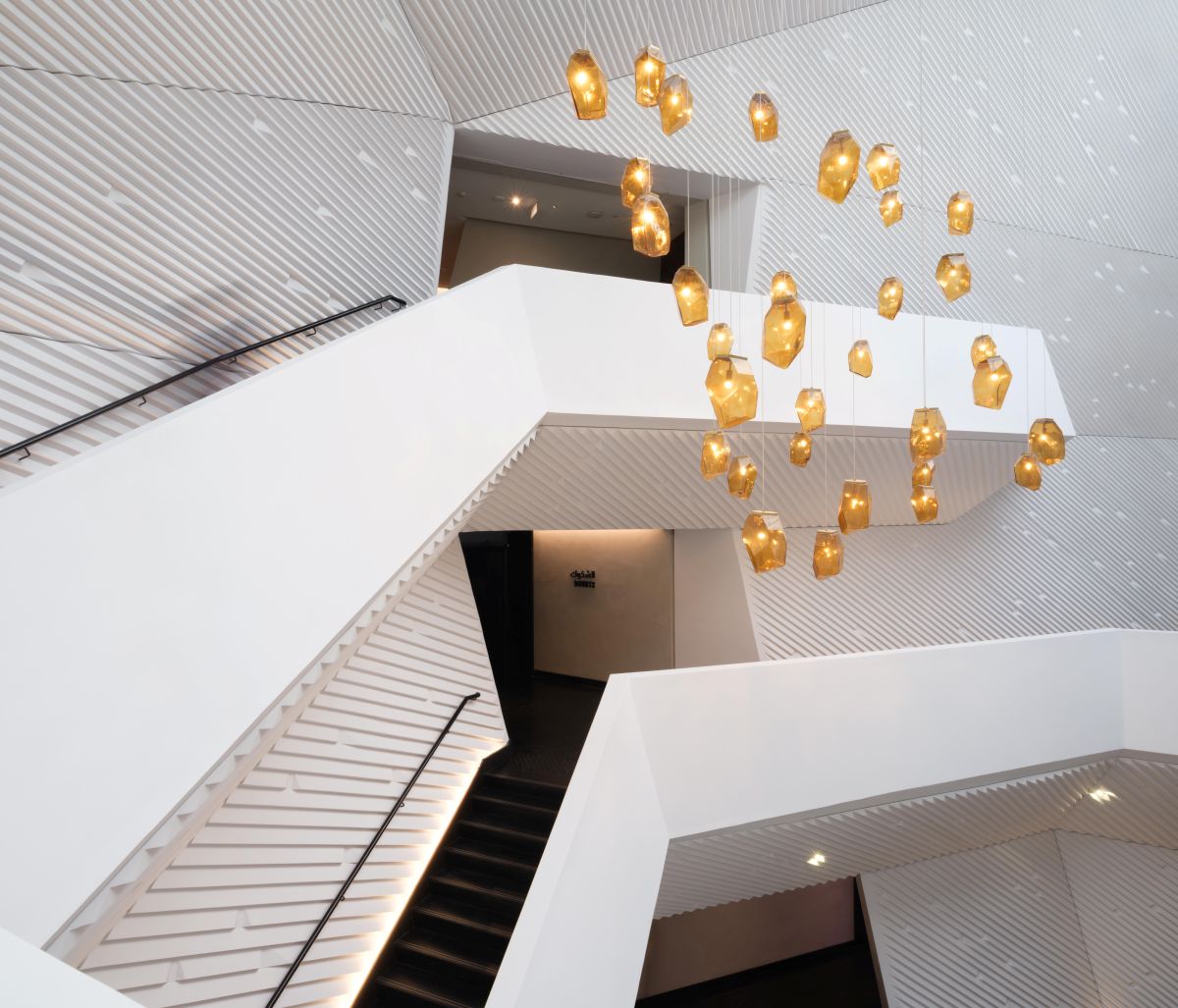
The materials read as a double layer. The first is geological: terrazzo with mineral inclusions, polished plaster with a matte surface, forms that allude to the wadis and sedimentary strata of the Arabian Peninsula. The second is molecular: “delicate patterns inspired by the molecular structures of hydrocarbons and by hexagonal geometry,” in the studio’s own words. This duality matters: in the museum, oil is shown not as an industrial product but as an organic substance with its own formal logic — from molecule to stratum.
Kang himself describes the task this way: “Transforming a former library into a museum required a complete rethinking of how people would move, gather, and encounter works of art. Our aim was to bring clarity and rhythm to the existing geometry — to compose a sequence of spaces that intuitively guides visitors while preserving the individuality of each gallery.”
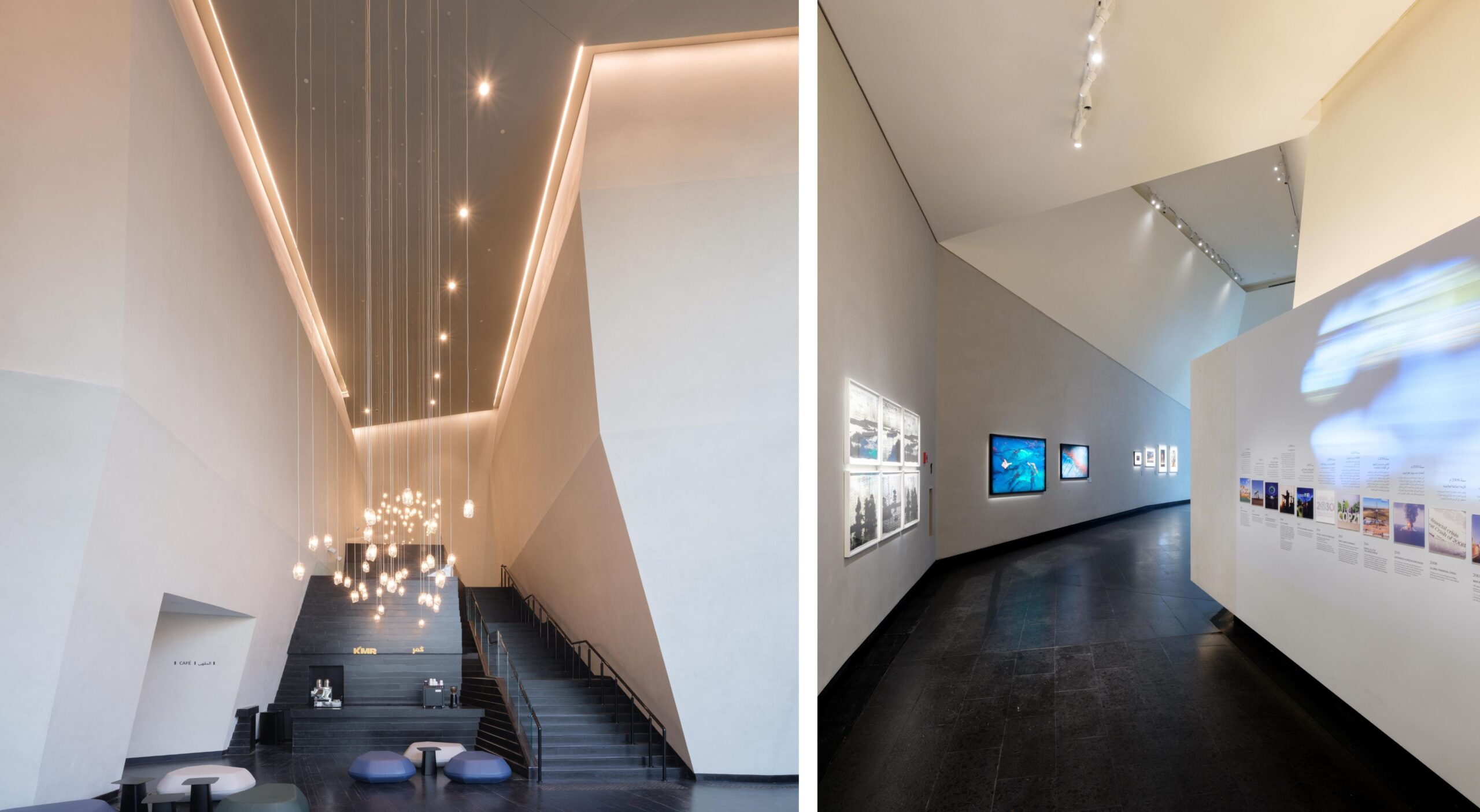
The four thematic galleries — ENCOUNTER, DREAMS, DOUBTS, VISIONS — form a sequence in which nothing is accidental. The discovery of oil and the industrial ascent it made possible; the dreams of development that followed; the questions that arise as its role is reconsidered; and the gaze toward what comes next. The visitor traces this path physically — rising from the lower-ground level to the fourth floor — and the architecture does not contradict the theme but supports it. Persekian puts it directly: “Everyone who comes here should leave with multiple interpretations and open questions — about the history of oil, about how it changed our lives, about how global economic structures have taken shape. The museum gives oil its due as the most important source of energy of the twentieth century and the immediate future — and at the same time raises the question of alternative energy and of what oil itself is investing in today.” The building helps that conversation take place.
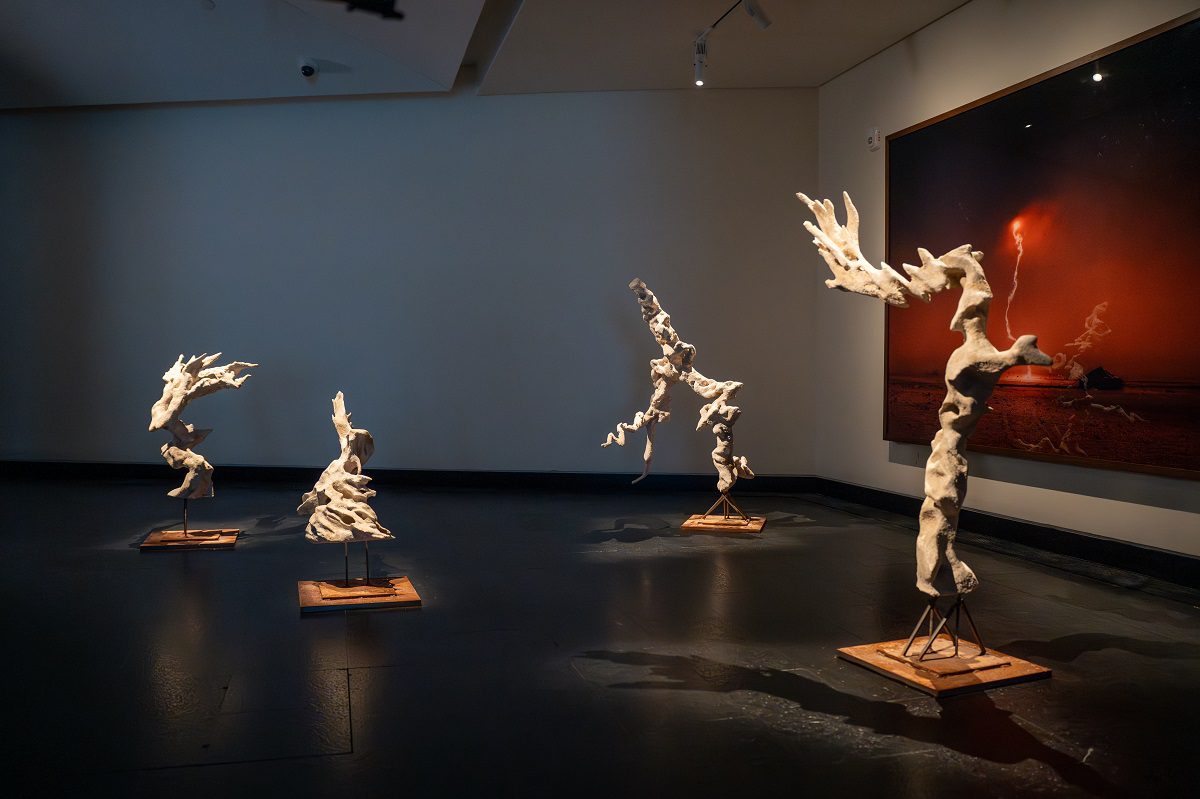
In the academic discourse of the past fifteen years, the term petromodernity has emerged — a modernity shaped by oil, a contemporary form of life inseparable from the hydrocarbon economy, from the material culture of plastic, from the mobility of the automobile. The Black Gold Museum is the first institution to translate this theoretical concept into exhibition space. The structure of its four galleries — encounter, dreams, doubts, visions — is, in effect, an architectural reinterpretation of four phases in humanity’s relationship with oil: discovery, expansion, reflection, transformation.
ENCOUNTER opens with Saudi Arabia’s own oil heritage: the discovery of oil in the kingdom, including such milestones as the Dammam No. 7 well. DREAMS expands the perspective: oil transforms societies, fuels ambition, reshapes daily life — food, clothing, transport, housing, medicine. DOUBTS poses uncomfortable questions: ecological consequences, the paradoxes of dependency, and the weight of a finite resource. VISIONS turns to what is taking shape in its place.
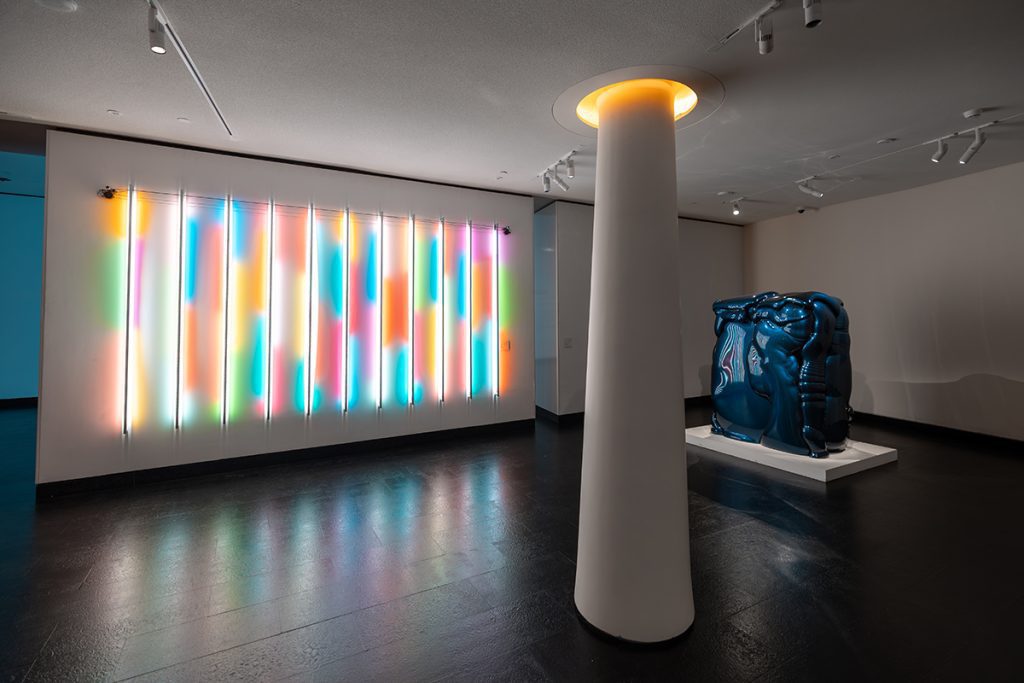
What is unusual about the Black Gold Museum is not that it asks difficult questions: cultural institutions increasingly do. What is unusual is that it asks them from within. The researchers and visitors of the museum walk the same campus, inhabit the same hexagonal geometries, and stand each day in immediate proximity to the subject of the conversation — oil. The museum does not arrive as an external critic; it emerges from the very ecosystem it studies. “Nothing like this exists,” Persekian says. “Nowhere in the world is the history of oil told through the eyes and from the perspective of artists.”
This is an important distinction. The Black Gold Museum is a building about looking attentively at difficult things: the role of oil in the making of the modern world, the scale of the transformations it has set in motion, and the questions facing a country reflecting on its own legacy. That DaeWha Kang Design has done this with such restraint — working inside the geometry of one of the most recognisable voices in architecture, on a campus that is, by definition, a site of energy research — is itself an architectural statement.
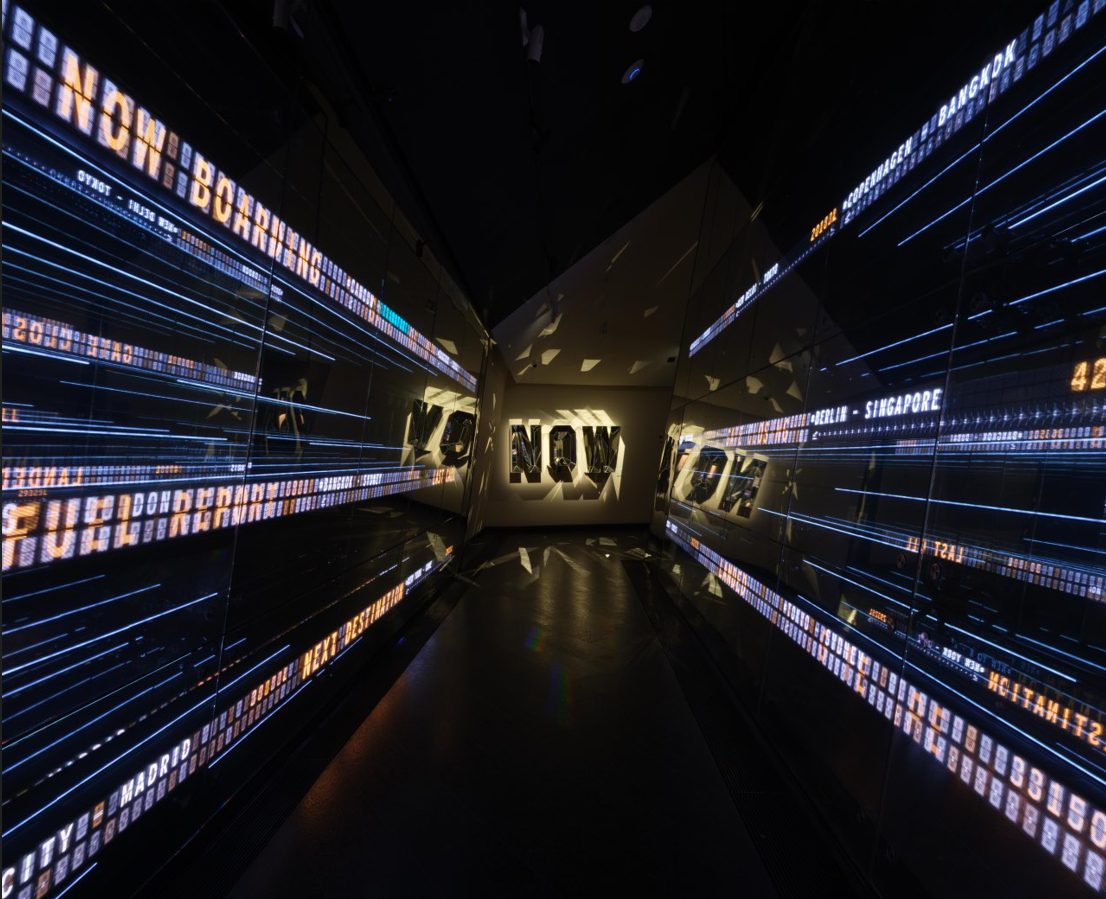
At the same time, the Black Gold Museum is also a space of rare beauty. The crystalline volumes of Hadid’s white campus rise against the sky and desert of Riyadh; the spiral staircase in the atrium is, on its own, worth the journey to Riyadh; the interiors with their mineral inclusions and softly diffused light produce a sense of focused attention rare in contemporary museums. A collection of 350 works by 170 artists from more than thirty countries is the kind of scale for which one normally plans a separate trip. The visitor is given the rare chance to spend a day inside a Hadid building — and that, in itself, is an architectural event. The museum is open daily and is set to take a notable place among the cultural addresses of Riyadh, a city to which more and more significant institutions have been arriving in recent years.
© Julia Smolenkova
© OpenSpace


