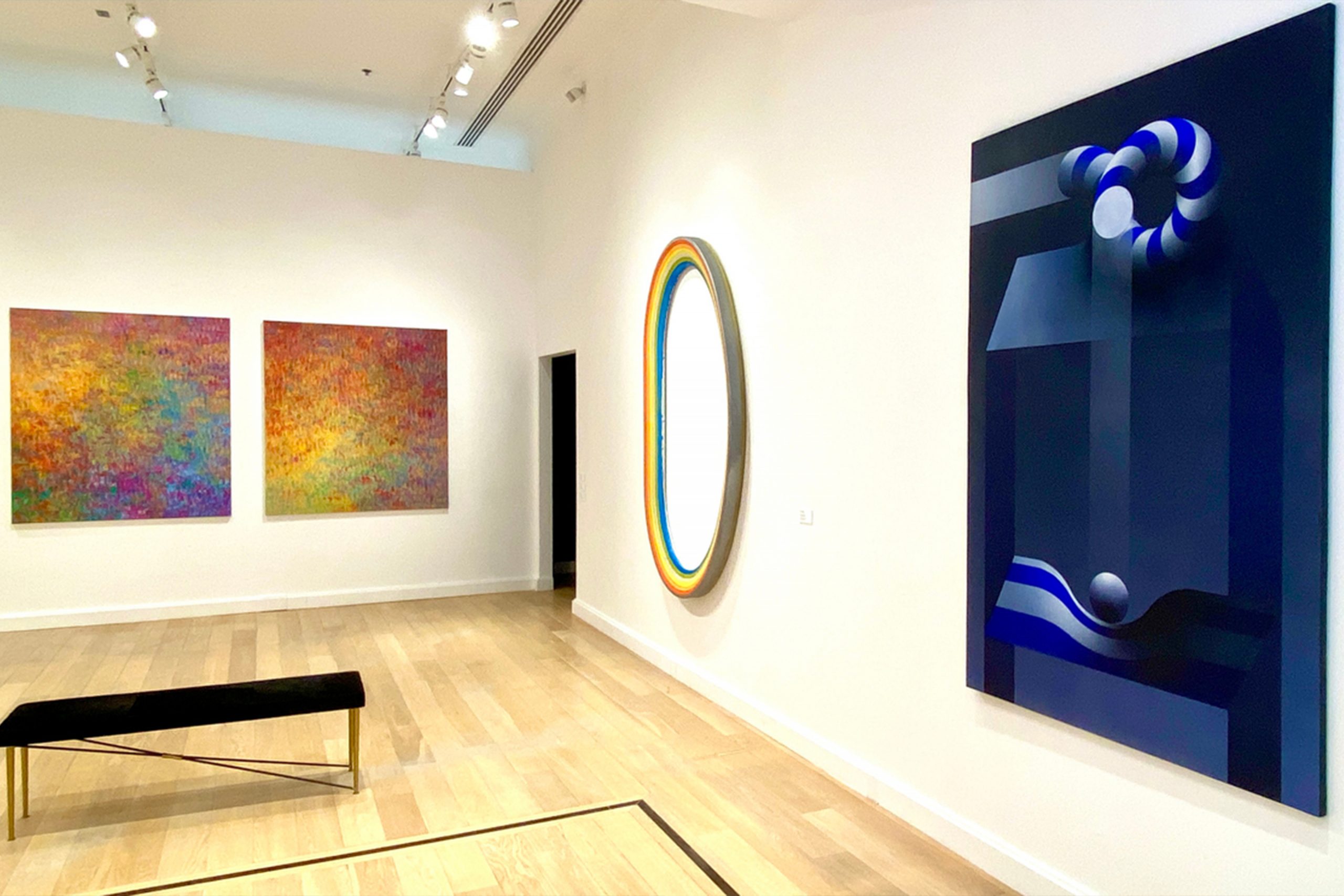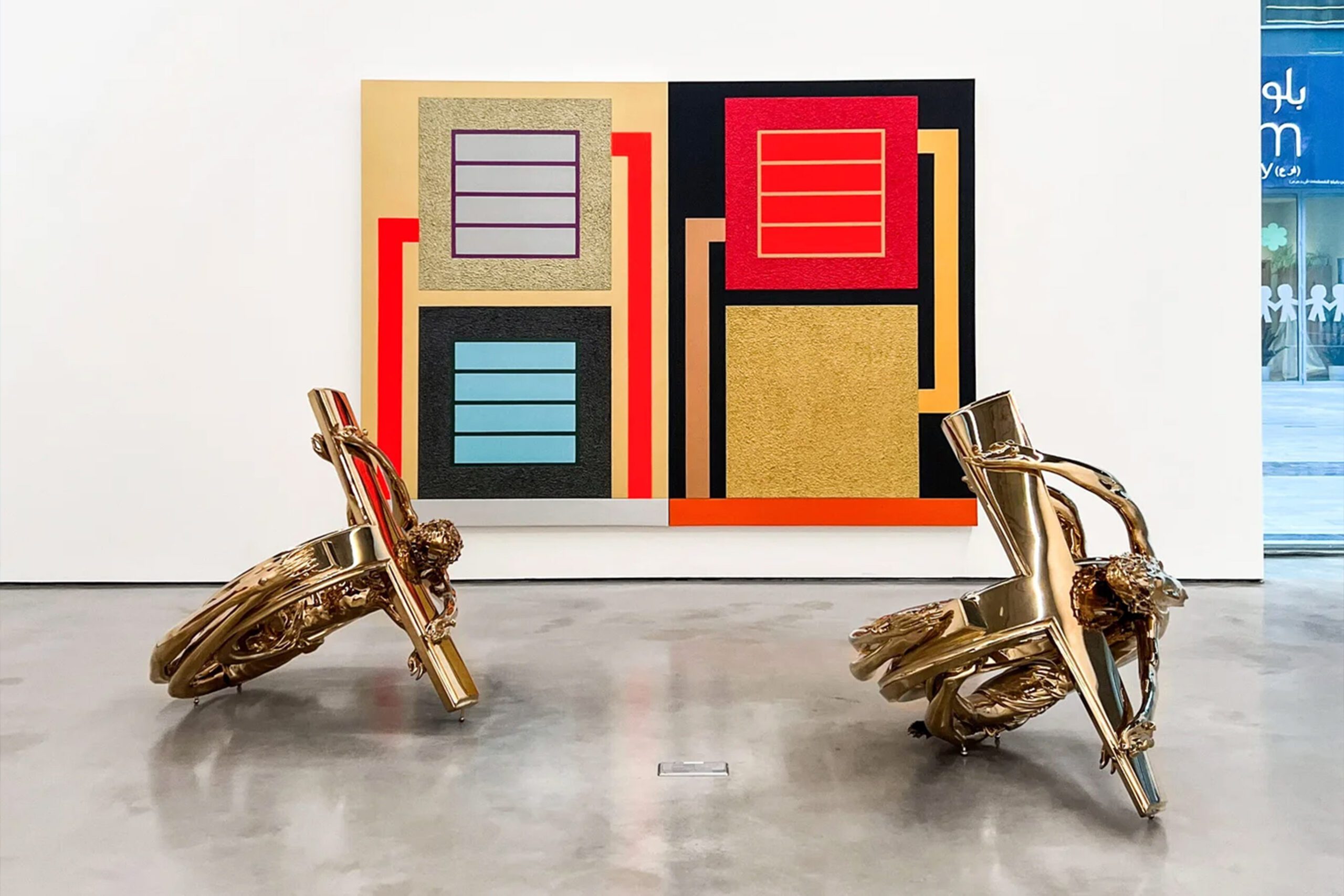
The Inaugural Exhibition at Tatintsian Gallery marks an important new chapter in Dubai’s art landscape. Running through 31 May 2026, the exhibition celebrates the opening of the gallery’s permanent space in Dubai Design District (d3). Already established internationally through its programmes, Tatintsian Gallery has built a reputation for presenting museum-calibre contemporary art. Its arrival in Dubai reflects the emirate’s growing status as a crossroads for collectors, artists, and cultural institutions from Europe, the Middle East, and Asia.
Located in Building 3 of d3, the gallery’s new premises introduce a programme focused on notable artists whose works appear in major private and public collections. Rather than launching with a single-artist survey, the gallery has chosen a group exhibition format so visitors can encounter a range of practices, generations, and artistic languages. The result is an ambitious opening statement that spans sculpture, painting, and conceptual work.
The show brings together figures associated with post-war experimentation, Pop-inflected critique, contemporary figuration, and design-led practice. Among the most prominent names included is designer and artist Ron Arad, celebrated for dissolving boundaries between art, architecture, and industrial design. Famous for furniture and sculptural objects that combine engineering with wit, Arad displays New Ping Pong (2008-2015), a piece made of polished stainless steel and patinated bronze. Its reflective surfaces and playful title demonstrate the artist’s longstanding fascination with movement, material transformation, and unexpected functionality.
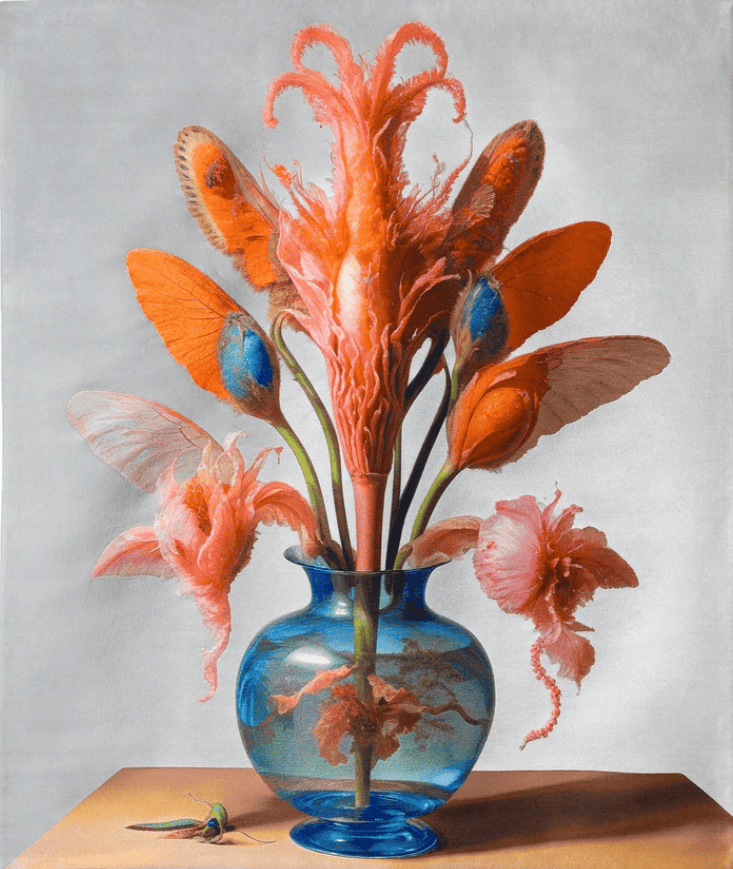
The exhibition also features British artist Mat Collishaw‘s work. He employs photography, moving image, and immersive installations to explore illusion, beauty, and moral unease. His tapestry Alluvion V (2024) extends these concerns into textile form. It translates digitally inflected imagery into a medium historically associated with grandeur and storytelling. The juxtaposition of old technique and contemporary vision is characteristic of Collishaw’s art.
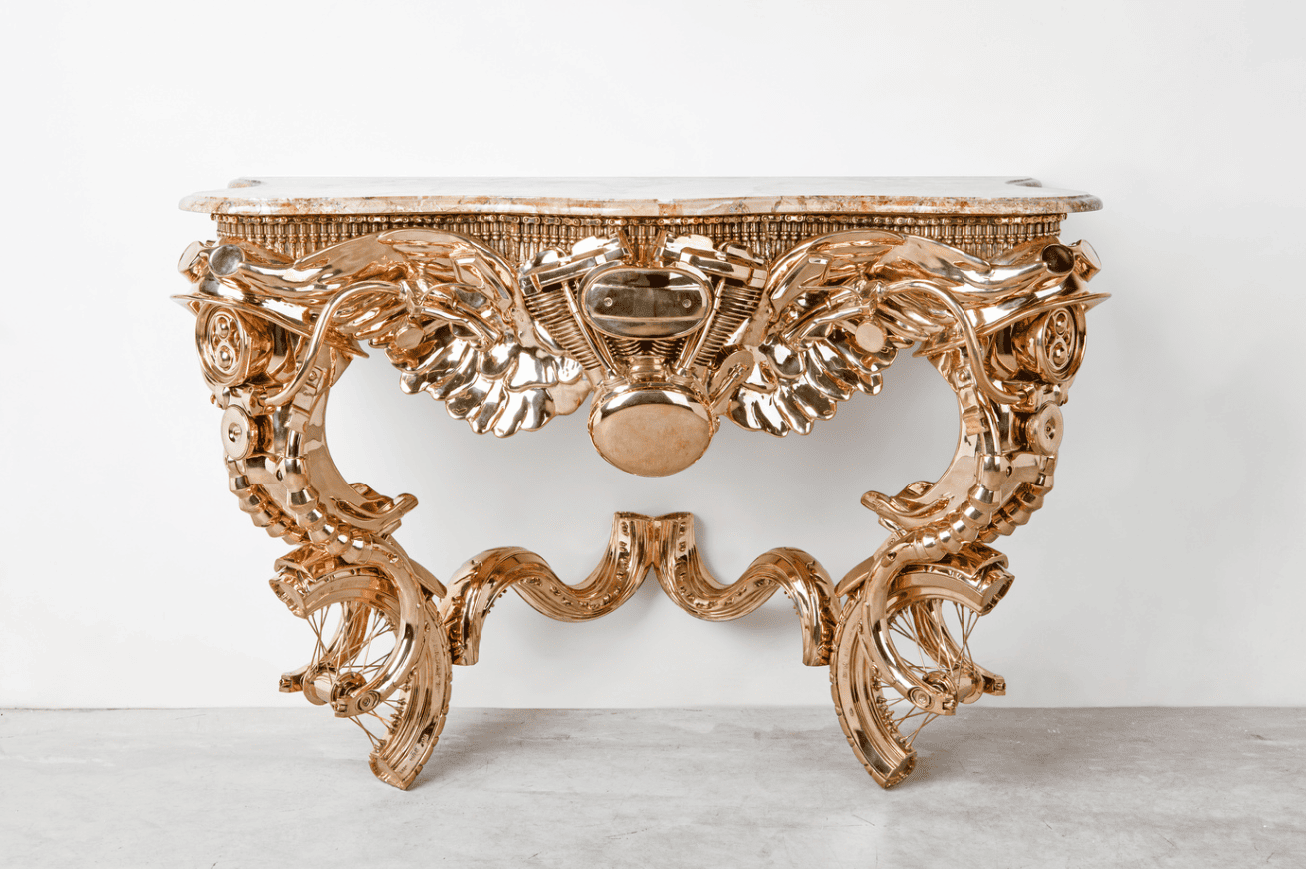
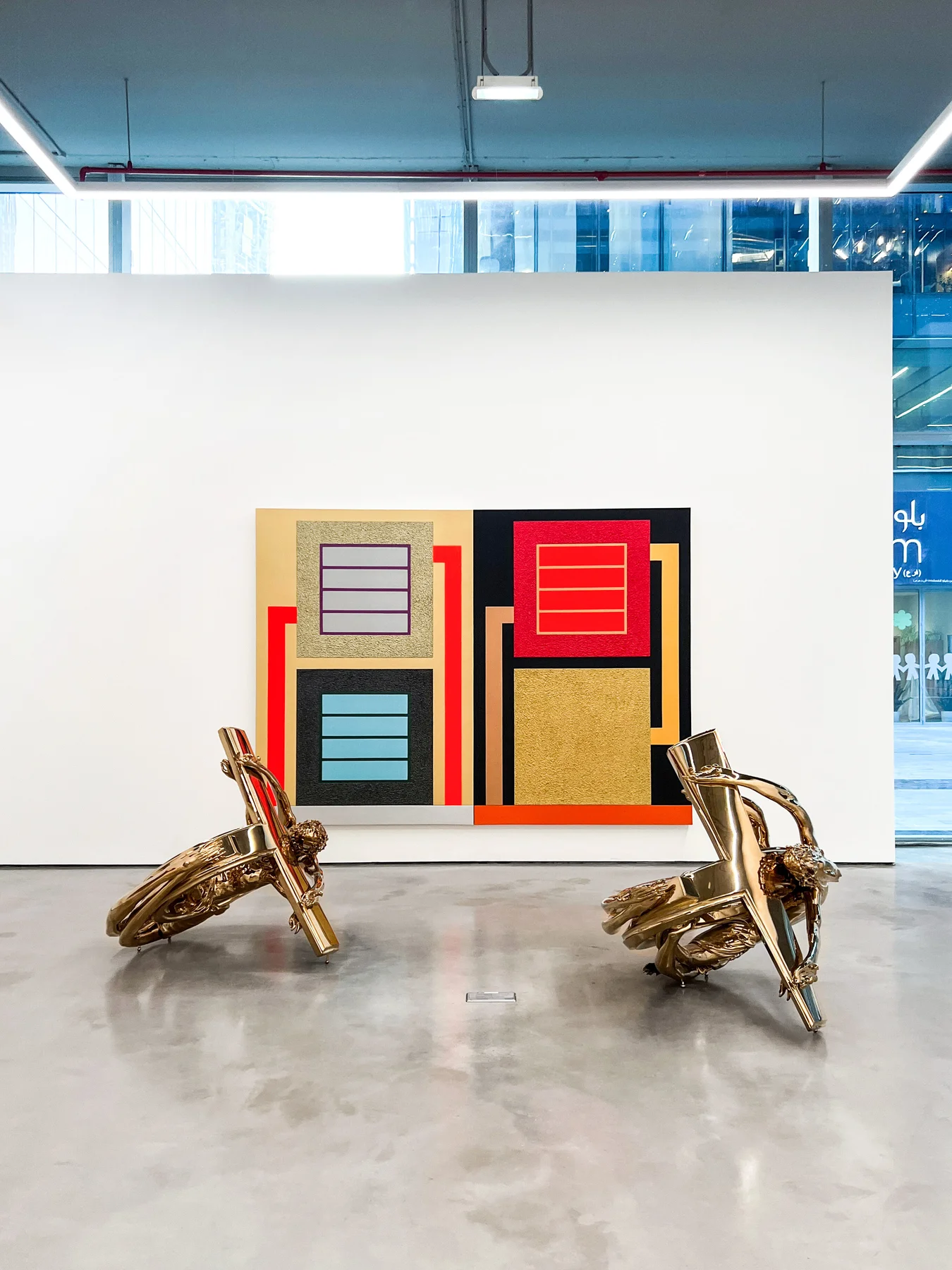
Belgian artist Wim Delvoye contributes several sculptures that showcase his signature blend of craftsmanship, irony, and technical virtuosity. Delvoye is widely known for transforming everyday objects through Gothic ornamentation or surreal metamorphosis. Art pieces such as Untitled (Slanted Dump Truck) and Untitled (Console) reveal how industrial machinery and decorative traditions can collide in unexpectedly elegant forms. Delvoye’s sculptures often question taste, labour, luxury, and cultural hierarchy.
Also featured is American artist Peter Halley, whose geometric canvases became emblematic of Neo-Conceptual art in the 1980s. His brightly coloured cells, conduits, and grids reflect systems of confinement, connectivity, and urban life. Halley’s monumental work Tangled (2010), created using acrylic, metallic pigments, and textured Roll-a-Tex, demonstrates the visual intensity and intellectual rigour that made him a defining voice of late twentieth-century abstraction.
Other major American names, who bring a more introspective and ironic tone to the showcase, are Peter Saul, sculptor Tony Matelli, and artist, writer, and musician John Miller. Saul’s irreverent and politically charged paintings occupy a unique place between Pop Art, underground comics, and social satire. His displayed canvas exemplifies his explosive colour palette and biting humour. Across decades, Saul has used exaggeration and grotesque caricature to critique power, war, and consumer culture.
Tony Matelli creates hyperreal sculptures that balance humour with psychological tension. His work often presents uncanny figures, weeds, or fragmented bodies that feel simultaneously absurd and unsettling. Meanwhile, John Miller’s multidisciplinary practice examines consumerism, banality, and the overlooked aesthetics of everyday life.
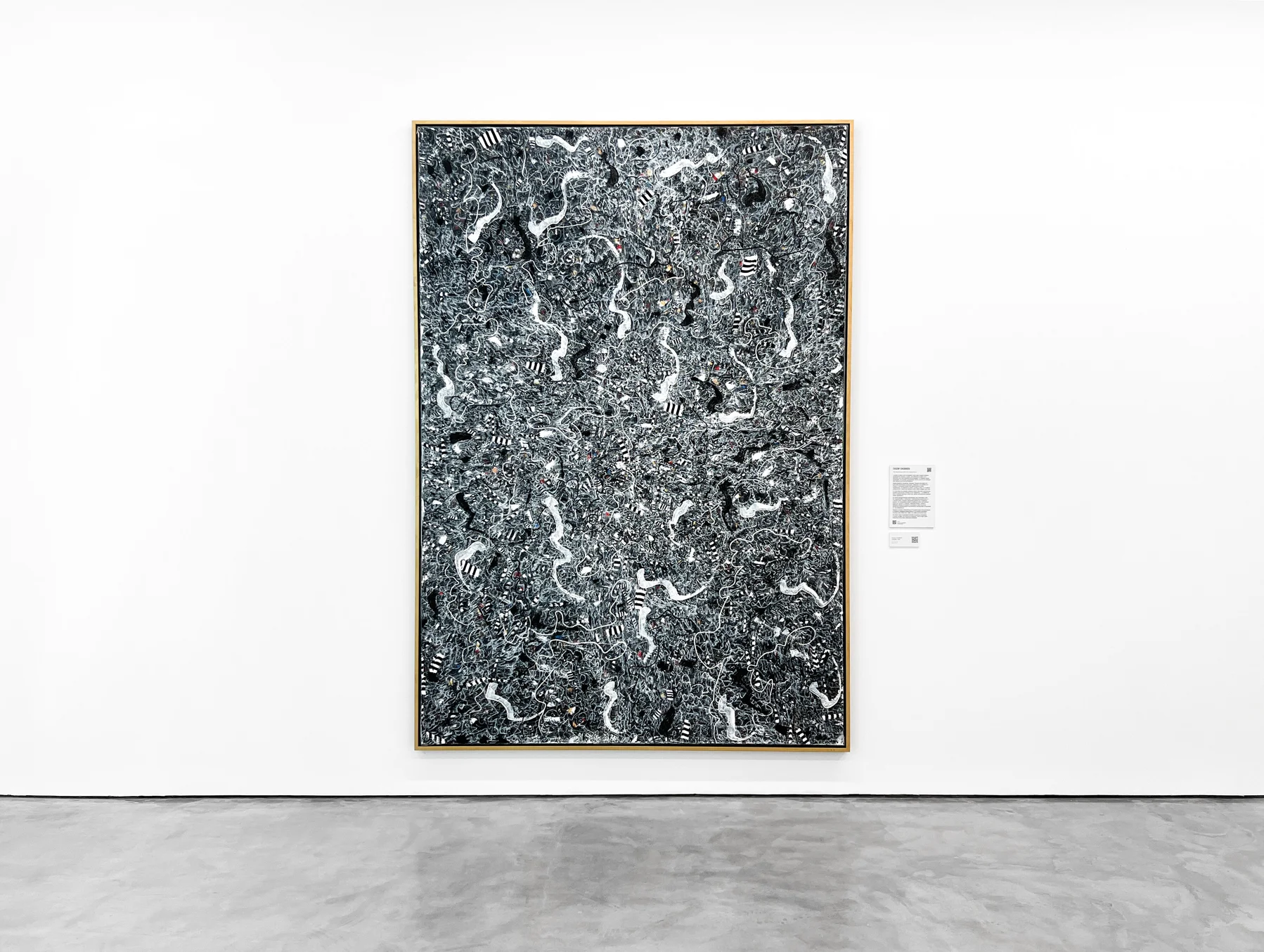
Historical depth is added through works by British-American artist and painter Malcolm Morley (1931-2018) and artist and sculptor Evgeny Chubarov (1934-2012). Morley, a Turner Prize winner, moved from photorealist painting toward expressive, often turbulent compositions inspired by maritime history and memory. Chubarov produced powerful abstract works shaped by dense gesture and emotional intensity. Their presence situates the exhibition within a broader post-war lineage rather than limiting it to recent market names.
What makes Tatintsian Gallery’s inaugural presentation significant is not only the calibre of artists involved, but the message it sends about Dubai itself. The city has increasingly positioned culture alongside finance, tourism, and design as a central part of its identity. By opening in d3 and not in a conventional retail district, Tatintsian aligns itself with a neighbourhood built around experimentation, architecture, and creative enterprise. The gallery enters a local ecosystem that includes institutions, fairs, and private initiatives attracting global attention.
For visitors, the exhibition offers a concise survey of influential international contemporary art across media and generations, while for collectors, it signals access to artists with established institutional reputations. For Dubai, it reinforces the city’s ability to host serious commercial and cultural ventures at an international level. As an opening statement, The Inaugural Exhibition succeeds in combining spectacle, intellectual range, and market confidence, setting a high benchmark for future programming at Tatintsian Gallery.
To learn more about the show, please visit its official web page.
In addition, you might be interested in attending Flor Salina by Cveto Marsič.