


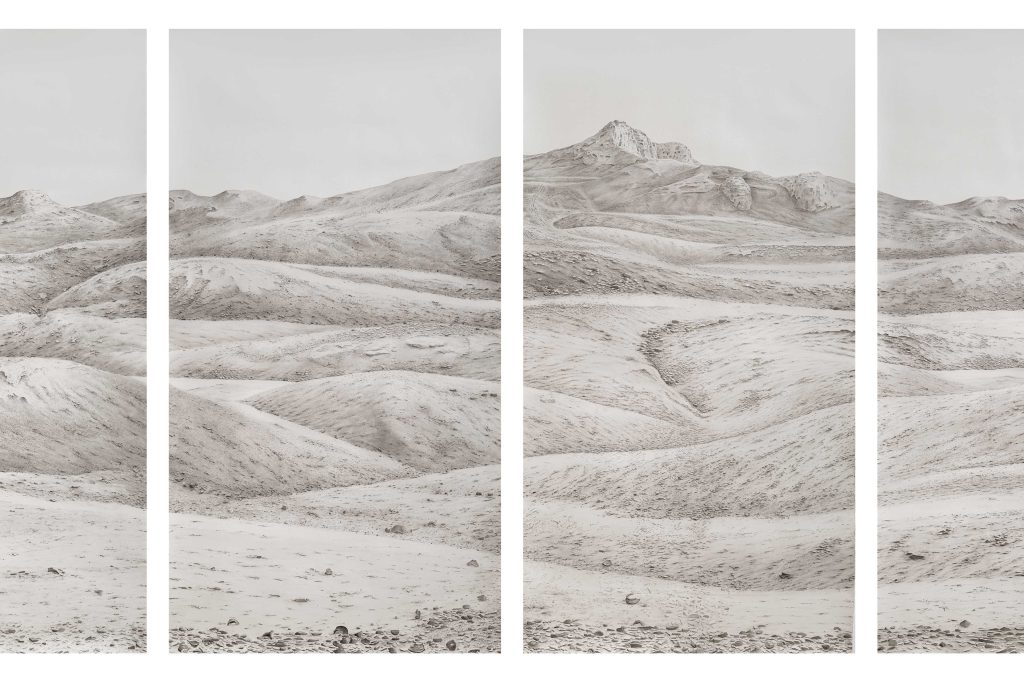
Ishara Art Foundation presents Urdu Worlds, the UAE’s first major contemporary art exhibition dedicated to the Urdu language, on view until 31 May 2026. Curated by Hammad Nasar, the exhibition stages a visual conversation between Ali Kazim and Zarina, and marks the first comprehensive presentation of Kazim’s work in the Gulf.
Urdu Worlds takes language as both its subject and material, asking how words do more than describe the world and instead participate in making it. The exhibition proposes Urdu as a dynamic site where personal histories, collective memories, and political imaginaries intersect.
Featuring works by Lahore‑based multimedia artist Ali Kazim and the late New York‑based artist Zarina, the exhibition unfolds across the galleries like two interlinked constellations. While the artists differ in generation, geography, and medium, they share a deep sensitivity to the Urdu language and its visual, sonic, and emotional resonances.
Zarina: language as home
Zarina’s presentation focuses on two seminal bodies of work, Urdu Proverbs and Home is a Foreign Place, that articulate her lifelong project of “world‑making” in Urdu. Born in Aligarh (India) and having led an itinerant life across continents before settling in New York, Zarina came to locate her sense of home within the language itself. She folds its script, proverbs, and poetry into delicate woodcuts and prints.

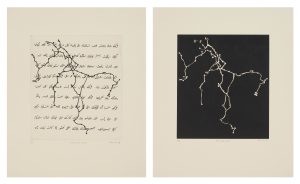
Urdu Proverbs, shown in facsimile at Ishara, comprises ten woodcut prints based on common expressions in Urdu, with the proverbs inscribed as integral components of each image. As a linguistic device, the proverb condenses cultural cues and shared references that often resist direct translation into English. The series, however, attempts to “translate the untranslatable” through visual interpretation and metaphor.
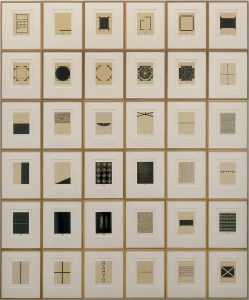
Home is a Foreign Place, a landmark work in the Ishara Art Foundation and Prabhakar Collection, consists of 36 woodcuts that each visually unfold a single Urdu word associated by Zarina with home, such as “sky”, “rain”, “fragrance”, and “language”. These prints form a lexicon of belonging, mapping home as a constellation of sensations, memories, and words.

Ali Kazim: a landscape alphabet
In Urdu Worlds, Zarina’s prints occupy a central “island” around which a sea of Ali Kazim’s paintings, drawings, sculptures, prints, and videos extends across two decades of practice. Based in Lahore, Kazim roots his “Urdu world” in a strong sense of place, while embracing a range of influences that mirror the layered and composite history of the language itself.
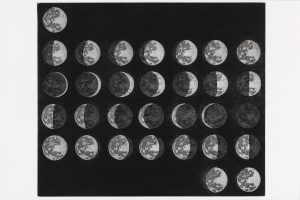
Kazim’s new series, Alphabets, presented for the first time at Ishara, comprises 19 etchings and aquatints that function as a kind of dictionary of South Asian urban and pastoral landscapes. Developed in dialogue with the forthcoming book Ali Kazim: Alphabet Book | Urdu Qaida, co‑authored with Nasar and to be published by Ochre Books in 2026, the works transform fragments of terrain into an “alphabet” of forms through which memory, history, and everyday life can be read.
A key work in the exhibition, the large‑scale four‑panel painting Tteela shows a landscape rippling with mounds of sherds and archaeological fragments, suggesting that we continue to cohabit the world with past generations long after they have disappeared from view. In Kazim’s practice, land is never a neutral backdrop: it becomes a carrier of memory and a site of cohabitation where human and non‑human timescales overlap.

Reading room and literary worlds
On Ishara Art Foundation’s mezzanine floor, a dedicated reading room extends the exhibition into the realm of literature and publishing. The space features selections from Kazim’s Alphabets suite alongside a curated collection of books that visitors are invited to browse, foregrounding the artists’ deep engagement with textual culture.
The titles on view include Urdu kay aik so aik mahavray (101 Urdu Proverbs), compiled in 1991 by Zarina’s sister Rani and illustrated with the Urdu Proverbs portfolio, as well as Ali Kazim: Alphabet Book | Urdu Qaida and The Conference of the Birds by 12th‑century Sufi poet Farid‑ud‑Din Attar. By weaving together contemporary art, classical poetry, and didactic materials, the reading room reinforces Urdu Worlds as an environment where words, images, and worlds feed into one another.

From words to worlds
Urdu Worlds underscores the capacity of art to act as a bridge into the imaginative worlds of artists, even when visitors do not share their written language. The exhibition invites audiences to inhabit unfamiliar vocabularies and question how institutions, states, and communities appropriate languages to construct narratives of belonging and exclusion.
At the same time, the project draws attention to the role of words in articulating identity and the urgency of maintaining ties to one’s native language in an era marked by migration, displacement, and exile. Through the quiet restraint and formal economy that characterise Zarina’s and Kazim’s practices, Urdu emerges as a space where the intimate and the political, the remembered and the yet‑to‑be‑imagined converge.

Urdu Worlds is made possible through loans from institutional and private collections, including Cristea Roberts Gallery, Durjoy Bangladesh Foundation, the Ishara Art Foundation, the Prabhakar Collection, Jhaveri Contemporary, Sharjah Art Foundation, and numerous individual collectors. The exhibition is supported by J. Safra Sarasin (Middle East) Ltd., Emirates Insurance, Moni Mohsin and Shazad Ghaffar, and Taimur Hassan, with logistical support from Jhaveri Contemporary and special thanks to RIT Cary Graphic Arts Collection and Freight Systems.
Curator and institution
Hammad Nasar is a curator, writer and Director of Programmes & Content at Ibraaz in London; he is known for collaborative, exhibition‑led inquiries that often orbit around South Asian and diasporic practices. His curatorial work includes co‑curating British Art Show 9 and projects with major institutions such as the Turner Prize, as well as the UAE’s national pavilion Rock, Paper, Scissors: Positions in Play at the 57th Venice Biennale in 2017.
Ishara Art Foundation, founded in 2019, is a Dubai‑based non‑profit organisation dedicated to presenting contemporary art from South Asia and its diasporas. Guided by a research‑led approach and presented in partnership with Alserkal Avenue, the Foundation realises its mission through exhibitions, public programmes, education initiatives, and international collaborations that foster exchange between South Asian and global artistic networks.
To learn more about Urdu Worlds, please visit the official web page of the exhibition.
In addition, you might be interested in visiting In the Space of Becoming by Alia Hussain Lootah and “Self-portrait with a cat I don’t have” by Bady Dalloul.


